
ALEX & ALEX — THE PRACTICALISTS
It looks clean. So why does the smell keep coming back?
The floors are mopped, the toilet bowls are clean and the bins have been emptied. Yet an unpleasant smell returns before the next cleaning round.
For offices, hospitality venues, schools and other NZ workplaces, this is a frustrating problem. It can also lead to extra cleaning and products being used without resolving the cause.
Alex & Alex’s starting point: find where the odour is coming from, then match the cleaning or maintenance response to that source.
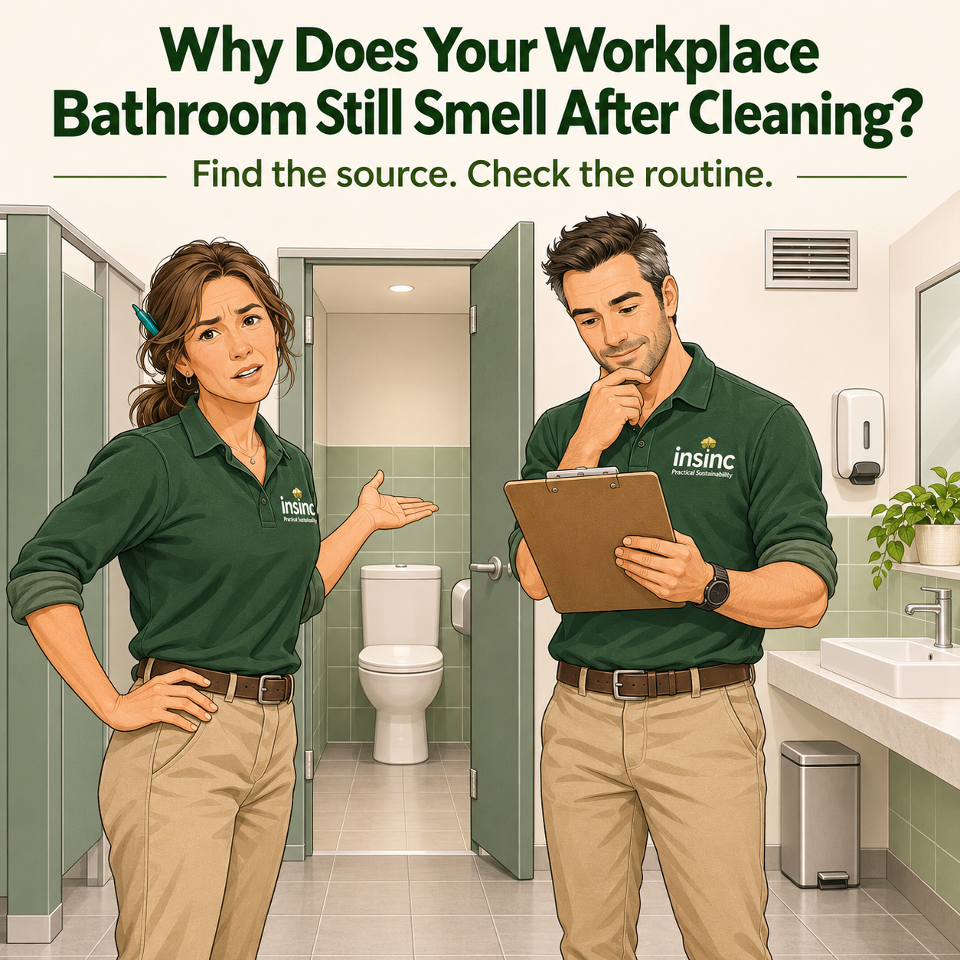
Why can a bathroom smell after cleaning?
The odour source may be outside the areas being cleaned: around fixtures, inside a bin, on cleaning equipment or within a drain. The cleaning method may also need adjusting. Persistent drain or sewage smells can indicate a plumbing issue that cleaning products will not fix.
Start by noticing where and when
Before changing products, record a few observations. Is the odour strongest beside one fixture, near the floor drain or around the waste bin? Does it return after a busy period, immediately after mopping or when the room has been unused?
These observations help narrow the investigation. They are clues, not a diagnosis.
| Where you notice it | What to review | Next step |
|---|---|---|
| Around toilets or urinals | Surrounding surfaces, fixture edges and cleaning coverage | Inspect accessible areas and review the cleaning method. |
| Near a drain | Infrequent use, slow drainage, gurgling or recurring odour | Report the symptoms to your facilities team. |
| Around bins or sanitary units | Spills, lid surfaces and servicing frequency | Clean accessible bin surfaces and review collection arrangements. |
| After mopping | Mop condition, bucket cleanliness and solution changes | Check the equipment and preparation routine. |
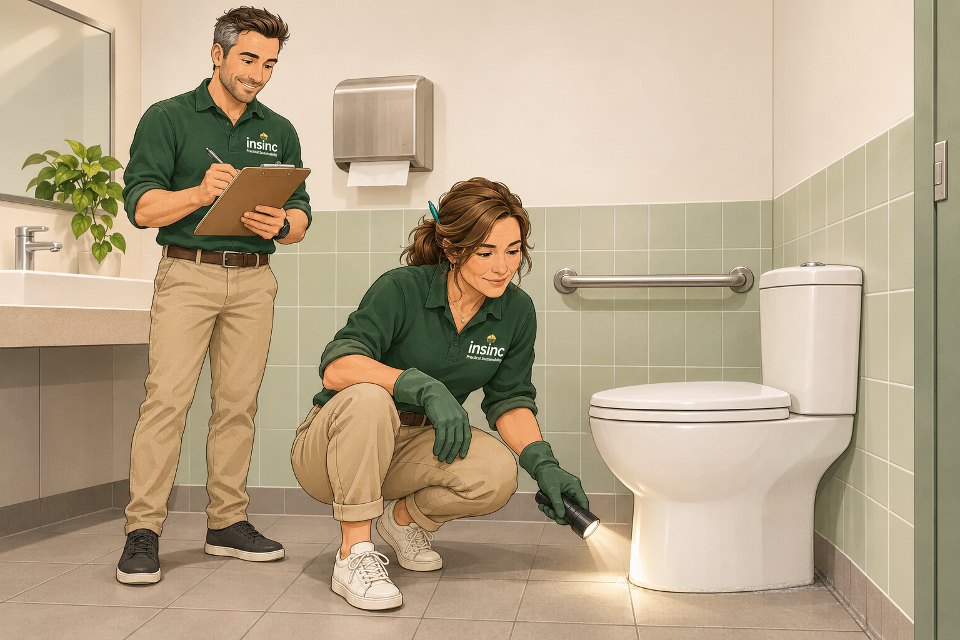
1. Check the areas a quick clean can miss
A clean bowl does not tell you what is happening around the outside of the fixture.
Include accessible toilet bases, seat hinges, surrounding floor edges, partitions and the areas beneath urinals in your inspection. Look for residue and places the usual cloth or mop does not reach well.
Use tools and products suitable for the surface. Report damaged seals, loose fixtures or recurring moisture rather than repeatedly cleaning over them.
What Alex would ask: “Is this area actually on the checklist, or do we assume it gets cleaned?”
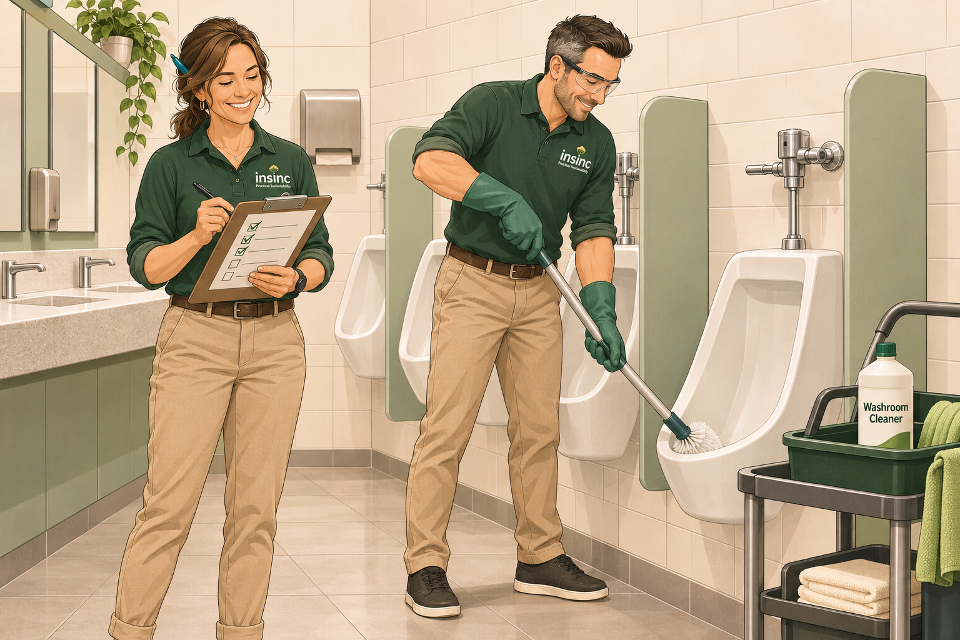
2. Match the product and method to the job
Routine surface soil, organic residue and mineral deposits may need different approaches. Choose a product labelled for the task and compatible with the fixture or flooring.
- Measure concentrates according to the label.
- Allow the specified working time.
- Use the recommended brushing or wiping method.
- Follow rinsing instructions where required.
- Keep toilet and urinal tools separate from hand-basin tools.
An enzyme-based cleaner may be an option for suitable organic residues. It should not automatically be treated as a descaler or disinfectant: check the specific product’s claims and directions.
Related washroom products from Insinc
These options offer starting points for your product review. Choose according to the surface, the type of soil and your workplace’s hygiene requirements.
BioCan Neutral Toilet Bowl Cleaner — 500ml
A neutral toilet bowl cleaner listed for bathroom soil and odour applications. Consider it when reviewing your regular bowl-cleaning product.
Check the application directions and fixture compatibility before use.
View BioCan 500ml →Bio-Zyme Cleaner & Antibacterial Sanitiser — 1L
An enzyme-based concentrate in a bottle with a dilution chamber. Listed applications include toilets, hand basins, floors, walls and drains.
Follow the directions for your particular cleaning or sanitising task.
View Bio-Zyme 1L →Bio-Zyme Cleaner & Antibacterial Sanitiser — 5L
A larger format to compare once you have confirmed the product suits your cleaning routine.
Plan for measured dispensing, correctly labelled working bottles and appropriate storage.
View Bio-Zyme 5L →See each product page and current label for specifications, directions and availability. These products are options to assess, not a combined treatment programme.
More product is not the next troubleshooting step
Use the label’s dilution, contact time, protective equipment and ventilation instructions. Never mix cleaning products, particularly bleach with acidic toilet cleaners or ammonia-containing products. Check the safety data sheet and your workplace procedure before switching treatments.
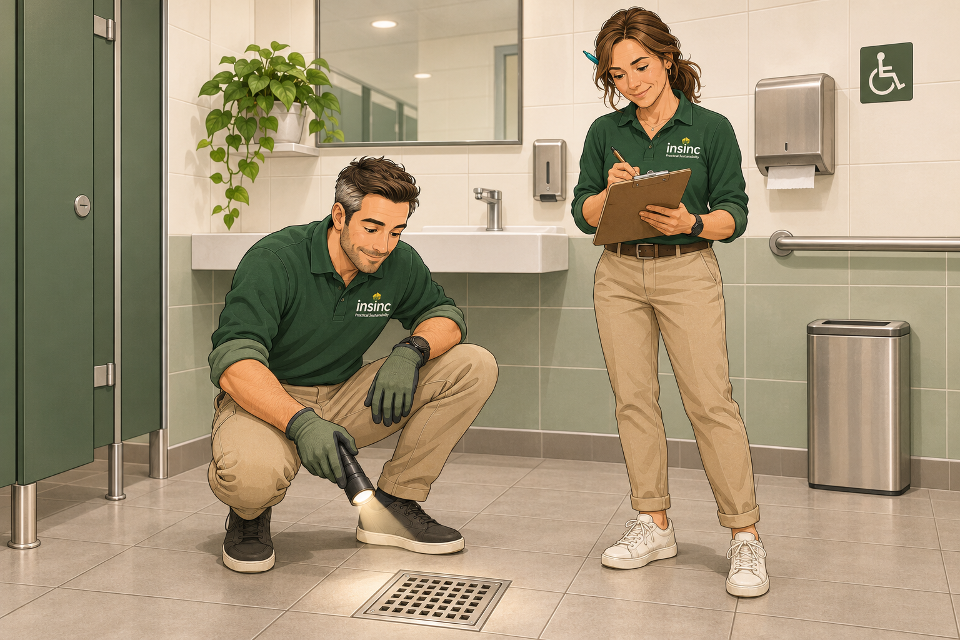
3. Know when the drain needs maintenance
A drain trap’s water seal helps stop sewer gases entering a building. Traps in infrequently used floor drains or bathrooms can dry out.
If an odour seems to come from a drain, record when it occurs and whether there is slow drainage, gurgling or visible leakage. Ask your facilities team or plumber to check the cause and appropriate maintenance.
A cleaning product cannot repair a failed seal, leak or plumbing fault. Avoid repeatedly adding chemicals to an unexplained drain problem.
4. Include bins, equipment and ventilation
Bins and sanitary units
Check accessible lids, pedals and bin interiors for spills. Review collection frequency against actual use. For serviced sanitary units, report issues to the service provider and follow the agreed handling arrangements.
Mops, cloths and brushes
Review cleaning, laundering and drying arrangements. Keep clean and used equipment separate, change dirty cleaning solution and inspect brush holders as part of the routine.
Airflow and dampness
Report a non-working extractor, persistent condensation or damp patches to your facilities team. Keep ventilation openings unobstructed and arrange inspection where needed.
5. Make the routine easy to repeat
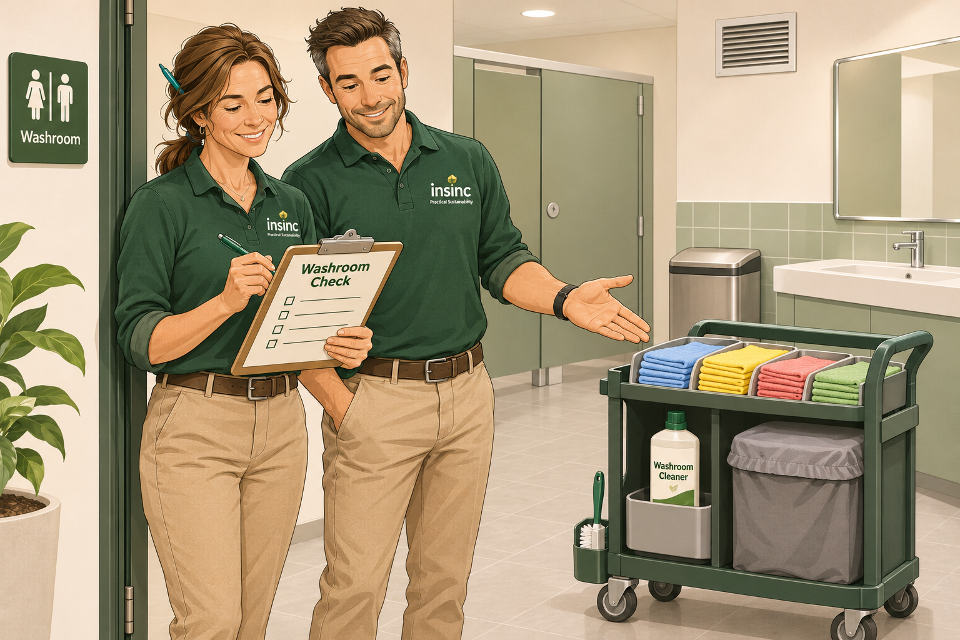
“Clean the bathroom” leaves plenty open to interpretation. A useful checklist names the surfaces, the product and method, and who reports defects.
Separate routine tasks from scheduled detail cleaning. Review the frequency after busy periods rather than assuming the same timetable works every day.
After making a change, check the room again at a comparable time. Record whether the odour returned, where it was noticed and what still needs attention.
What Alex would ask: “Would a new team member know exactly what a completed clean includes?”
Your 60-second Practical Workplace Check-up
- Locate: where is the odour most noticeable?
- Observe: when does it return?
- Review: which surfaces and equipment are included in the routine?
- Check: is the product being used according to its label?
- Escalate: are there drain symptoms, leaks or ventilation issues?
For help choosing cleaning products, tell Insinc about the surfaces, your current products and the problem you are trying to resolve. Refer suspected plumbing or ventilation faults to your facilities team.
Ask Insinc about washroom products →Frequently asked questions
Why does the toilet area smell when the bowl is clean?
Check surrounding surfaces and accessible fixture edges, as well as the bowl. If targeted cleaning does not resolve it, or moisture keeps returning, report the issue for maintenance assessment.
Will an air freshener fix the problem?
An air freshener can add fragrance, but it does not remove hidden soil or repair a plumbing fault. Investigate the source before relying on fragrance to manage a recurring smell.
Does a fresh smell prove the washroom is hygienic?
No. Fragrance is not a hygiene test. Follow the required cleaning procedure and, where disinfection is needed, use an appropriate labelled product according to its directions.
Can I use an enzyme cleaner with my other products?
Do not mix products. Check compatibility and sequencing with the manufacturer or supplier, particularly when changing between biological or enzyme-based products and disinfectants.
When should I call a plumber?
Arrange an assessment for persistent drain or sewage odours, recurring leaks, slow drainage or gurgling. If there is sewage overflow, a strong unexplained gas smell or anyone feels unwell, stop using the area and follow your site’s urgent reporting procedure.