
ALEX & ALEX — THE PRACTICALISTS
A small bag problem can make a big mess.
You lift the rubbish bag, the bottom gives way, and a quick bin change becomes another cleaning job. Or the liner slides down inside the bin before the day is halfway through.
Sound familiar? Before ordering a thicker bag, check what is actually going wrong. Size, fit, waste type and the way the bag is filled all deserve a look.
Alex & Alex’s starting point: choose a liner for the bin and the job it needs to do.
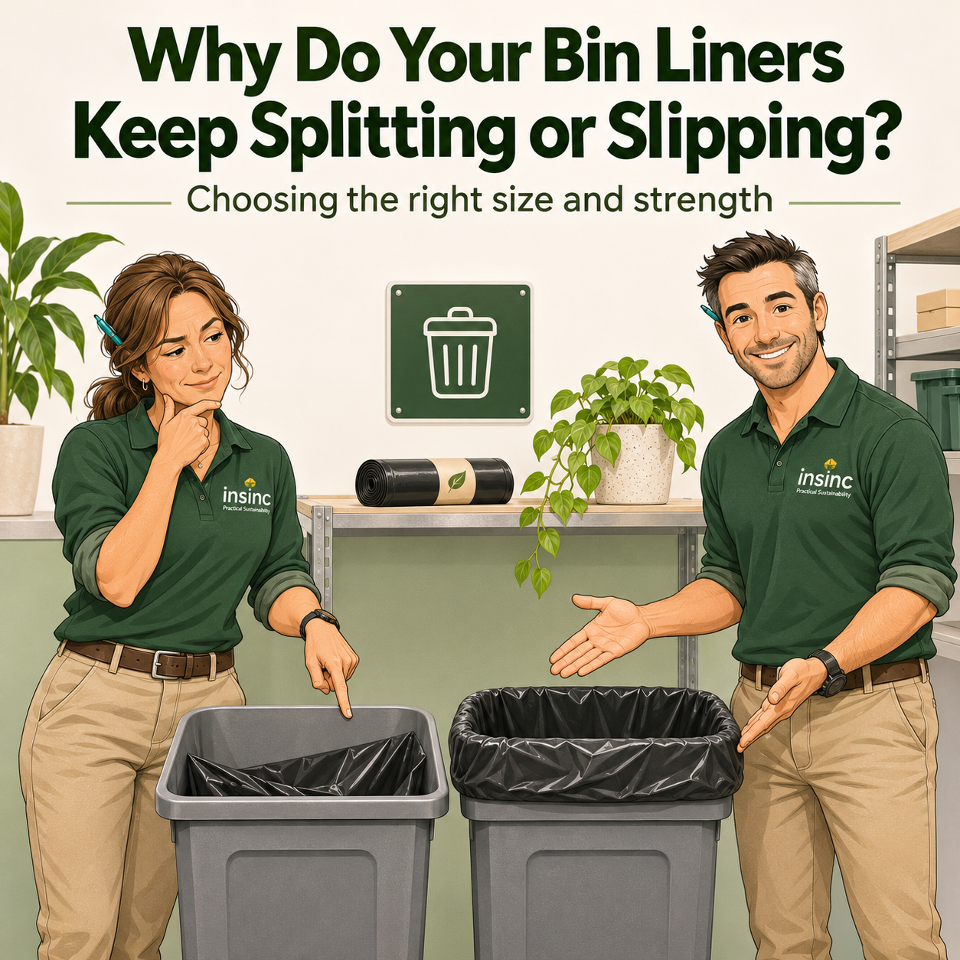
Why do bin liners split or slip?
A liner may slip because it is too short, fits poorly around the opening or is not secured by the bin’s retaining system. Splits can involve overloading, punctures, snagging or a bag that is unsuitable for the waste. Look at where and when the failure happens before changing products.
Start with the failure, then choose the fix
| What happens? | What to check first | A useful next step |
|---|---|---|
| The liner drops inside the bin | Bag length, rim fit and retaining ring | Trial a better-fitting liner and fit it securely. |
| The bag tears near the rim | An overstretched opening or rough bin edge | Check opening dimensions and inspect the bin. |
| The bag splits during removal | Waste weight, overfilling and snagging | Reduce the load and review bag suitability. |
| Small holes appear in the sides | Sharp contents or contact with rough surfaces | Separate unsuitable waste and avoid dragging bags. |
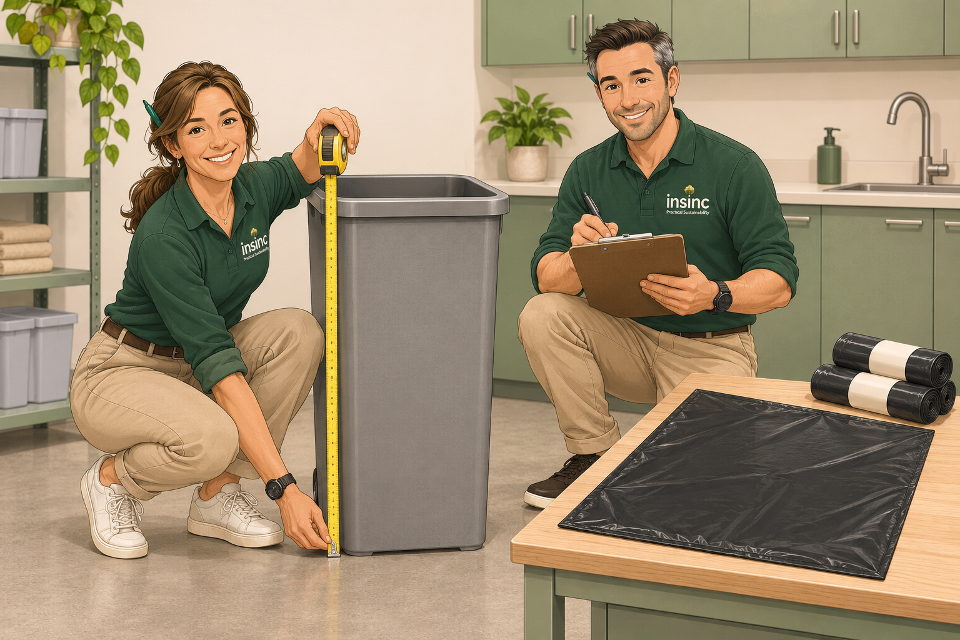
1. Check the dimensions, not just the litres
Two bins with the same capacity can have different shapes. A liner that fits a narrow bin may struggle around a wider opening.
Record the opening dimensions and bin height, then compare them with the supplier’s bag measurements. Allow for the base, the fold over the rim and room to close the bag.
A liner should reach the bottom without being stretched tight. An existing bag that fits well is a useful reference.
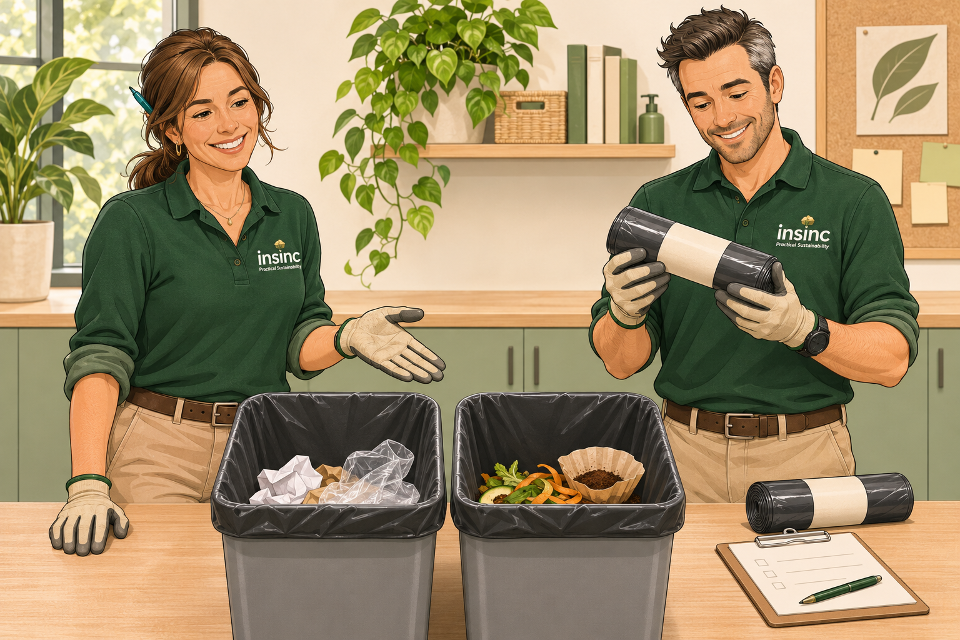
2. Match the liner to what goes inside
An office bin of soft wrappers presents a different job from a hospitality bin collecting dense, damp waste. Think about the contents and the load at collection time.
Ask your team
- Which bins have the most failures?
- What was inside the last bag that split?
- Does it fail while filling, lifting or moving?
- Would an earlier collection prevent overloading?
Micron measures film thickness, not guaranteed strength. Material formulation and seams matter too. Check the supplier’s intended application and trial the liner in your workplace.
Bin liners to compare from Insinc
Use these products as starting points for comparing dimensions and formats. Confirm fit and suitability for your waste before placing a bulk order.
Bastion 60L White Bin Liners
Listed at 635mm wide × 866mm long, with 24-micron HDPE film. Supplied as folded sheets in a carton of 500.
A useful option to compare for workplace bins where these dimensions provide the right fit.
View Bastion 60L liners →Best Purple Recycled 120L Bags
Hygiene Direct bags listed at 925mm × 1200mm and 33 micron, supplied in cartons of 200.
Made from recycled New Zealand pallet wrap. Compare this option when recycled content is part of your purchasing brief.
View recycled 120L bags →IKON 240L Heavy Duty Liners
Black wheelie bin liners measuring 1140mm × 1450mm, supplied in cartons of 100.
An option to compare for larger bins. A 240L capacity label does not mean the filled liner should be lifted by hand.
View IKON 240L liners →Check each product page for current specifications, pack quantities, pricing and availability. “Heavy duty” does not mean puncture-proof.
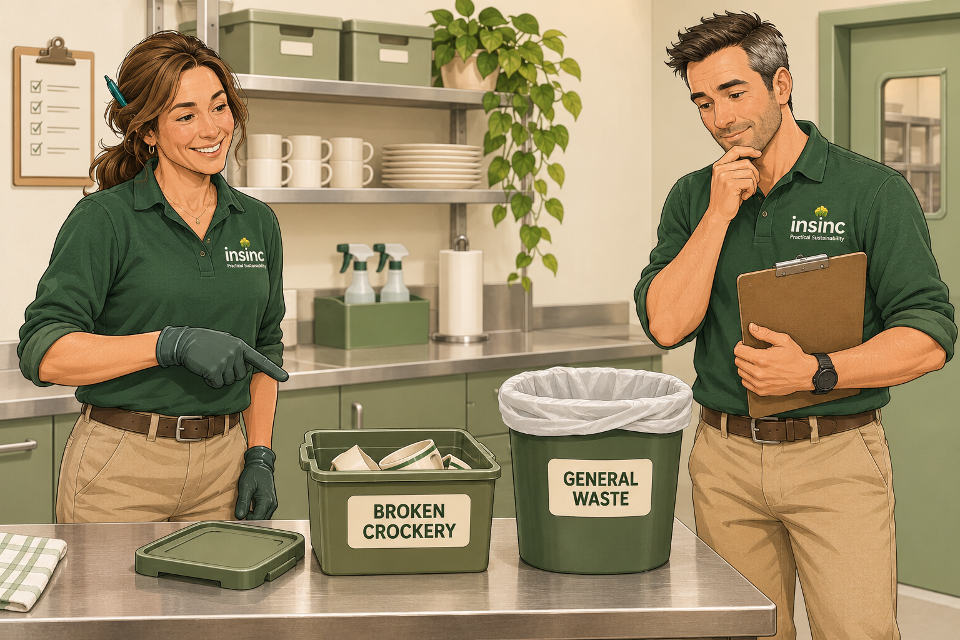
3. Deal with puncture risks separately
A thicker rubbish bag is not a substitute for a suitable sharp-waste procedure. Broken crockery, glass and other sharp items can damage liners and put the next person handling the bag at risk.
Use your workplace’s designated container and disposal procedure for these materials, and confirm collection requirements with your waste provider. Never reach into a rubbish bag to retrieve sharp objects.
Check the bin itself, too. A damaged rim or rough internal edge may catch the liner during removal.
What Alex would ask: “Are we blaming the bag for something that should not be going into it?”
4. Leave room to close the bag
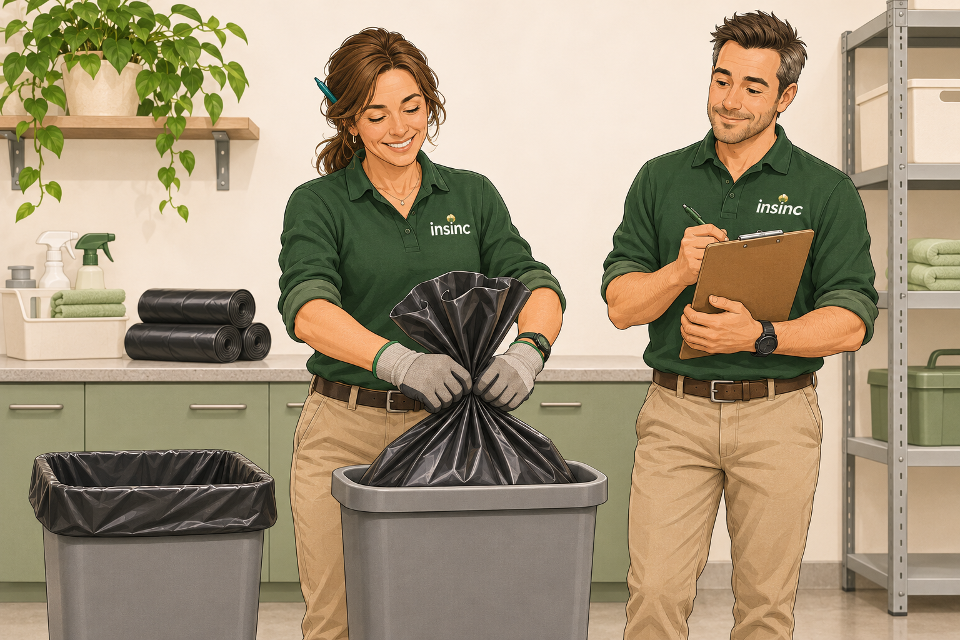
If the only way to tie a bag is to push everything down first, review the fill level or collection schedule.
- Leave enough loose material for the intended closure.
- Change bags before their weight becomes difficult to manage.
- Do not compress rubbish with your hands or feet.
- Avoid dragging filled bags across floors or rough surfaces.
- Use the appropriate trolley or handling method for the load.
Fit replacement liners consistently, including any retaining ring or securing system supplied with the bin.
Compare the cost of the whole bin change
Price per bag is useful, but it does not capture a liner that regularly needs replacing before use or creates extra cleaning after a split.
Run a short trial in the bins that cause the most trouble. Record the liner used, the type of waste, any failures and whether staff needed a second bag. Compare those results before changing the whole site.
Practical sustainability: aim for a suitable bag used well. Check recycled-content claims on the specific product. If considering compostable liners, first confirm that your collector accepts the exact liner and its contents.
Your 60-second Practical Workplace Check-up
Pick one problem bin and check:
- Fit: does the liner reach the base and fold securely over the rim?
- Contents: what usually goes into this bin?
- Failure: does the bag slip, puncture, snag or split?
- Routine: is it changed before it becomes overfilled or too heavy?
- Product: do you know the bag’s dimensions and product code?
Send Insinc your bin measurements, a photo and a description of the waste. That gives the team a useful starting point for helping you compare liners.
Ask Insinc about bin liner fit →Frequently asked questions
How do I stop a bin liner slipping?
Check that the bag reaches the base with enough material to fold over the opening. Use the bin’s retaining system if it has one. If the liner still slips, trial a different size or shape.
Should I double-bag every bin?
If routine double-bagging is needed to prevent failures, investigate the cause. A better fit, suitable liner or earlier collection may resolve the problem. Follow any specific containment requirements that apply to your workplace.
What should I record when a bag splits?
Note the product code, bin location, contents and where the damage occurred. Record whether the failure happened during filling or removal. Photos of the damage and bin can help your supplier assess the issue.
Can one liner work across the whole workplace?
Possibly, but check each bin type and waste stream first. Standardising products is useful only when the chosen liner performs well in every intended location.