MEET ALEX & ALEX · THE PRACTICALISTS
A fresh wipe for every job, or a cloth you can wash and use again? The right choice starts with the task, the surface and what happens after cleaning.
For New Zealand offices, hospitality venues and cleaning teams, choosing between microfibre cloths and disposable wipes affects more than the supplies cupboard. It shapes daily routines, staff time and ongoing costs.

Microfibre cloths or disposable wipes: the quick answer
Reusable microfibre cloths suit routine cleaning when you have a reliable system for changing, laundering and drying them. Disposable wipes can suit individual tasks where a fresh, ready-to-use product is useful or laundry facilities are limited. Neither is automatically the right choice for every job.
Also, these categories overlap: microfibre describes a material, while disposable describes how a product is used. Some wipes are reusable, some arrive dry, and some contain a cleaning or disinfecting solution. Check the actual product rather than judging by the pack.
The Practicalist Take
Start with the job. Then check whether your team can follow the complete process. A reusable cloth needs a laundry plan; a disposable wipe needs clear instructions and a suitable disposal route.
When to choose reusable microfibre cloths
Microfibre cloths use fine fibres to lift and hold dirt. They are a practical option for planned cleaning rounds where staff carry clean replacements and collect used cloths for laundering.
- Office desks and general surfaces: choose a cloth suited to the finish and the type of soil.
- Glass and mirrors: consider a purpose-made glass cloth rather than assuming every microfibre weave gives the same result.
- Separate cleaning zones: use an agreed colour system to help staff distinguish cloths for different areas.
Fold the cloth to expose a manageable cleaning face, then move to a fresh face as needed. Replace a soiled cloth instead of carrying it through the rest of the building.
Explore Insinc’s microfibre cloths and glass-cleaning cloths to compare formats for your tasks.

When disposable cleaning wipes make sense
Disposable wipes can simplify small, clearly defined jobs: a remote work site without laundry facilities, an occasional clean-up or a station where staff need a fresh wipe close at hand.
Choose the format deliberately. A dry wipe may require a separate suitable cleaner. A pre-moistened cleaning wipe contains a formulation, but that does not automatically make it a disinfectant. Hand wipes and surface wipes are not interchangeable unless their labels allow both uses.
Look at sheet size, strength, pack closure and dispensing. If staff need several small sheets for one task, the cheapest pack may not deliver the lowest cost per job.

Match the product to the cleaning job
| Job | Option to consider | Check first |
|---|---|---|
| Regular office cleaning | Reusable microfibre | Clean replacements and laundry capacity |
| Glass and mirrors | Dedicated glass cloth | Surface compatibility and finish |
| Occasional small clean-ups | Suitable disposable wipe | Absorbency, sheet size and instructions |
| A task requiring disinfection | Labelled disinfectant wipe or compatible cloth-and-disinfectant system | Required efficacy, surface suitability and contact time |
| Food-contact surfaces | Product and process specified by your food-safety plan | Food-contact suitability and rinsing instructions |
Cleaning is not the same as disinfecting
Cleaning removes dirt and contamination; disinfection uses an appropriate product to kill or inactivate specified microorganisms. Do not assume a surface is disinfected simply because it looks clean.
When disinfection is required, follow the product label for preparation, application and contact time. The surface must remain wet for the specified contact time; a quick wipe followed immediately by drying may not achieve the intended result. Use the required protective equipment and follow the instructions for any subsequent rinse.
For food-contact surfaces, check that the product is suitable and whether a rinse is required. Healthcare, food preparation and body-fluid clean-ups need their own site procedures, rather than a general-purpose cleaning shortcut.
Reusable cloths need a complete care routine
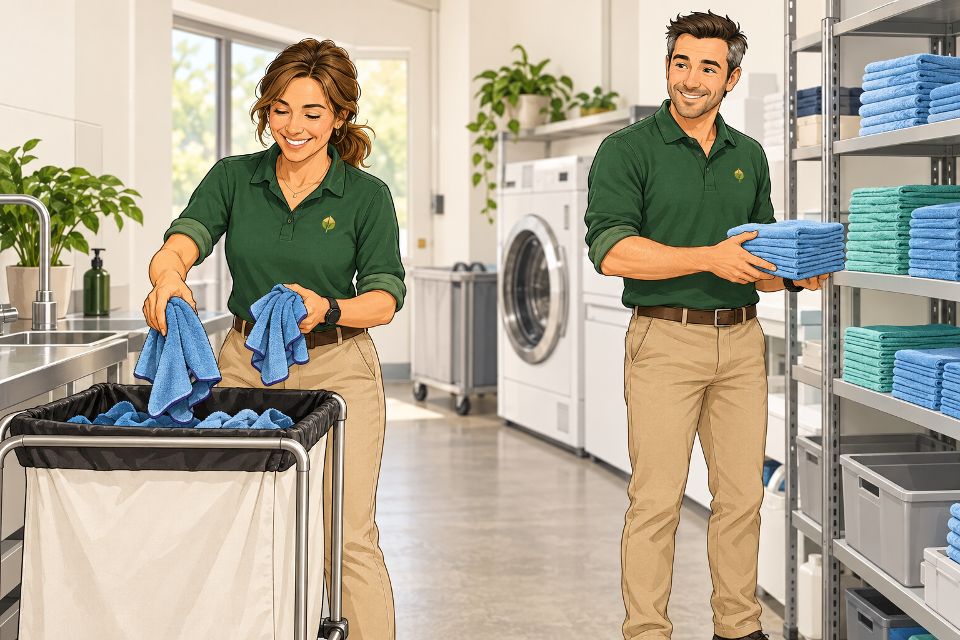
Before switching to reusable cloths, work out who collects them, who washes them and where they dry. Follow the cloth manufacturer’s instructions for detergent, temperature and drying. Avoid fabric softener unless explicitly permitted by the manufacturer.
- Keep clean stock separate from used-cloth collection.
- Change cloths between designated tasks or zones and whenever soiled.
- Use the laundering process required for the cloth and workplace.
- Dry fully before storing in a clean, protected area.
- Replace cloths that are damaged or no longer perform adequately.
Build in enough spare stock for laundry turnaround. A reusable system becomes difficult to follow when the last clean cloth disappears halfway through a shift.
Compare cost per job, not just pack price
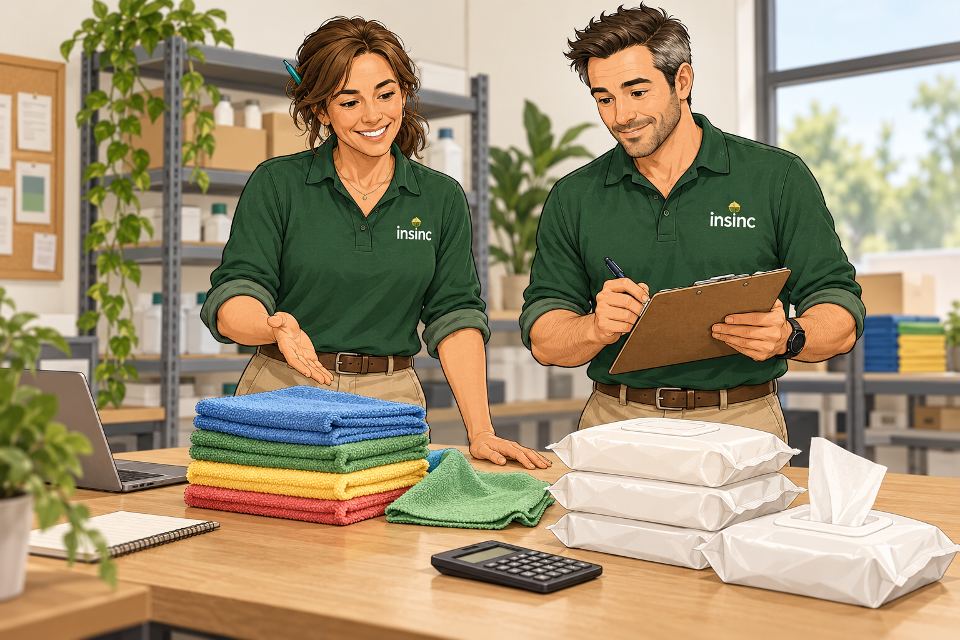
Run a small trial on the same type of job before changing your whole supply order. Record how many cloths or wipes are used, how long the task takes and whether the result needs rework.
Reusable option: include cloth replacement, laundering, detergent, water, energy, handling time and any cleaning chemicals.
Disposable option: include wipes used, dispensers, separate chemicals where required, disposal and staff time.
Cost per completed job = total relevant costs ÷ jobs completed. Use the same job definition and GST basis for both options.
For example, trial each option on comparable desks over a week. Count actual consumption instead of assuming one wipe or one cloth will always complete the job.
Practical sustainability starts with how you use it
A useful comparison includes the whole routine: how many times cloths are actually reused, laundry inputs, wipes consumed, packaging and disposal. Avoid choosing solely because a pack says “reusable” or “biodegradable”.
Ask the supplier what an environmental claim covers and which disposal conditions apply. Confirm the route with your waste provider before putting used wipes into recycling or compost collections.
Your workplace may benefit from a mixed approach: reusable cloths for scheduled cleaning and suitable disposable wipes for specific tasks.
Where Insinc can help
Compare commercial microfibre cloths, cleaning cloths and antibacterial wipes and cloths. Check individual product descriptions: a category name alone does not establish whether an item is disposable or suitable for disinfection.
When asking for help, describe the surface, task frequency, hygiene requirements and laundry facilities. Those details make it easier to narrow down a practical product choice.
Your 60-second Practical Workplace Check-up
- Are we cleaning, disinfecting or doing both?
- Is the product suitable for the surface?
- Can staff easily access a fresh cloth or wipe?
- Who manages laundering or disposal?
- Have we measured consumption per completed job?
Choose one frequently repeated task and review it this week. A clearer routine can be just as valuable as a different product.
Frequently asked questions
Are microfibre cloths better than disposable wipes?
It depends on the task and the system behind it. Consider reusable microfibre for regular cleaning with dependable laundering. Consider suitable disposable wipes where individual use and convenient access matter.
Do all disposable wipes disinfect?
No. Check for a specific disinfecting claim and follow the directions for the intended surface and task. A dry wipe or ordinary cleaning wipe is not automatically a disinfectant.
How many times can you reuse a microfibre cloth?
There is no single figure for all cloths. Follow the manufacturer’s stated durability and care instructions, and monitor condition and cleaning performance.
Does a dispenser box mean the cloths are disposable?
No. Packaging describes how a product is dispensed, not necessarily its lifespan. Read the product instructions to confirm whether it is single-use or washable.
Which option is cheaper for a workplace?
Compare the total cost of completing the same task. Include laundering for reusable cloths, consumption and disposal for wipes, and staff time for both.
Related reading: How do microfibre cloths work?
Further guidance: CDC cleaning and disinfection principles and Rubbermaid HYGEN laundry guidance. Always follow the instructions for the actual products and workplace procedures you use.