Why Does Your Takeaway Food Arrive Soggy? A Guide to Choosing Better Food Packaging
Alex & Alex | The Practicalists
Crispy when packed. Soggy when opened. What happened?
The problem may not be your cooking. Alex & Alex explore the packaging choices that help NZ takeaway businesses protect food texture, presentation and the customer experience.
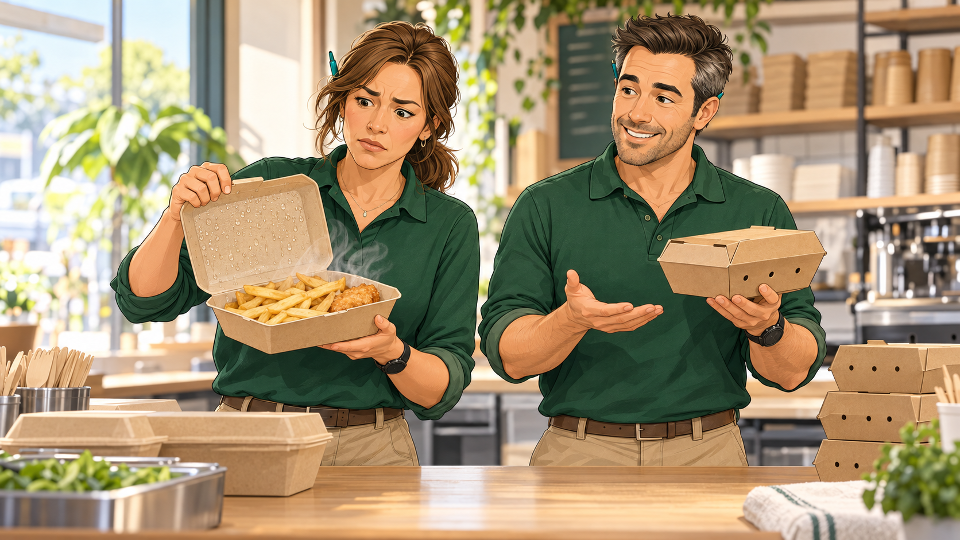
Freshly fried chips leave your kitchen golden and crisp. Ten minutes later, a customer opens the box and finds soft chips, a damp burger bun or a soggy coating on their fried chicken. The food may still taste good, but it no longer feels like the meal you intended to serve.
Why does takeaway food arrive soggy? Hot food releases moisture as steam. If that steam is trapped inside a container, it can condense into droplets and soften crisp surfaces. Sauces, wet ingredients, unsuitable lids, long holding times and the wrong packaging material can make the problem worse. Choosing packaging for the actual meal is often more useful than simply choosing the thickest or most expensive box.
The quick answer
Match ventilation, moisture resistance and food separation to what you are packing. Vented packaging can help steam escape from chips and other crispy foods. Leak-resistant, securely lidded containers are more useful for curries and saucy meals. Keep wet toppings or sauces away from crisp items where practical, and always follow safe food handling and transport requirements.
Why takeaway packaging affects the food inside
A takeaway container has several jobs. It needs to hold the correct portion, protect the food from contamination, resist grease or liquid where needed, survive handling and help maintain food quality until the customer can eat it. Those jobs are not identical for every menu item.
A sealed container that works beautifully for a saucy rice dish may trap too much moisture around chips. A highly ventilated chip box may not be secure enough for soup. And a container that fits the food but leaves no room around it may cause a crisp coating to rub against wet toppings.
For New Zealand food businesses, the practical question is not simply, "Which packaging is sustainable?" It is, "Which packaging suits this food, journey and disposal pathway?"
7 common reasons takeaway food becomes soggy
1. Steam gets trapped under the lid
Hot food gives off water vapour. Inside a mostly closed container, that vapour can collect on cooler surfaces, including the lid. When it turns back into droplets, moisture can fall onto chips, crumbed food or bread. The longer the food sits in a steamy space, the more opportunity there is for the crisp surface to soften.
What to do: For foods that depend on crunch, compare packaging designed with suitable ventilation. Keep in mind that extra ventilation may also allow heat to escape more quickly, so check the complete delivery process rather than assuming more holes are always better.
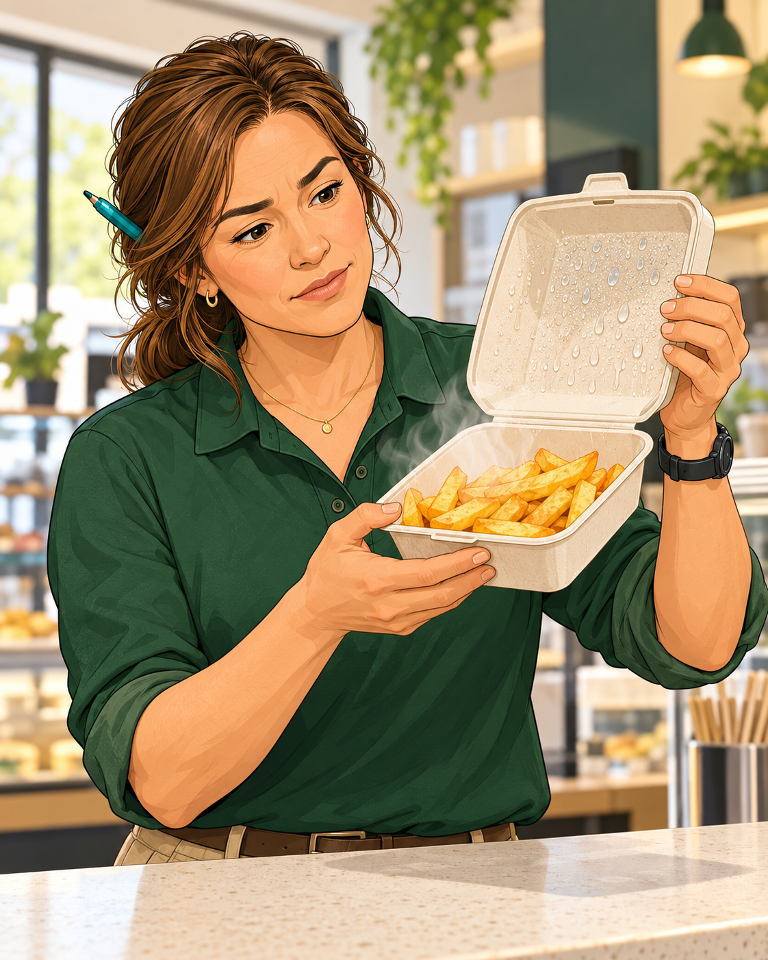
Female Alex notices
"Those droplets have to go somewhere."
Condensation under a lid is a useful clue. If customers frequently report soft chips, inspect a sample order after the usual packing and delivery time. Is the inside of the lid wet? Is steam escaping? What happens to the chips at the bottom of the box?
Practical tip: Test the packaging with your actual menu items, not only with an empty container on the counter.
2. The box has the wrong ventilation for the meal
Some takeaway containers are designed to hold liquids securely. Others are designed to help release steam. Neither approach is universally better. Using an airtight-style container for freshly fried chips may trap moisture, while using an overly open pack for a saucy meal can create leaks and heat-loss problems.
What to do: Choose an appropriate box for the food's temperature, texture and moisture content. For chips, look at packaging designed specifically for hot fried foods rather than assuming any lidded carton will perform the same way.
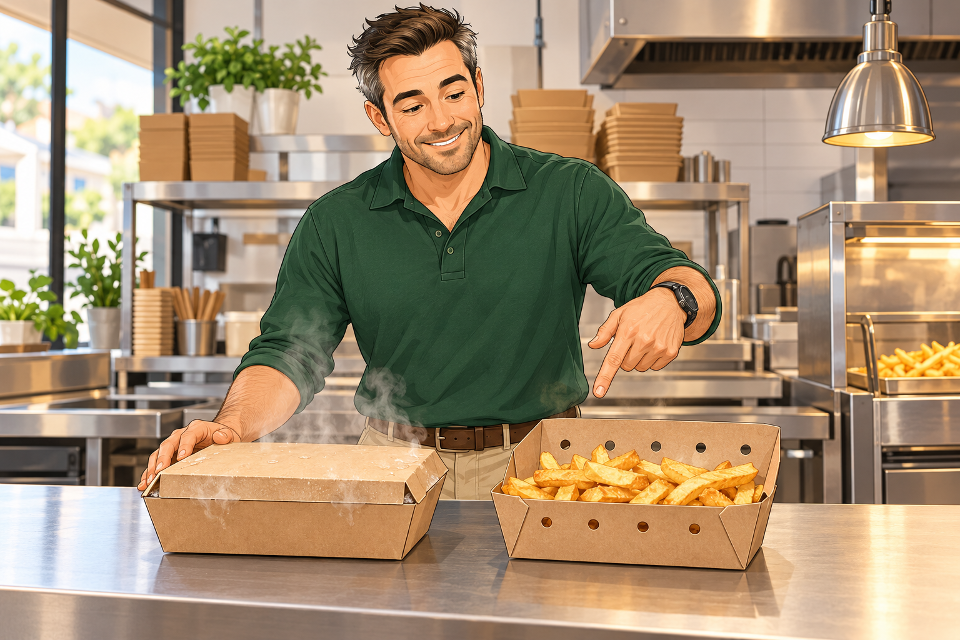
Male Alex compares a closed box with a ventilated option for hot chips.
Real Insinc example: The BioPak BioBoard Enclosed Chip Box has a self-closing design and ventilation holes intended to reduce sogginess during takeaway service. Check dimensions and suitability for your portions before ordering.
3. Sauces and wet ingredients are touching crispy food
A generous portion of gravy, dressing or burger sauce can be wonderful when the customer is ready to eat. But if it sits against crumbed chicken, chips or a toasted bun during the journey, the crisp surface absorbs moisture. Tomatoes, pickles and dressed salads can have the same effect.
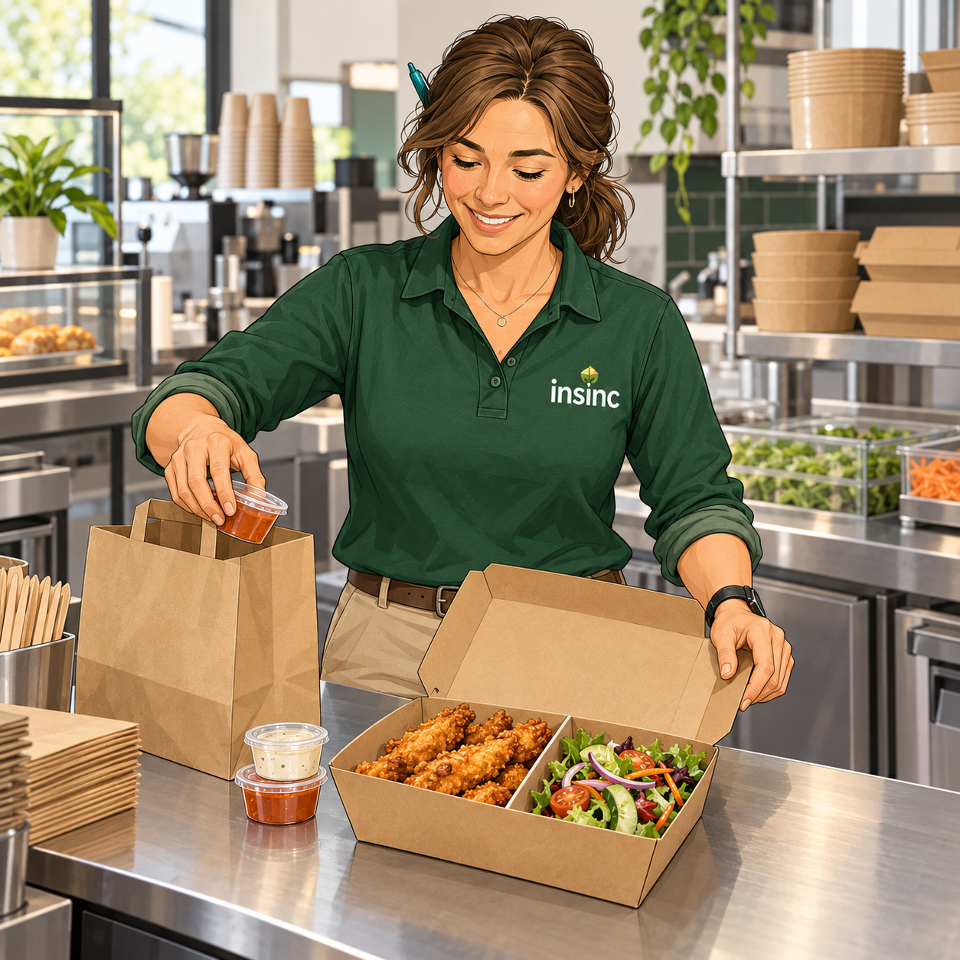
What to do: Where practical, pack sauces in a suitable, securely lidded portion cup. Consider separate compartments for ingredients with different textures. Make sure the sauce cup is compatible with its lid and unlikely to open or spill in transit.
Female Alex's packing rule
Keep the crunch away from the sauce
If crispy chicken and salad travel together, a compartment container may help keep them apart. A separately sealed sauce portion lets customers add dressing when they are ready.
Explore compartment food containers and sugarcane portion cups at Insinc.
4. Hot and cold foods are packed together
Putting a chilled salad beside piping hot fried food can affect both parts of the meal. The salad may warm up and release moisture, while the hot item may cool or soften. This is also a food-safety consideration, not just a texture issue.
What to do: Pack hot and cold items separately where the menu and service model allow. Use appropriate transport equipment and follow your food control plan. Food Standards Australia New Zealand advises keeping hot and cold food at safe temperatures during delivery. A crisp result should never come at the expense of safe handling.
5. The container is too small or overfilled
When food is pressed tightly against a lid, there is little room for steam to move or for delicate coatings to stay intact. Tall burgers can be compressed, chips may become crowded, and toppings can rub against one another. An oversized box can also allow the meal to slide around and lose presentation.
What to do: Match the actual portion dimensions to the container's usable internal space. Consider the height of burgers, volume of chips and extra room needed for sauces or separators. Close a fully packed sample box and check whether it crushes or shifts the food.
6. Food spends too long waiting before collection
Even suitable packaging has limits. Food may wait on a counter for a delivery driver, sit inside a carry bag, then spend more time travelling before being opened. During that journey, heat and moisture conditions continue changing.
What to do: Review preparation-to-collection timing, order hand-off and delivery distance. Test your packaging over a realistic journey. Use appropriate temperature-control procedures for potentially hazardous foods; never leave food sitting longer simply to let steam escape.
7. The packaging material or lining doesn't suit the food
Paperboard, moulded fibre, lined cartons and other materials handle grease, moisture and heat differently. An unlined box that works for relatively dry chips may not hold oily sauces or wet noodles reliably. A moisture-resistant container might handle saucy food well but still need a different design for crispy items.
What to do: Check the product's food-contact suitability, temperature limits, lining, grease resistance and intended use. Never assume a container is oven-safe, microwave-safe, compostable or suitable for hot liquids without verifying its specifications.
Which takeaway packaging works best for different foods?
Use the menu, not just the material, as your starting point. This table shows what to prioritise when comparing packaging options for NZ takeaway service.
| Food type | Main challenge | Packaging features to consider |
|---|---|---|
| Chips and crispy snacks | Steam softening the exterior | Suitable ventilation, shape that protects food, secure carry design |
| Burgers and toasted sandwiches | Moisture in buns, compression | Correct height and fit, controlled moisture, separation of especially wet additions |
| Curries, soups and saucy noodles | Leaks and spills | Liquid-resistant, food-safe container with a compatible secure lid |
| Salads and cold meals | Wilting and temperature control | Cold-food suitability, separate dressing, correct chilled handling |
| Mixed meals and combo boxes | Moisture transferring between foods | Compartments or separate packs for contrasting textures and temperatures |
Packaging features are general selection criteria, not guarantees. Confirm the product's specifications and test it with your actual menu and delivery conditions.
The Practicalist Take: test the whole takeaway journey
Female Alex asks: "What does the customer find when they open the container?"
Male Alex asks: "Can we deliver that result consistently, without overpaying for packaging that doesn't suit the job?"
Try a simple comparison before buying cartons of a new container:
- Pack the actual meal in your current container and a promising alternative.
- Use the real portion and packing method, including the sauce, napkin, carry bag and any inserts.
- Simulate a normal collection and delivery window while following food-safety and temperature controls.
- Open both packs and inspect condensation, texture, leaks, food movement and container strength.
- Record the result and cost per order. Choose the option that meets the food's needs reliably, rather than judging only the carton price.
This approach reflects Insinc's Practical Sustainability™ thinking: choose what works in the real world and avoid waste caused by unsuitable packaging, remakes and unnecessary extras.
Where Insinc can help
Insinc supplies takeaway packaging for different NZ food-service jobs. Start with your menu and compare products that suit the food's temperature, moisture, portion size and transport requirements.
- BioPak Enclosed Chip Box: designed with ventilation holes and a self-closing lid for hot chips.
- Compartment Takeaway Containers: compare options for keeping different meal components separated.
- Sauce and Portion Cups: pack dressings and dips separately with their matching lids.
- Food Packaging Range: explore broader takeaway containers, trays, bags and food-service supplies.
Sustainability check: Recyclable and compostable do not mean the same thing. Check each product's material, certification, food contamination and whether the customer's local collection or composting service accepts it.
The 60-second Practical Takeaway Packing Check-up
Before the order leaves the counter, ask:
- Does this container suit the food's temperature and moisture level?
- Does a crispy item need packaging that allows some steam to escape?
- Are wet sauces and dressings separated where helpful?
- Does the box fit the portion without crushing it or allowing excessive movement?
- Are all lids secure and are hot and cold foods handled safely?
- Will the meal still present well after the usual customer collection or delivery time?
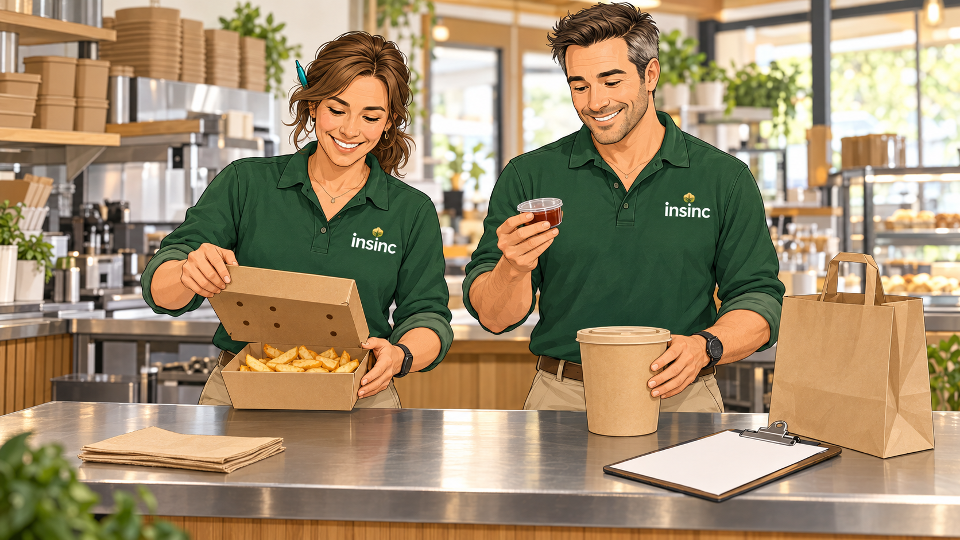
A quick packing check can help protect the result your kitchen worked hard to create.
Frequently asked questions about soggy takeaway food
Why do takeaway chips go soggy in a box?
Hot chips release steam. When moisture is trapped, it can condense on the lid and soften the crisp surface. Suitable ventilated chip packaging can help release steam, although holding time and delivery conditions still matter.
Is ventilated packaging always better than a sealed container?
No. Ventilation may help crispy foods, but soups and saucy meals need secure, leak-resistant packaging. Excessive ventilation can also affect heat retention. Match the container to the food and safe transport requirements.
What is the best takeaway packaging for fried chicken?
Look for a food-safe container that protects the coating, suits hot food and manages steam appropriately. Keep sauces separate where practical, avoid compressing the pieces and test the chosen box over your typical delivery window.
How can I stop burger buns becoming soggy during delivery?
Reduce direct contact between the bun and very wet toppings or sauces where possible, and choose a box with enough space to protect the burger. Test how the packaging handles heat and moisture without crushing the meal.
Should sauces be packed separately?
For crispy foods, separate sauces often help preserve texture. Use a suitable food-safe cup with a matching secure lid, and consider whether the extra packaging is necessary for the specific meal.
Does paper or cardboard packaging automatically keep food crisp?
No. Material alone does not determine performance. Ventilation, lining, food moisture, temperature, shape and delivery time all contribute. Some paperboard boxes are designed for chips, while other paper containers are intended for different foods.
Is compostable takeaway packaging always the more sustainable choice?
Not automatically. Check the product's certification, performance, whether it reduces avoidable food waste, and whether a suitable local composting option exists. A well-matched container with an appropriate end-of-life pathway is more meaningful than an unsupported environmental claim.
How do I test takeaway packaging before ordering in bulk?
Prepare your normal portion, pack it exactly as you would for a customer, and assess it after a realistic journey while following food-safety controls. Compare texture, condensation, leaks, appearance, handling and cost per order.
More practical food packaging guides
- From Plastic to Plant-Based: Switching to Compostable Deli Packaging — explore the practical changeover.
- Home or Commercially Compostable Takeaway Packaging? — understand the difference.
- Choosing the Right Pizza Box — consider material strength and food presentation.
Better packaging. Better takeaway experience.
From ventilated chip boxes to compartment containers and sauce cups, explore food packaging that fits what your NZ business actually serves.
Explore Insinc Food Packaging