
ALEX & ALEX · THE PRACTICALISTS
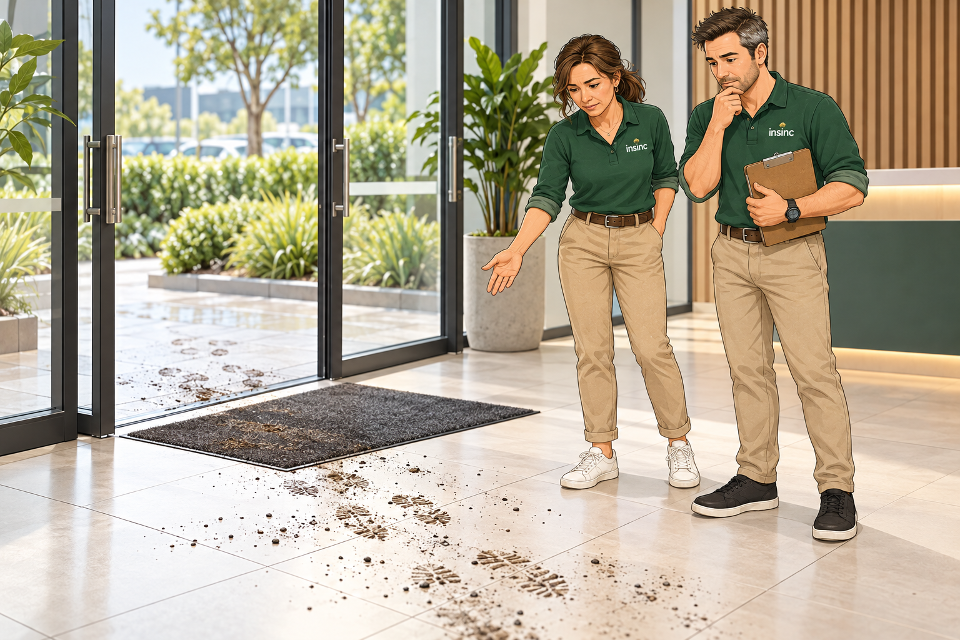
You have just cleaned the entrance. A few arrivals later, the footprints are back. Before changing your floor cleaner or adding another mop to the cupboard, take a closer look at the mat by the door. Is it catching the dirt coming in, or are people simply stepping over it?
Quick answer: why does the dirt keep coming back?
Entrance floors can stay dirty when the mat is too small, positioned outside the walking route, unsuitable for the dirt or moisture arriving, or overdue for cleaning. Start by checking what is being tracked in. Then match the mat's surface, size, backing and location to your entrance. A mat that is full of grit or saturated with water also needs attention, even if it was the right choice originally.
Why your entrance deserves a closer look
A busy doorway connects the outdoors to everything you are trying to keep clean inside. Rainwater, garden soil, loose grit and dust can arrive on footwear throughout the day. In a shop, office, school or accommodation reception, those arrivals quickly add up.
Repeated mopping treats the visible mess. Reviewing your entrance matting helps you address where some of that mess starts. The aim is to intercept dirt and moisture before people carry them farther into the building.
The Practicalist take: A mat should earn its place at the door. Choose it for the job, then keep it in a condition where it can do that job.
1. Identify what people are bringing inside
Look at the entrance before cleaning it. The pattern of dirt is useful information:
- Grit and small stones: Consider a scraping surface at the entry point, suitable for its location.
- Wet footprints: Check whether you have an absorbent mat inside and whether it is already saturated.
- Dirt beside the mat: Watch whether people naturally walk around it.
- Dirt well beyond the mat: Check its length, condition and cleaning frequency.
Also look outside. A muddy approach, leaves collecting at the doorway or water pooling near the entrance can keep feeding the problem. Matting works best alongside routine care of the approach and prompt attention to leaks or drainage issues.
2. Match the mat surface to the task
Scraper mats: tackle loose dirt at the entrance
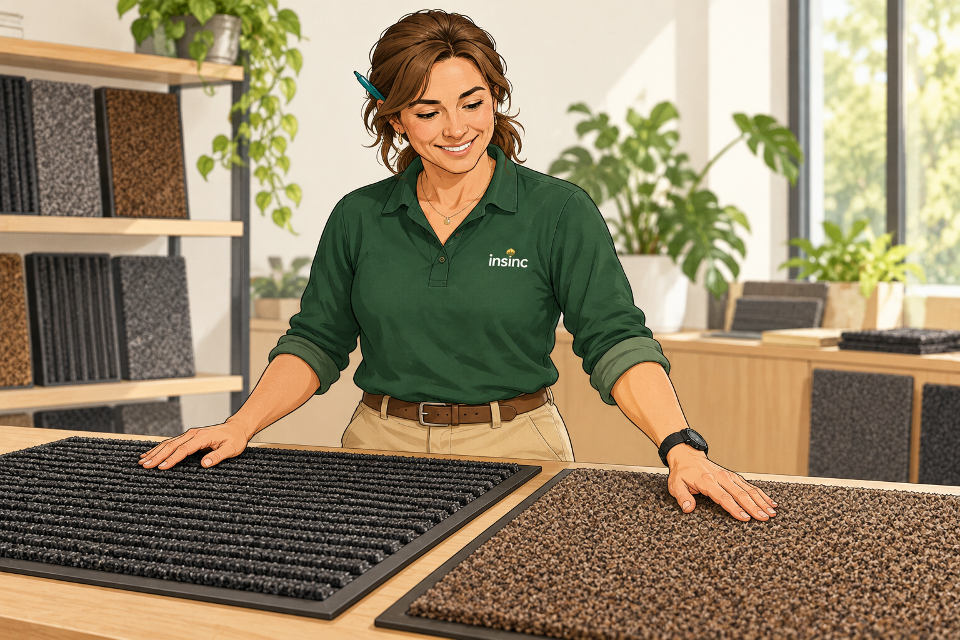
A textured scraper mat helps remove debris from footwear. Check whether the specific mat is designed for an exposed outdoor entrance, a sheltered area or indoor use. Outdoor suitability should come from the product specifications, not simply from how tough the mat looks.
Absorbent pile mats: manage moisture carried indoors
Textile pile entrance mats can help collect moisture and finer dirt. They are useful to consider for reception areas and lobbies, particularly where wet footprints are the recurring complaint. Check the product's approved location, backing and care instructions.
Combination surfaces: check the balance
Some entrance mats combine a scraping texture with fibres that hold dirt and moisture. They may suit an entrance where space is limited, provided the specific product fits the conditions and floor surface.
What Alex would ask: “Are we mainly dealing with grit, wet shoes, or both?” Answering that first makes the product shortlist much more useful.
3. Put the mats where people actually walk
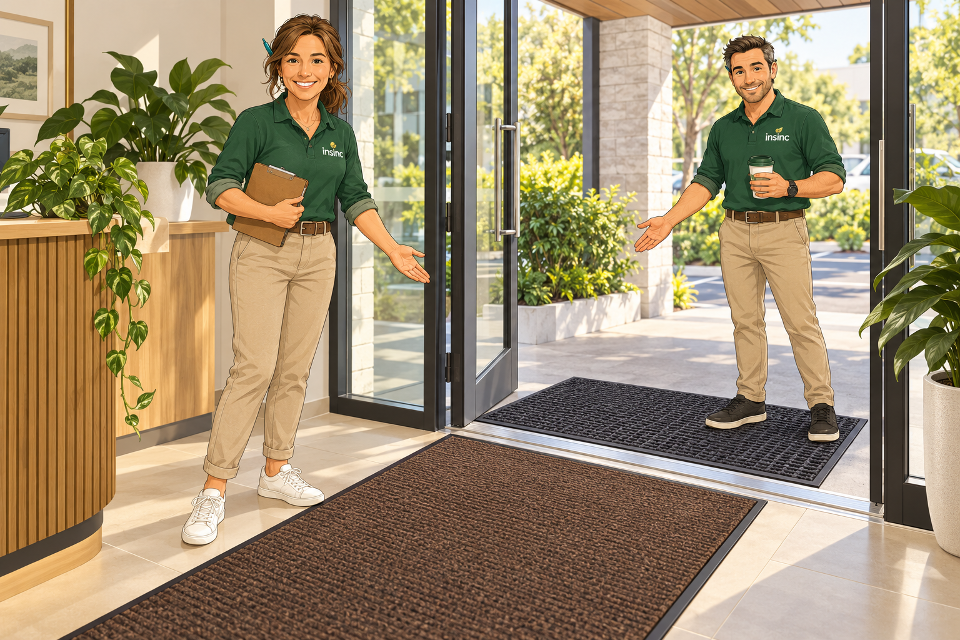
Where the layout allows, a suitable outdoor scraper followed by an indoor absorbent mat can address different parts of the problem. The first targets debris; the second helps manage what remains on footwear.
Observe the normal route from the door to the reception desk, counter or corridor. Place matting on that route without obstructing the doorway. A mat placed neatly to one side may look tidy but do little if everyone misses it.
Keep mats flat and separate rather than overlapping their edges. Check door movement, wheeled access and any changes in floor level. Matting should not introduce a new obstruction or trip point.
4. Measure the space before choosing a size
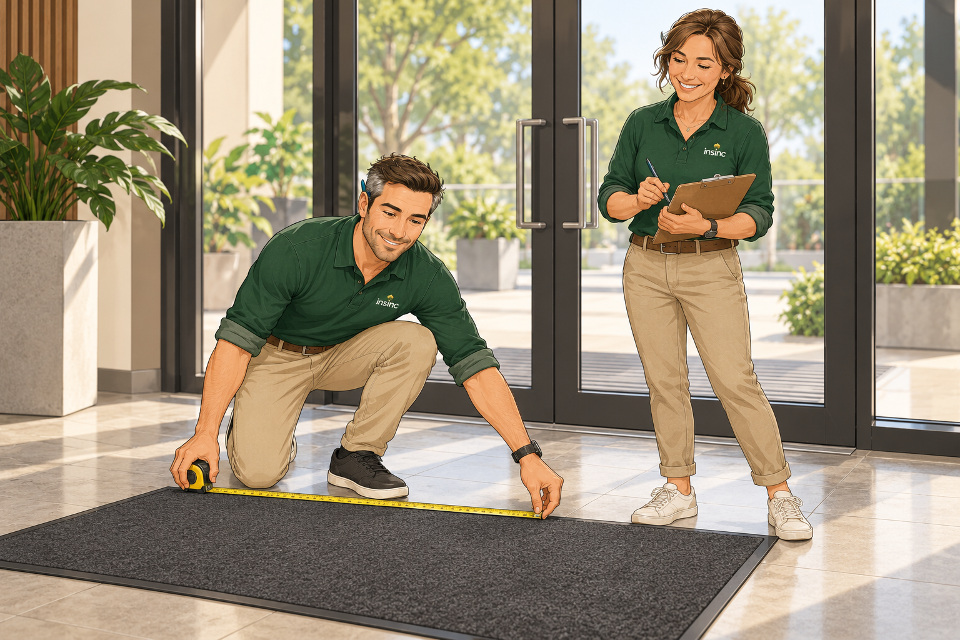
A mat can fit the doorway and still be too short for the way people move through it. Measure the usable space and consider how much contact footwear will make with the mat during normal walking.
- Width: Does the mat cover the main walking route?
- Length: Will people walk along it, or step straight over it?
- Clearance: Can the door open freely without catching the mat?
- Floor compatibility: Is the backing suitable for the floor finish?
- Daily use: Will wheelchairs, pushchairs or delivery trolleys pass over it?
Do not choose a larger mat if it blocks circulation or creates an awkward edge. For a tight recess or close door clearance, confirm actual dimensions and thickness before ordering; nominal sizes can have manufacturing tolerances.
Check the floor underneath, too
A suitable backing matters as much as the surface people walk on. Insinc's Master Scraper and Prestige Plus listings specifically advise against use on vinyl, PVC and decorative flooring because of a possible reaction between the backing and the floor. For these surfaces, check with the flooring manufacturer and Insinc before choosing a mat. Do not assume another rubber-backed mat is automatically suitable.
5. Make mat care part of the cleaning routine
A mat that catches dirt needs somewhere for that dirt to go next. Include it in the cleaning schedule rather than only cleaning the visible floor around it.
- Inspect the entrance daily, with additional checks during wet weather or busy periods.
- Remove dry soil using a method suitable for the mat, such as vacuuming compatible textile pile.
- Clean beneath the mat and check for trapped grit or moisture.
- Follow the manufacturer's instructions for washing, hosing and drying. Care methods differ between products.
- Deal promptly with saturated mats and wet surrounding floors. Keep a suitable dry replacement available where needed.
- Check edges, backing and surface wear. Replace mats that remain curled, move excessively or no longer perform properly.
A useful workplace check: After changing the mat or its placement, note where footprints appear and how often the entrance needs attention. Compare similar weather and traffic conditions before deciding whether the change helped.
Where Insinc can help: three options to compare
Start with your entrance conditions, then compare specifications. These are examples from Insinc's range, rather than a one-size-fits-all recommendation.
Master Scraper Mat — 900 × 600mm, Charcoal
An outdoor scraper option with a raised surface and recycled crumb-rubber backing. The listing describes it as hose-cleanable. Check the size against your entry route and observe the flooring restrictions above.
View the Master Scraper Mat →Century Pile Mat — 1200 × 850mm, Brown
A nylon-pile entrance mat with nitrile-rubber backing and absorbent properties. Listed for indoor or covered outdoor areas, including entrances and receptions. Confirm floor compatibility and follow the specified laundering instructions.
View the Century Pile Mat →Prestige Plus Mat — 1500 × 900mm, Charcoal
A ridged polypropylene entrance mat designed to collect dirt and moisture. Listed for indoor or covered outdoor use. Its natural-rubber backing makes the vinyl, PVC and decorative-flooring restriction especially relevant when comparing options.
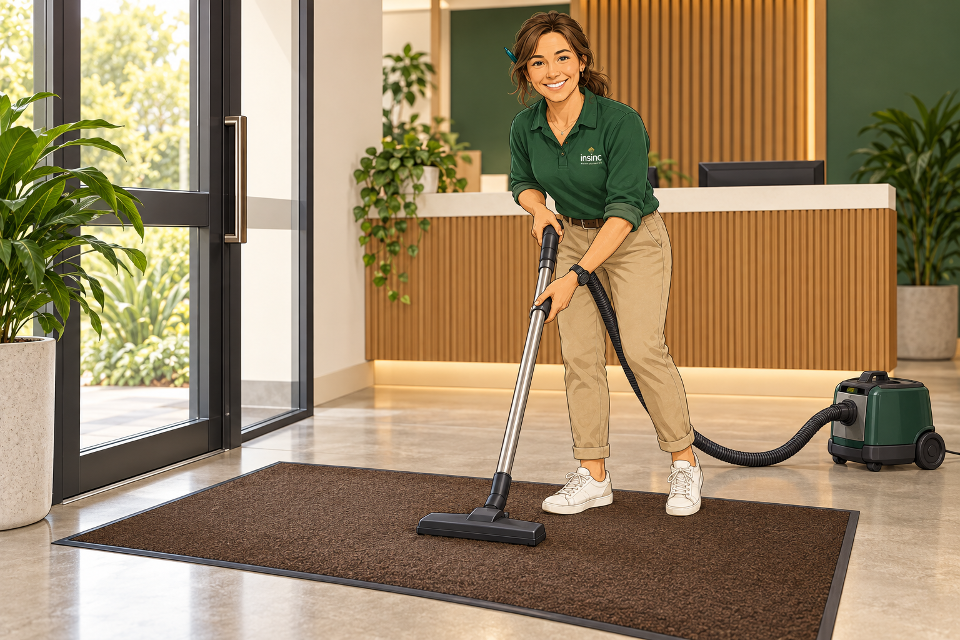
View the Prestige Plus Mat →Explore the wider Insinc floor mat range if your entrance needs a different format. Illustrations in this guide show general matting principles; use the linked product pages for actual product appearance and specifications.
Why choose Insinc?
Insinc brings commercial matting and everyday cleaning supplies together so you can consider the entrance as a whole. Send the team your measurements, floor type and a photo of the doorway to ask which options suit your space.
For Alex & Alex, Practical Sustainability™ starts with choosing something that fits the job and caring for it properly. A durable mat that works in your entrance is a more useful purchase than repeatedly replacing an unsuitable one.
Your 60-second Practical Workplace Check-up
Stand at your entrance and ask:
- What is getting past the mat: grit, water or both?
- Do people walk across it naturally?
- Is it clean, dry enough to work and lying flat?
- Have we checked the backing against our floor type?
- Do we know the usable width, length and door clearance?
Need a hand narrowing the options? Call 0508 467 462 or email sales@insinc.co.nz.
Explore entrance mat optionsFrequently asked questions
Why is the floor still wet when we already have an entrance mat?
The mat may be saturated, too short, outside the walking route or designed primarily for scraping dirt. Check its condition and absorbency, then look for other water sources such as umbrellas, leaks or pooling outside.
Do we need a mat outside and inside?
Two stages can be useful when you need to manage both loose debris and moisture, provided there is enough space. Choose each mat for its location and keep doorways clear. A smaller entrance may need a different arrangement.
What size entrance mat should a business buy?
There is no single size for every business. Measure the walking route, available length and door clearance, and consider traffic and wheeled access. Choose a size people will actually walk across without introducing an obstruction.
Can rubber-backed mats go on vinyl floors?
Do not assume they can. Compatibility depends on the backing and floor finish. The Master Scraper and Prestige Plus products linked above advise against vinyl, PVC and decorative flooring. Check both mat and flooring guidance before purchasing.
How often should commercial entrance mats be cleaned?
Set the schedule around traffic, weather and visible soil. Daily inspection is a useful starting point, with more attention during busy or wet periods. Follow the individual product's instructions for deeper cleaning and drying.
Will a larger mat solve the problem?
Extra coverage may help if the existing mat is being stepped over, but size alone is not enough. Surface type, placement, backing compatibility and maintenance all matter. Check those before buying.