
Why Are Your Floors Still Sticky After Mopping? A Practical Guide for NZ Cleaning Teams
Alex & Alex | The Practicalists
Mopped the floor, but it still feels sticky?
The answer may be in your cleaner, your mop water or the floor itself. Alex & Alex explain how NZ cleaning teams can find the cause before doing the whole job again.
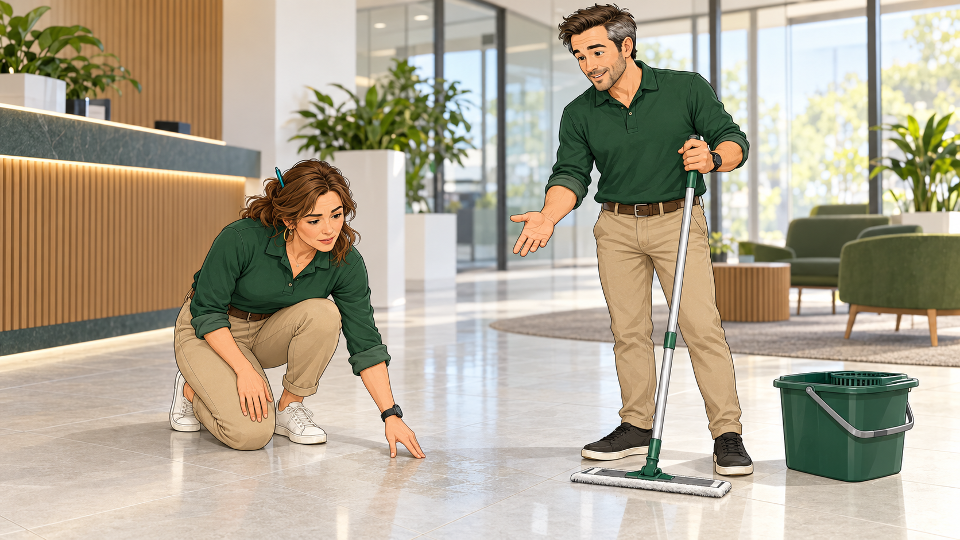
You've finished mopping the reception area, school corridor or office kitchen. The floor looks better at first, but once it dries, shoes make that familiar tacky sound. Some patches feel sticky underfoot, while others show dull marks or collect dirt again within hours.
Why are floors sticky after mopping? Common causes include too much detergent, incorrect dilution, dirty mop water, residue from old cleaning products, a cleaner that does not suit the floor, or soil that was loosened but not removed. The fix depends on which problem is actually happening.
The quick answer
Start by checking the cleaning solution and your method. Measure the chemical according to its label, use a clean mop or pad, replace dirty water promptly, and follow the floor manufacturer's care instructions. If a residue has built up, test an approved corrective clean on a small area rather than simply adding more product.
Why sticky floors matter in a workplace
A tacky floor isn't only frustrating. Dirt can stick to residue, the finish may look inconsistent, and cleaners may spend more time going over the same space. More importantly, any unexpected change in floor grip deserves attention. Wet or slippery floors are a known workplace hazard; WorkSafe New Zealand identifies floor surfaces made slippery by cleaning as a risk.
Don't assume a sticky feeling means the floor is safe. Keep people off the affected area when needed, manage the risk using your site's procedure, and only return it to use once it is suitably dry and safe.
7 reasons your floor may still be sticky after mopping
1. You're using more floor cleaner than the job needs
It is tempting to add an extra splash of detergent when a floor looks particularly dirty. But a stronger mix is not automatically a better one. If the solution is too concentrated, detergent can remain on the surface after the water evaporates. That residue may feel tacky or attract new dirt.
Try this: Check the product label for the specified dilution and cleaning method. Use a measuring cup, dosing system or correctly calibrated dispenser. Avoid estimating by the colour of the water or the amount of foam.
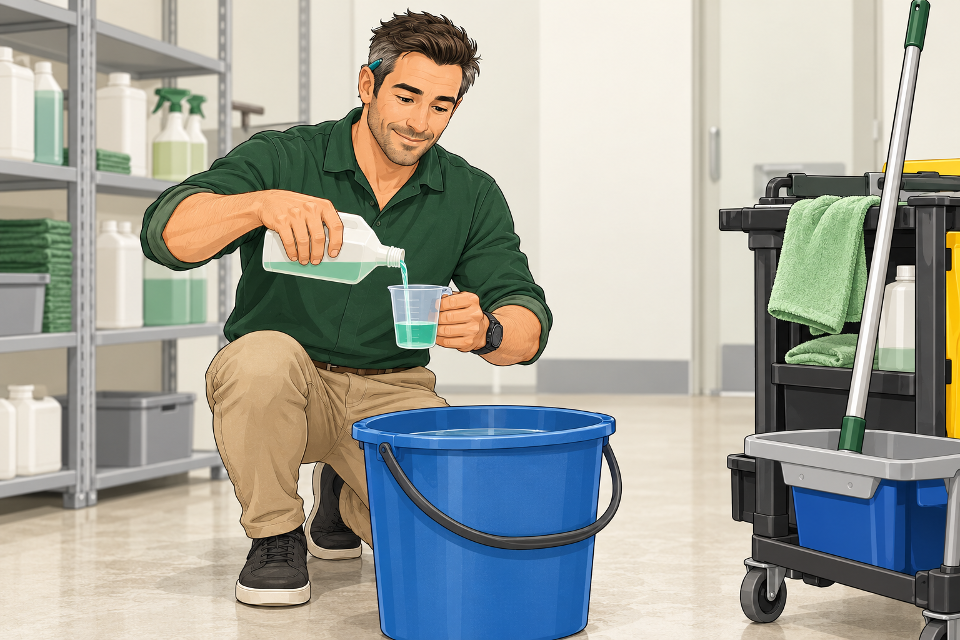
Male Alex's rule: measure first, mop second. Follow the directions for the product in use.
Helpful Insinc resource: Keep the Chemical Dilution Rate Chart handy for checking mixing quantities. Always confirm that the ratio convention and directions match the actual product label before preparing a solution.
2. The cleaner isn't suitable for the floor or the type of soil
One product may work well on sealed tiles but be unsuitable for an oiled timber floor, a specialist coating or a particular flooring warranty. Some products are designed for routine maintenance; others target heavy grease, strip finishes or leave a protective dressing. Choosing the wrong job for the product can cause poor cleaning results or damage.
Try this: Identify the flooring material and finish, then check both the floor manufacturer's care instructions and the cleaner's technical information. For routine maintenance of suitable water-safe floors, a compatible neutral-pH cleaner may be useful. For kitchen grease, investigate the soil and the approved cleaning process instead of automatically using a stronger general detergent.
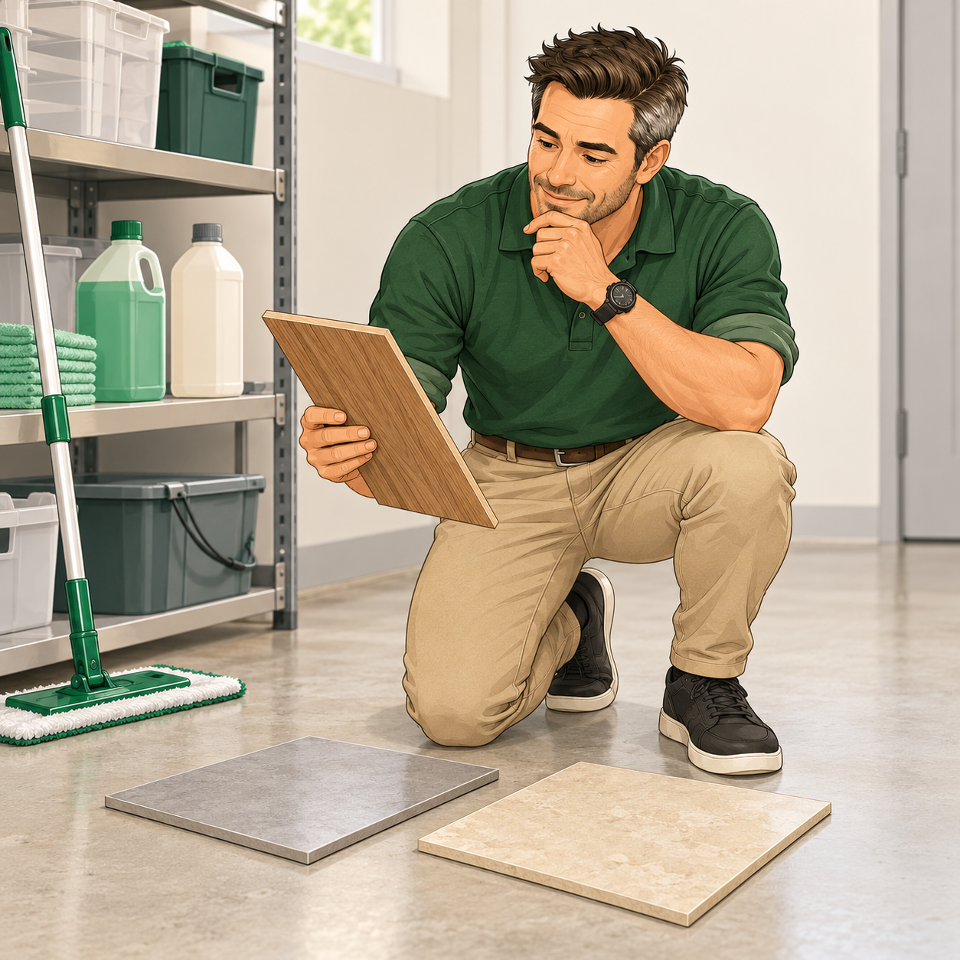
What Male Alex checks
Start with the floor finish
Is it ceramic tile, sealed vinyl, laminate, timber or a coated surface? Is the finish still intact? Does the cleaner require rinsing, or is it explicitly a no-rinse product? These details matter more than finding the strongest bottle on the shelf.
3. You're redistributing dirt with dirty mop water
If the bucket is visibly cloudy, the mop is loaded with soil or the pad was used on another cleaning zone, the floor may be getting a thin layer of dirty solution instead of a clean finish. A dirty pad also struggles to collect what it has loosened.
Try this: Remove loose debris before wet mopping, change solution whenever it becomes soiled, and replace or launder pads according to their care instructions. A two-bucket or clean-solution/dirty-water separation system may be useful for larger or dirtier areas. Keep bathroom and food-area tools separated in line with your workplace's colour-coding system.
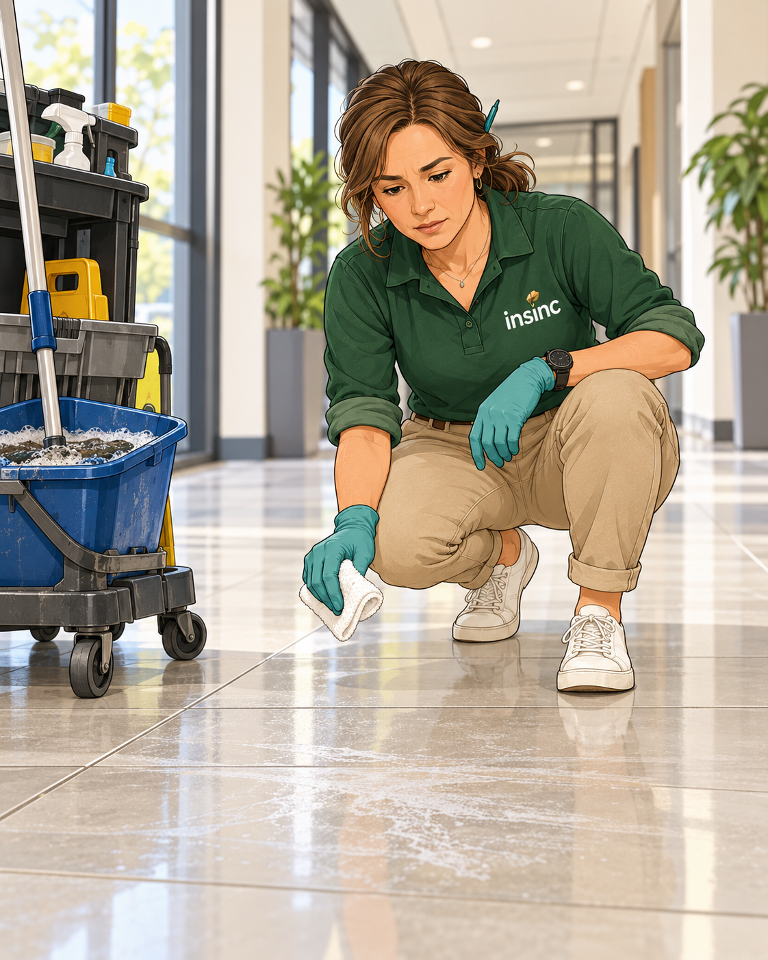
Female Alex's practical question
"Are we lifting the dirt or moving it around?"
Before blaming the cleaner, inspect the mop head and bucket. If the cleaning water is already carrying lots of dirt, changing the chemical won't solve the problem.
A small improvement: Use fresh solution and a clean pad for the final section, then compare the result after it has dried.
4. Previous products have left a build-up
Residue can accumulate when a floor is repeatedly treated with incompatible cleaners, poorly rinsed solutions or maintenance products intended to leave a film. On coated floors, the issue could involve the finish itself rather than ordinary dirt.
Try this: Review what has been used on the surface over recent weeks. Look for a pattern: is the tackiness widespread, or limited to areas treated with a particular product? Test the floor manufacturer's approved corrective procedure on a small, inconspicuous patch. Do not use a floor stripper or abrasive pad on a coated or sensitive floor unless it has been specifically approved.
5. The soil has been loosened but not picked up
Heavy foot traffic, drink spills, tracked-in grime and old cleaning residue can need more than a quick pass. If the mop simply wets the dirt and leaves it behind, the floor may dry with a sticky patch still in place.
Try this: Remove spills promptly, pre-treat stubborn spots using the correct product and contact time, agitate only with a pad or tool approved for the surface, then remove the soiled solution. A clean-water rinse is appropriate only where the product and floor care directions call for it.
6. Too much water or poor drying is affecting the result
Leaving standing solution behind can lengthen drying time and increase the opportunity for dirt to be tracked across the floor. Water-sensitive flooring, such as some timber and laminate systems, may also be damaged by excess moisture.
Try this: Wring out the mop adequately, use a damp method when appropriate, control access to wet areas and improve ventilation where practical. Follow the floor manufacturer's guidance on moisture and drying. Never soak timber or laminate to try to remove stickiness.
7. New contamination is getting onto the floor
If only the area near a coffee station, entrance or loading bay becomes sticky, the source may not be the mopping process. Sugary spills, adhesive residue, tracked-in oils or rubber transfer can keep returning after routine cleaning.
Try this: Note precisely where and when the problem comes back. Check nearby work activities, entrance matting, footwear traffic and spills. Target the source and use a suitable spot-cleaning process instead of increasing the chemical dose across the whole floor.
How to fix a sticky floor without making it worse
Use this short troubleshooting sequence before scheduling a complete re-clean:
Follow your workplace's wet-floor and slip-risk procedure while checking the surface.
Check whether tackiness is everywhere, near a spill, or only in one cleaning zone.
Read the label, confirm the dilution and check if the product suits the floor finish.
Use an approved method and clean equipment. Do not water-test a moisture-sensitive floor.
Collect dirty solution; rinse only if directions require it; allow suitable drying time.
Check the patch and record which adjustment worked before changing the whole process.
Choosing a cleaning method for different floors
| Floor surface | What to check | Practical approach |
|---|---|---|
| Sealed tile | Grout soil, spills, cleaner residue | Use a compatible cleaner, sufficient agitation and clean solution; remove dirty water |
| Vinyl or resilient flooring | Finish/coating, approved chemical, pad type | Use the flooring supplier's recommended maintenance method and avoid unnecessary product build-up |
| Laminate or timber | Water sensitivity, seal condition, warranty | Use only an approved lightly damp process; avoid soaking and harsh cleaners |
| Polished or coated floor | Finish type and previous maintenance products | Use a cleaner compatible with the finish; seek specialist advice before stripping |
Always check the manufacturer and workplace requirements first. Product suitability depends on the actual floor construction and finish, not just its appearance.
The Practicalist Take: good results start with the right fit
Female Alex: "First, find out where the stickiness is coming from. Is it the floor, the solution or a spill that keeps returning?"
Male Alex: "Then match the product and dilution to the job. A cheaper or stronger-looking solution doesn't help if it leaves more work behind."
Practical Sustainability™ isn't about using as little cleaning product as possible regardless of performance. It's about using an effective product correctly, looking after reusable tools, and avoiding needless repeat cleans and waste.
Where Insinc can help
Insinc supplies practical floor-care options for NZ workplaces. The right choice depends on the flooring, the soil, the maintenance programme and the cleaning equipment you already use.
- Floor cleaning products: compare routine and specialist floor-cleaning solutions.
- Instaclean Neutral Floor Cleaner: a neutral maintenance option; check the specified damp- and wet-mopping dilutions.
- Green Earth Neutral Floor Cleaner: another floor-cleaning option with instructions for different cleaning intensities.
- Flat mops and microfibre pads: check wet-use compatibility, pad size and replacement options.
Note: A neutral-pH label does not override the flooring manufacturer's instructions, and no-rinse claims apply only when the specific product is used as directed.
The 60-second Practical Workplace Check-up
Before the next floor-cleaning round, ask these five questions:
- Do we know the floor material and its cleaning requirements?
- Are we measuring the correct solution strength for this product?
- Is our mop or pad suitable, clean and in good condition?
- Are we removing dirty solution and following the right rinse/dry method?
- Have we checked the floor after it dries rather than judging it only while wet?

A final check helps you spot recurring problems before the next cleaning round.
Frequently asked questions about sticky floors
Why is my floor sticky even though I just mopped it?
The most common possibilities are excess cleaner, leftover residue, dirty mop water or soil that has not been fully removed. Identify the floor type and check the product directions before trying a corrective clean.
Does using more detergent make the floor cleaner?
Not necessarily. Using more than the recommended dose can leave residue or create extra rinsing work. Follow the manufacturer's dilution and method for the level and type of soiling.
Should you rinse the floor after mopping?
It depends on the product and flooring. Some cleaners require a rinse, while correctly diluted no-rinse formulas are designed to remain without one. Follow both sets of instructions, especially for water-sensitive surfaces.
Can dirty mop heads make floors sticky?
They can contribute. A saturated or poorly maintained mop may spread contaminated solution and cleaning-product residue instead of removing it. Clean or replace the mop head and use fresh solution.
Is a pH-neutral cleaner always safe for timber or laminate?
No. pH is only one factor. Excess moisture, solvents, the type of finish and the flooring manufacturer's instructions all matter. Use only products and methods approved for the particular floor.
How do I remove built-up floor cleaner residue?
First identify the product and surface. Test the floor manufacturer's approved cleaning procedure in a discreet area, using clean equipment and a compatible solution. Avoid household chemical mixtures, aggressive stripping and excessive water.
What if only the café or kitchen floor stays sticky?
Check for grease, sugary spills and soil being tracked back onto the floor. A targeted cleaning process may be required. For that specific situation, see Insinc's guide to greasy café floors after mopping.
Keep learning with Alex & Alex
- Chemical Dilution Rate Chart — take the guesswork out of mixing concentrates.
- How to Clean a Floor — choose cleaning methods for different surfaces.
- How to Choose the Right Mop for Your Business — understand which mop system fits the job.
Better floors start with a better cleaning fit
If your team keeps remopping the same sticky patches, Insinc can help you review practical floor-cleaning products and mop options for your workplace.
Explore Insinc Floor Cleaning Products