
Why Are Café Floors Still Greasy After Mopping? A Cleaning Guide for NZ Operators
The chairs are up, the coffee machine is clean and the floor has been mopped. By the next morning, the kitchen still feels greasy underfoot. Near the counter, shoes leave marks across a sticky patch that seemed clean the night before.
When café floors stay greasy after mopping, check the cleaning process before adding more chemical. The cleaner may not suit the soil, the dose may be wrong, or the mop may be spreading dirty solution instead of removing it. Sometimes the floor is being contaminated again after cleaning.
For a busy NZ café, finding the cause saves repeated work and helps manage a slippery surface. Start with where the problem appears and when it returns.
Is it grease or cleaning residue?
A floor that feels sticky is not necessarily covered in cooking oil. Milk, sweetened drinks and leftover detergent can also leave an unpleasant film. Appearance alone will not reliably identify it.
Look for a pattern:
Around cooking equipment, investigate food fats, splashes and deposits beneath nearby fixtures.
Behind the coffee machine, check milk spills, syrups and the route to the dishwashing area.
Across most of the freshly mopped floor, review dilution, rinsing requirements and the condition of the mop.
Along a narrow walking route, check whether footwear is carrying contamination from another area.
Ask the opening team what they notice before service begins. Then compare it with the floor after the breakfast rush. A problem present before opening calls for a different investigation from one that appears as soon as cooking starts.
Five reasons mopping leaves café floors greasy
1. The cleaner does not suit the task
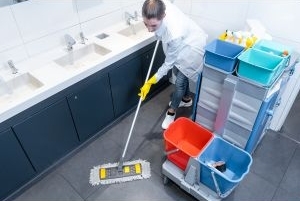
A product used successfully in the dining area may not be suitable for accumulated kitchen grease. Check what the label says it removes and which flooring materials it can be used on.
Insinc’s commercial floor cleaning range includes options for routine maintenance and heavier cleaning. Choose according to the floor and contamination rather than assuming one product should cover every room.
A disinfectant claim does not establish grease-removal performance. If the café’s procedure includes disinfection, check the cleaning preparation required by that product’s instructions.
2. Staff are guessing the dilution
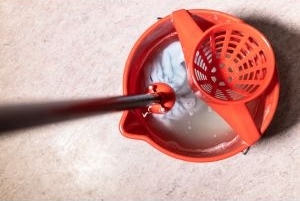
An extra splash of concentrate can leave more product to remove. Too little may also fail to clean effectively at the intended application rate.
Make the correct dose easy to repeat. Keep a marked measure with the product and write the approved quantity for the actual bucket size into the cleaning procedure. Confirm what any ratio on the label means rather than guessing.
Our guide to diluting concentrated cleaning products accurately explains why measurement matters. If the bucket or product changes, review the instructions at the same time.
3. The cleaning solution is being spread around
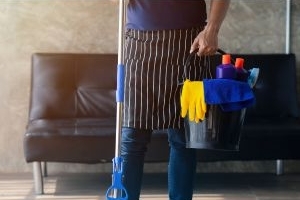
Watch what happens after the first few metres. Does the mop pick up the dirty liquid, or leave a wet trail that dries back onto the floor?
Start with clean equipment and replace dirty solution as needed. A single bucket carried from a greasy kitchen into the dining area deserves a closer look. Separate equipment or a method that keeps clean solution apart from recovered soil may suit the site better.
4. The cleaner is removed too quickly
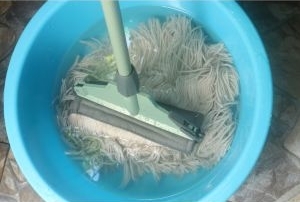
A rushed pass may not give the product enough working time. Follow the label’s directions for application, agitation and removal, including any requirement to keep the solution wet during use.
The UK Health and Safety Executive’s floor-cleaning guidance highlights allowing detergent time to work on greasy floors. There is no single waiting time suitable for every cleaner, so build the actual product instructions into the closing routine.
5. The equipment cannot reach the soil
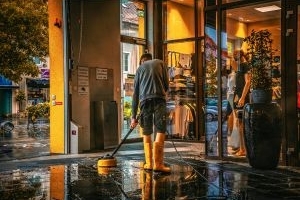
A mop that works on smooth dining-room flooring may struggle with contamination in textured kitchen flooring or around grout lines. Repeatedly passing over the top can leave those areas untouched.
Check the flooring manufacturer’s recommended brush or pad before scrubbing. More abrasive is not automatically better. Inspect worn mop heads and brushes, and replace equipment that can no longer perform the task.
How to clean a greasy café floor properly
Prepare the area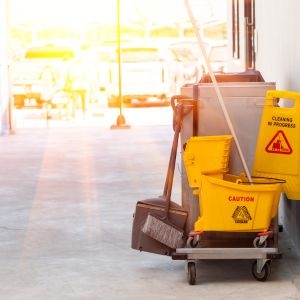
Plan the main clean when the space can be kept out of use. Remove loose items and move only equipment that staff are authorised to move safely. Protect exposed food and food-contact items from cleaning splashes.
Use barriers and signs where appropriate, and maintain a safe route for anyone still working. Do not make the floor the last rushed task when everyone is waiting to lock up.
Remove loose debris first
Collect crumbs, coffee grounds and other loose material before wet cleaning. Pick up substantial spills using a suitable method rather than dragging them through the room with the mop.
Pay attention to floor edges and accessible spaces beneath benches. Those areas are easy to miss when the routine consists only of a quick pass along the centre aisle.
Prepare and apply the correct solution
Use the specified dilution and water temperature. Check the label and safety data sheet for handling precautions and protective equipment. Never mix cleaning chemicals.
Work in manageable sections. Apply enough solution for the labelled method without flooding the room. The floor finish, joints and nearby equipment all need to be considered when deciding how much water is appropriate.
Agitate and remove the loosened dirt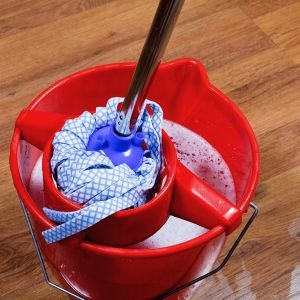
Use the recommended mop, brush or machine to work the solution across the surface. Give particular attention to identified problem areas while following the required working time.
Then remove the dirty liquid. Depending on the approved cleaning method, this could involve a clean mop, suitable wet recovery equipment or a scrubber-dryer. A loosened layer of grease still needs to leave the floor.
Rinse where required and let the floor dry
Follow the cleaner’s rinsing instructions. A rinse-required product needs that step; a no-rinse product still needs correct dosing and application. Do not assume the instructions for one apply to another.
Keep people away until the area is clean and dry, then inspect the result. Warning signs alone do not make a contaminated floor safe. WorkSafe NZ’s workplace guidance advises prompt spill removal, drying and signage as part of managing floor hazards.
Check what happens after the mop is put away
If the floor is cleaned and then staff empty greasy bins, carry dirty trays through the kitchen or move used mats back into position, the closing sequence may be undoing the work.
Walk through the final half-hour of service with the team. Identify which tasks still involve liquids or food waste and arrange the floor clean accordingly. Keep a method available for dealing with later spills.
Look for recurring sources too: a leak, overflowing container or deposit that returns in the same place each day. The HSE’s catering guidance identifies equipment maintenance and effective extraction among ways to limit floor contamination. Cleaning will not repair the source.
Give each café area its own routine
Write instructions around the work happening in each area. Behind the coffee counter, staff need a practical response to frequent small spills. The cooking area needs attention to grease and accessible floor edges. The dining room needs a method suited to its flooring and customer traffic.
Avoid a checklist that only says “mop floor”. Record the product, dose, equipment, sequence, responsible person and what to do when the result is unsatisfactory. Include cleaning and drying the equipment afterwards.
During training, ask someone to demonstrate the process. It is an effective way to spot unclear instructions, missing measures or a bucket that nobody knows how far to fill. Review the routine when the menu, layout, floor finish or cleaning product changes.
For a broader introduction, see our guide to cleaning different floor types.
When the floor needs a closer assessment
Persistent slipperiness after a correctly completed clean should not be dismissed as normal. Damaged finishes, worn surfaces or an unsuitable cleaning method may need assessment by the flooring supplier or a competent cleaning professional.
Keep a short record of where the problem occurs, the products used and the steps already tried. Photos of the affected area and the flooring details will make that conversation more useful. Avoid experimenting with stronger chemicals or aggressive pads while the cause remains unclear.
Why Choose Insinc Products?
A workable café cleaning routine needs supplies that staff can select, measure and use consistently. Insinc offers floor cleaning products, cleaning brushes and buckets, so you can review the equipment alongside the chemical.
Start with the floor material and the job you need to do. Check each product’s instructions, then choose a suitable option for routine cleaning or heavier soil removal. Keep that information in the café’s procedure so the next person on closing shift follows the same method.
Frequently Asked Questions
Why is my café floor sticky after mopping?
Possible causes include detergent residue, drink spills, dirty cleaning equipment or soil that has not been removed. Check where the stickiness occurs and review the dilution and removal steps before increasing the chemical dose.
Can I use washing-up liquid on a café floor?
Only use a product if its instructions and the flooring guidance support that application. A hand dishwashing liquid is not automatically suitable for floors or cleaning machines. Choose a product intended for the task.
Does every greasy floor need a heavy-duty degreaser?
No. First identify the contamination and confirm the floor material. A stronger cleaner may be unsuitable for the finish, and it will not solve problems caused by dirty equipment or incorrect use.
How often should café floors be cleaned?
Remove spills promptly and set the routine around use, contamination and the café’s cleaning plan. Busy preparation areas may need attention during service as well as at closing. Review the frequency if contamination remains between cleans.
Should café floors be rinsed after mopping?
Follow the product label and flooring instructions. Rinsing requirements vary. If rinsing is required, remove the rinse water appropriately and keep the area out of use until clean and dry.
Can an enzyme cleaner remove kitchen grease?
Some enzyme-based products are formulated for greasy soils, but suitability depends on the exact product and surface. Check its intended use, dilution and application method. The word “enzyme” alone does not establish that it suits your café floor.
https://www.insinc.co.nz/category/cleaning-products-supplies.html