Alex & Alex · The Practicalists
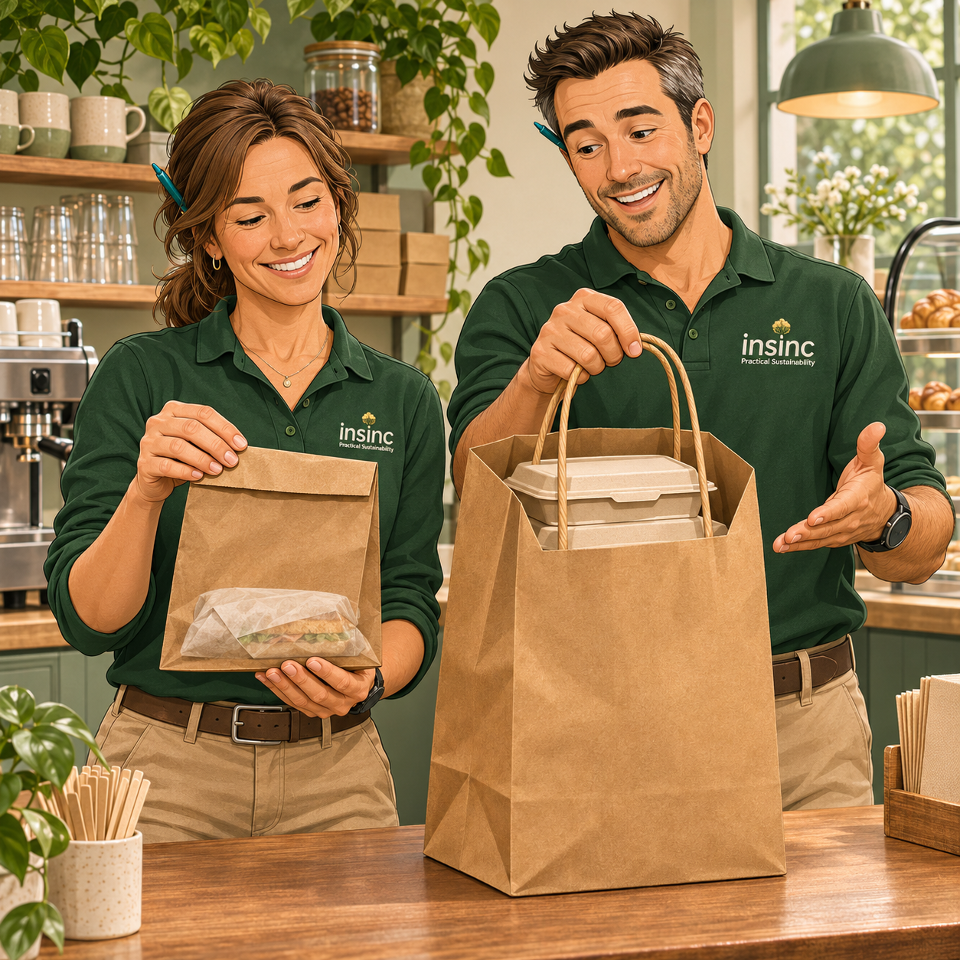
A sandwich and a family order need different bags
A bag can look perfectly suitable at the packing counter and become awkward as soon as the customer picks it up. The container tilts, the handles pull tight, or a damp corner starts to soften.
Choosing between paper bags with handles and flat takeaway bags starts with the order inside: its weight, shape, moisture and journey.
Here is how Alex & Alex would help a New Zealand café, bakery or takeaway business choose a practical fit.
Quick answer: which bag should you choose?
Flat, handleless paper bags are worth considering for lightweight, relatively flat items such as wrapped sandwiches and small bakery purchases. Handled paper carry bags are useful when customers need to carry several packaged items together.
Neither format guarantees strength, grease resistance or leak protection. Check the specific bag’s dimensions, intended use and load guidance, then trial it with your actual order.
A useful distinction: a “flat handle bag” has handles made from flat paper. It is different from the flat, handleless takeaway bags discussed here.
Match the bag to the order
| Your order | A format to consider | Check before choosing |
|---|---|---|
| One wrapped sandwich or lightweight bakery item | Flat handleless paper bag | Enough room for the item and a neat closure without stretching the seams. |
| Several closed food containers | Handled carry bag with a suitable base | Containers sit level, the load is within guidance, and handles remain easy to grip. |
| A wide meal box | Bag with sufficient base width and depth | The closed box fits without turning sideways or pushing against the bag. |
| Greasy food or a potentially leaky order | Suitable food-contact wrapping or containers first | The outer paper bag stays dry; ordinary kraft paper is not assumed to be greaseproof. |
| A longer walk or delivery journey | Carry format tested for the complete journey | Grip, balance, container movement and bag condition after carrying. |
01 · Container shape
Start with the base, not just the height
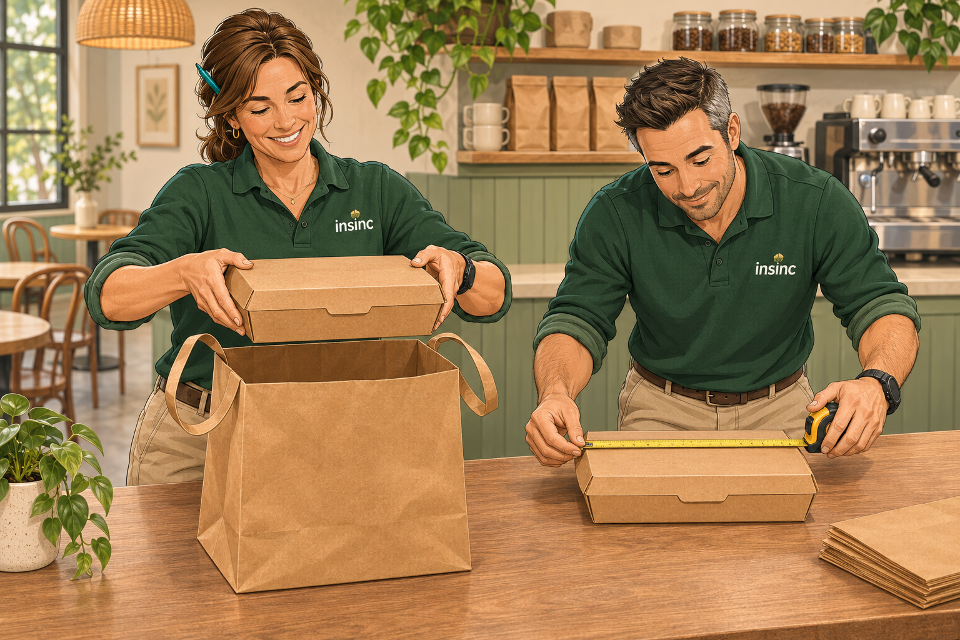
A tall bag can still be too narrow for a lunch box. Measure the container with its lid fitted, including any rim or tabs that extend beyond the base.
- Check the bag’s usable base width and depth.
- Allow space to lower containers in without forcing them.
- Check the total height of the packed order.
- Keep containers level and avoid stacking heavy items on delicate ones.
Flat bags have limited room for bulky items. Increasing the bag’s height will not create the same base as a gusseted carry bag.
Use Insinc’s paper bag sizing guide to compare options, then confirm the current product dimensions.
02 · Packed weight
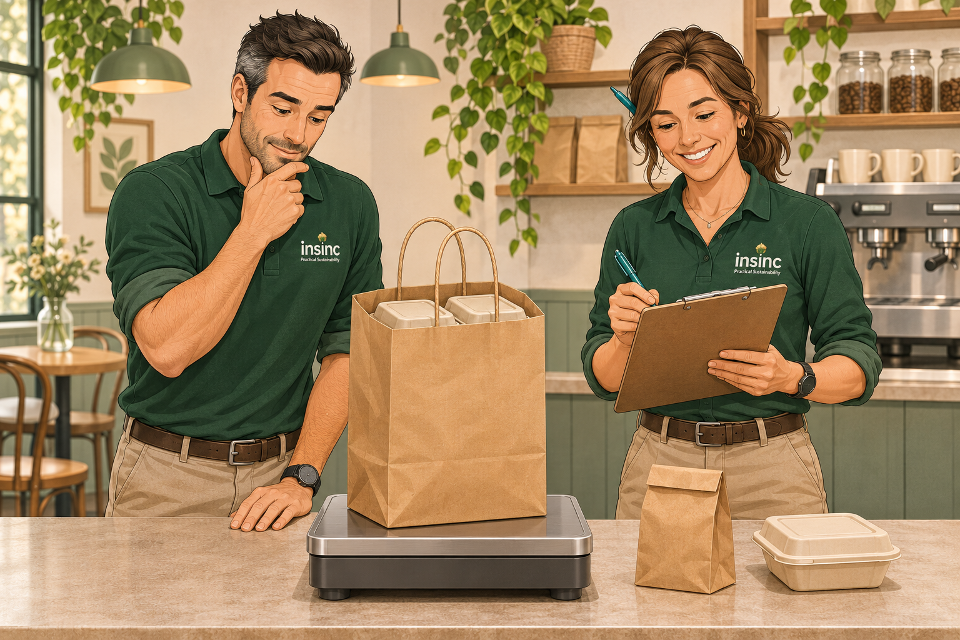
Weigh the complete order
Include the food, containers, sauces and extras. A bag that works for an empty packaging demonstration may behave differently with the finished meal inside.
Check the supplier’s load guidance for the exact product. Paper thickness, seams, base construction and handle attachment all matter. Handles alone do not tell you how much a bag can carry.
For example, the BioPak Small Flat Handle Paper Bag lists a 4kg capacity. That is a product-specific specification, not a general rating for small paper bags. Its specification also identifies cold and dry use, so check suitability for your intended packing conditions.
03 · Moisture and grease
Keep leaks out of the carry bag
Moisture can soften ordinary paper packaging. A stronger-looking handle will not solve a leaking soup lid or a wet bag base.
- Use containers and lids intended for the food and temperature.
- Check closures all the way around before packing.
- Keep the outside of containers and the packing bench dry.
- Use suitable grease-resistant food packaging where needed.
- Replace damp or damaged bags before handing over an order.
For food placed directly into a bag, confirm that the bag is suitable for food contact and the intended food. Brown kraft paper does not automatically mean greaseproof, waterproof or suitable for hot food.
Explore Insinc’s greaseproof paper bag range when ordinary flat paper bags do not suit the item.
04 · The journey
Try carrying it as your customer would
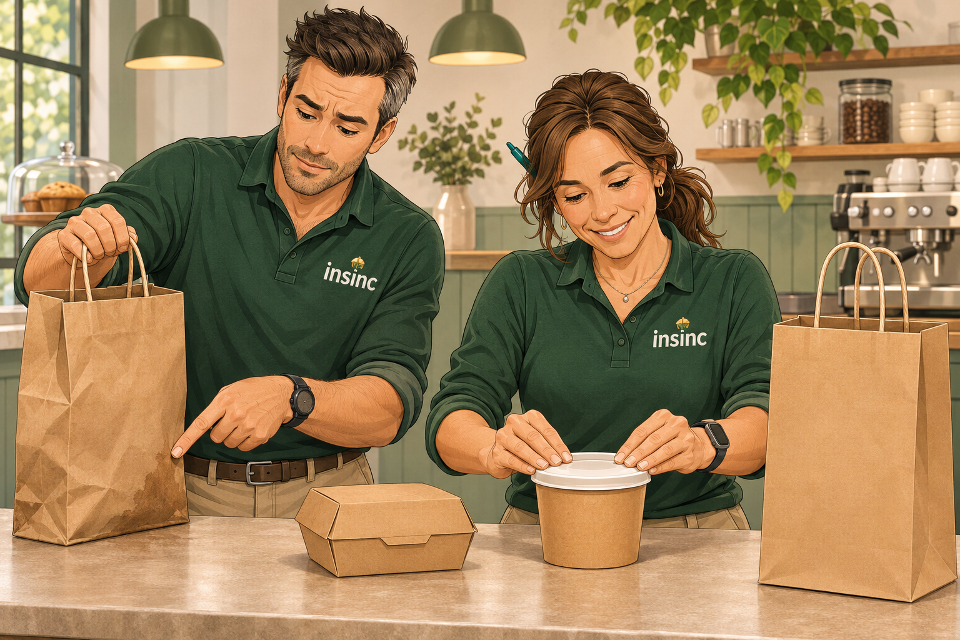
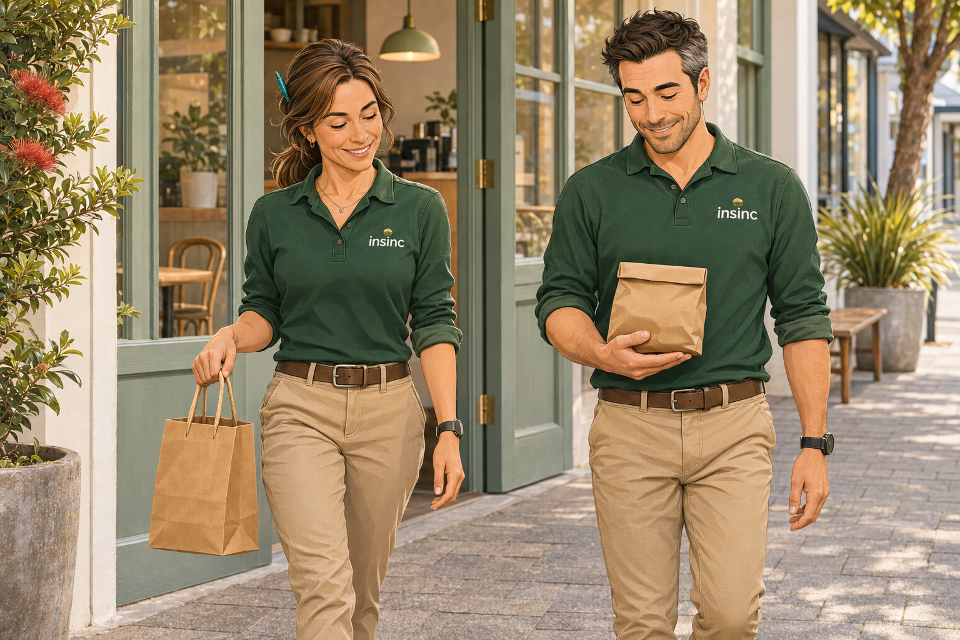
A short handover across the counter is different from a walk back to the office. Test whether the packed bag feels balanced, whether the handles are accessible and whether containers move during carrying.
A small flat bag can be convenient for a light purchase. A handled bag can make several items easier to manage, provided its size and construction suit the load.
For delivery orders, also check that the package stays upright inside the delivery carrier. A paper bag is not a substitute for the transport equipment your food requires.
Related Insinc products to compare
These products provide starting points for your packing trials. Check each listing and confirm suitability for your food, load and handling conditions. Illustrations show general packing scenarios, not exact product replicas.
Gratpak No. 4 Flat Brown Bag
A handleless kraft paper option for comparing against your smaller, flatter orders.
- Dimensions: 240 × 200mm
- Paper weight: 50gsm
- Pack of 500
- Made in New Zealand
BioPak Small Flat Handle Bag
A handled carry bag to compare for grouped, packaged orders. “Flat handle” describes the handle style.
- Dimensions: 280 × 150 × 275mm
- Carton of 250
- Listed load capacity: 4kg
- Check cold and dry use requirements
BioPak Regular Kraft Snack Box
An unlined paperboard box to consider for suitable snack orders. Check food suitability before pairing it with your bag.
- Listed size: 175 × 90 × 84mm
- Carton of 200
- Check the closed box’s fit in your chosen bag
- Do not assume an unlined box is liquid-tight
Need a different format? Browse flat brown paper bags, twisted handle paper bags and cardboard food containers.
Practical sustainability starts with a good fit
Choose packaging that protects the order with an appropriate amount of material. A small purchase may not need a large carrier; a bulky order may need a better-sized bag to avoid routine double-bagging.
Compare cost per successfully packed order, including extra bags, repacking and damaged food. The lowest price per bag does not always give the best result.
Check disposal instructions for the specific product and the collection service available to your business. Avoid assuming every paper bag has the same recycling or composting pathway, especially when food-soiled or coated.
Frequently asked questions
Are paper bags with handles always stronger?
No. Strength depends on the particular bag’s material, seams, base and handle attachments. Check its published load guidance and test it with your complete order.
Is a flat handle bag the same as a flat takeaway bag?
No. A flat handle bag is a carrier with flat paper handles. A flat takeaway bag generally means a slim, handleless bag. Check the product photo and dimensions when ordering.
Can I put hot or greasy food straight into a paper bag?
Only if the specific bag is suitable for direct contact with that food and its temperature. Standard kraft bags should not be assumed to be greaseproof. Use appropriate wrapping, a suitable food bag or a container where required.
How do I choose a bag for several takeaway containers?
Measure the closed containers, plan a stable arrangement and weigh the full order. Check the bag’s usable base, height and load guidance, then test carrying it under realistic conditions.
Should we double-bag every order?
A routine need for two bags is a reason to review your packaging choice. Double-bagging does not establish a tested load rating or fix a leaking container. Trial a more suitable bag or divide the order into manageable loads.
Your 60-second takeaway packaging check
- Shape: does the closed container fit without tilting?
- Weight: is the full order within the bag’s guidance?
- Moisture: are the containers closed and the bag dry?
- Grip: can the customer hold the package comfortably?
- Journey: have you tested a realistic carry?
For a fuller trial, repeat the check with your most common order and your largest regular order.
Need help narrowing down the options? Send Insinc your container dimensions, packed weight and typical order details.
Ask Insinc about bag options