Why Healthy Soil Matters: How Food Waste and Compost Support Soil Health in New Zealand
Healthy soil is easy to take for granted.
We walk over it, grow food in it and build entire agricultural systems around it, but beneath the surface is a complex living environment that helps plants grow, stores and filters water, cycles nutrients and supports countless microorganisms.
For New Zealand, where agriculture, horticulture, food production and natural landscapes all play such an important role, soil health matters far beyond the garden bed.
And surprisingly, one of the ways we can support healthier soils begins somewhere completely different: the rubbish bin.
Food scraps and other organic materials contain nutrients and carbon that can potentially be returned to the soil through composting. When suitable organic waste is collected separately and processed correctly, it can become compost rather than simply being treated as rubbish.
That creates an important connection:
Food → food scraps → compost → healthier soil → new plant growth
Understanding that cycle can help households and New Zealand businesses make better decisions about food waste, organics collection and the products they use to manage those waste streams.
What Is Soil Health?
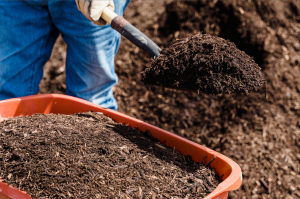
Soil health describes how well soil is able to function as a living ecosystem.
Healthy soil is not simply dirt with nutrients added to it. It contains a combination of:
- Minerals
- Organic matter
- Water
- Air
- Plant roots
- Fungi
- Bacteria
- Insects and other soil organisms
These components interact constantly.
The USDA Natural Resources Conservation Service identifies soil organic matter, soil structure, water infiltration, water-holding capacity and biological activity among the important indicators and functions associated with healthy soil.
Healthy soils are generally better able to support plant growth, cycle nutrients and absorb and retain water.
That makes soil health relevant not only to farmers and growers but also to gardeners, landscapers, councils, composting operations and anyone interested in how New Zealand manages its organic resources.
Why Is Healthy Soil So Important?
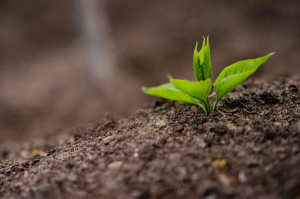
Soil performs several jobs at the same time.
It provides the physical environment in which plants establish roots, but its role extends much further.
1. Healthy Soil Supports Plant Growth
Plants depend on soil for water, nutrients, physical support and interactions with soil organisms.
Organic matter is particularly important because it contributes to soil fertility and provides a source of energy and nutrients for soil organisms.
The Food and Agriculture Organization notes that soil organic matter helps bind soil particles together, supports soil organisms and improves the soil's ability to retain nutrients and water.
This is one reason healthy soil cannot simply be thought of as an inert growing medium.
It is a living system.
2. Healthy Soil Can Hold More Water
Good soil structure allows water to move into the soil rather than immediately running across the surface.
Organic matter also contributes to the soil's ability to retain moisture.
Healthy soil management can therefore improve water infiltration and water-holding capacity, which can help plants cope better during periods when rainfall is limited.
For growers, landscapers and gardeners, this can contribute to more resilient plants and better use of available water.
3. Healthy Soil Supports Nutrient Cycling
Nutrients constantly move through soil, plants and microorganisms.
Organic materials are broken down by soil organisms, gradually releasing nutrients that plants can use.
This natural recycling process is one of the reasons organic matter is so valuable.
Rather than treating soil simply as something that needs nutrients continually added from outside, healthy soil management aims to support the biological and physical processes already taking place within it.
4. Healthy Soil Supports an Entire Ecosystem
A handful of healthy soil contains far more than mineral particles.
Bacteria, fungi and other organisms break down organic materials, cycle nutrients and interact with plant roots.
The biological component of soil is therefore an important part of its overall health.
Adding suitable organic matter through practices such as compost application can help provide food and habitat for this underground ecosystem. Compost can increase organic matter while supporting beneficial microbial activity within soil.
What Does Food Waste Have to Do With Soil Health?
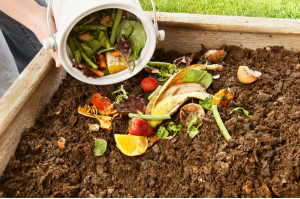
This is where things become interesting.
Think about a vegetable peel.
That vegetable originally grew by taking water and nutrients from soil.
It was harvested, transported, sold and eventually eaten.
The leftover peel still contains organic material. If it is placed into general rubbish and sent to landfill, those resources largely leave the productive biological cycle.
But if suitable food scraps are composted, their organic material can be transformed into a soil amendment that can eventually be returned to land.
In other words, composting provides an opportunity to close part of the loop.
Instead of:
Soil → Food → Waste → Landfill
we can potentially create:
Soil → Food → Food Scraps → Compost → Soil
This is one practical example of a more circular approach to resources.
Food Waste Is a Significant Issue in New Zealand
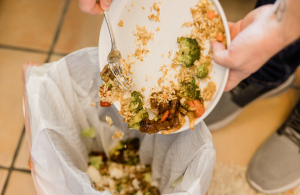
Food and organic waste are not environmentally neutral once they enter the waste stream.
New Zealand's Ministry for the Environment states that food and organic waste are responsible for around 9% of the country's biogenic methane emissions and 4% of total greenhouse gas emissions. These emissions include those associated with food production as well as the decomposition of organic waste in landfill.
When organic material decomposes in the low-oxygen conditions found in landfill, it can generate methane.
In 2022, biogenic methane accounted for 93.3% of New Zealand's waste-sector emissions, largely as a result of organic materials such as food, garden waste, wood and paper decomposing.
This is why keeping suitable organic material out of landfill is an important part of improving waste management.
But there is an important point here:
Preventing Food Waste Comes First
Composting should not be seen as permission to waste food.
If edible food can be avoided from becoming waste, eaten, stored correctly, donated or otherwise put to productive use, that should generally come before composting.
Composting becomes particularly valuable for unavoidable organic waste such as:
- Fruit and vegetable peelings
- Coffee grounds
- Eggshells
- Food preparation scraps
- Spoiled produce that cannot be safely consumed
- Other organic material accepted by the relevant composting system
The goal is not simply to compost more.
The better goal is to waste less food and make better use of the unavoidable scraps that remain.
How Composting Turns Food Scraps Into a Soil Resource
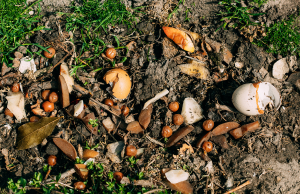
Composting is a controlled biological process.
Microorganisms break down organic materials in the presence of suitable oxygen, moisture and temperature conditions.
Over time, recognisable food and garden waste becomes a dark, stable organic material: compost.
When properly produced and appropriately applied, compost can then be used as a soil amendment.
This is where food waste and soil health reconnect.
1. Compost Adds Organic Matter to Soil
One of compost's most valuable contributions is organic matter.
Soil organic matter plays an important role in:
- Soil structure
- Nutrient cycling
- Biological activity
- Water retention
- Soil aggregation
The US Environmental Protection Agency identifies adding organic matter as one of the major soil benefits of compost.
Organic matter does not remain unchanged forever. It is gradually broken down and transformed through biological processes.
That means maintaining healthy soil is an ongoing process rather than something achieved with a single application.
2. Compost Can Improve Soil Structure
Healthy soil contains spaces between particles that allow air, water and roots to move through it.
Organic matter helps soil particles form aggregates, improving overall soil structure.
The FAO notes that organic matter can bind soil particles together into aggregates while also improving water-holding capacity.
Better structure can support:
- Root development
- Water infiltration
- Soil aeration
- Soil organisms
These physical characteristics are just as important as the nutrient content of the soil.
3. Compost Can Help Soil Hold Water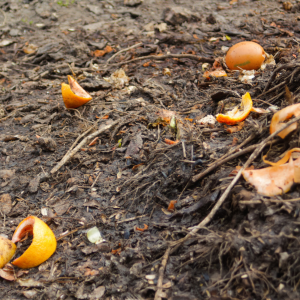
Compost can improve the ability of soil to absorb and retain moisture.
The EPA notes that compost can increase water absorption and retention, while its application can help soils better handle both heavy rainfall and dry conditions.
This does not mean compost eliminates the need for irrigation or prevents drought problems entirely.
Rather, improving soil organic matter and structure can contribute to a soil system that uses and retains water more effectively.
4. Compost Returns Nutrients to the Soil
Food scraps contain nutrients because the plants and ingredients from which they came once contained nutrients themselves.
During composting, organic materials break down and undergo biological transformation.
The resulting compost can contribute nutrients and organic matter when applied to soil.
Importantly, compost should not simply be considered a direct replacement for every fertiliser.
The nutrient composition of compost varies depending on its feedstock and processing.
Its value is broader: compost contributes to the physical, chemical and biological health of soil.
5. Compost Supports Soil Biology
Compost can also support the biological side of soil health.
The EPA notes that compost can help increase beneficial soil microbes, while soil organic matter provides energy and nutrients for organisms living within the soil ecosystem.
Those organisms contribute to decomposition and nutrient cycling.
This is one reason healthy soil is sometimes described as living soil.
The Bigger Picture: Keeping Organic Resources in Circulation
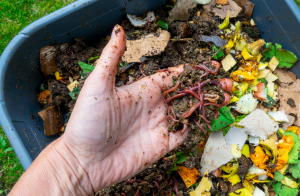
Food waste is often discussed entirely as a rubbish problem.
But it can also be viewed as a resource-management problem.
Consider the amount of effort required to produce food:
- Soil
- Water
- Energy
- Labour
- Fertiliser and nutrients
- Transport
- Refrigeration
- Packaging
- Storage
When food becomes waste, many of those invested resources have already been used.
Preventing edible food from becoming waste is therefore important.
But for unavoidable food scraps, separating organic waste and directing it towards appropriate processing can help recover some value.
Composting is one way of turning organic material into something useful again.
That makes the journey from food scraps to compost to soil an excellent practical example of circular resource use.
Where Compostable Bags Fit Into the Food Waste Cycle
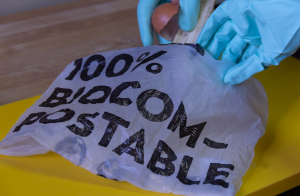
This brings us to something every food-waste collection system eventually has to consider:
How do we actually collect the scraps?
Anyone who has kept food waste in a kitchen caddy knows that organic waste can be:
- Wet
- Messy
- Smelly
- Heavy
- Difficult to empty
- Unpleasant to clean up if it leaks
Liners can make food-waste collection easier and help keep bins cleaner.
However, using a conventional plastic liner can create another problem if that plastic enters the composting stream.
This is where compostable bin liners can have a practical role.
What Are Compostable Bin Liners?
Compostable liners are designed to biodegrade under specified composting conditions rather than persist in the same way as conventional plastic.
They are particularly useful when collecting:
- Kitchen food scraps
- Commercial food waste
- Organic workplace waste
- Café and restaurant food scraps
- Compostable materials accepted by an organics collection provider
Insinc stocks compostable bin liners and rubbish bags in sizes ranging from small kitchen-caddy liners to larger commercial and wheelie-bin options.
The important phrase, however, is when used in the right system.
Compostable Does Not Mean “Throw It Anywhere”
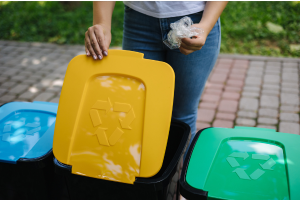
This distinction is extremely important.
A product being labelled compostable does not mean it will quickly disappear:
- On the side of the road
- In the ocean
- In a recycling bin
- In landfill
- In every home compost
- In every council organics collection
Composting requires particular biological and environmental conditions.
Different compostable products may also be certified for different types of composting.
A commercially compostable product, for example, may require the controlled temperatures and processing conditions of an industrial composting facility.
Collection rules and facility acceptance vary around New Zealand, so businesses and households should check with their council, waste collector or composting provider before putting compostable liners or packaging into an organic-waste stream.
This is especially important for businesses setting up food-waste systems.
The waste pathway should ideally be considered before purchasing the liner or packaging, not afterwards.
For more detail, Insinc's guide to the difference between biodegradable and compostable plastic explains why these terms should not be treated as interchangeable.
How BioBags Can Support Food-Waste Separation
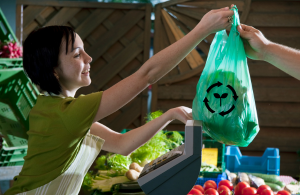
One option available through Insinc is BioBag, a range of biodegradable and compostable bags designed for applications including organic-waste collection.
Insinc stocks BioBag liners in multiple sizes, including smaller kitchen-caddy liners and larger bags suitable for food and garden waste.
For a workplace, café, commercial kitchen or household that has access to an organics collection system that accepts the liner being used, compostable bags can make separation easier.
For example:
At the food preparation station
Fruit and vegetable scraps can go directly into a lined organics caddy.
When the caddy is full
The liner can make removal cleaner and reduce direct contact with wet food scraps.
At collection
The organic waste can remain clearly separated from general rubbish.
At the appropriate composting facility
Accepted organic materials can be processed into compost rather than being disposed of as general waste.
That is where the bag becomes part of a larger system.
The bag itself is not the environmental solution.
Good separation and the correct end-of-life pathway are what matter.
Compostable Plastic Has to Match the Waste Stream
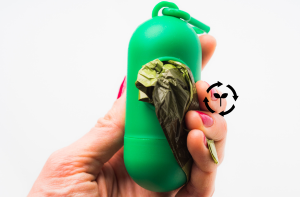
There is sometimes a temptation to treat “compostable plastic” as automatically better than conventional plastic in every situation.
It is more complicated than that.
A compostable product makes the most sense when:
- There is a genuine need for a disposable product.
- The product is suitable for the intended application.
- It can help collect or contain compostable material.
- A compatible composting pathway exists.
- Users know which bin it belongs in.
A food-waste liner is a good example.
If a compostable liner helps capture more food scraps and an appropriate organics service accepts it, the product can support the overall composting system.
If the exact same liner is placed into recycling, it can become contamination.
If it is sent to landfill, it may not experience the conditions for which its compostability was designed.
Material choice and waste infrastructure therefore need to work together.
For businesses comparing products, Insinc's guide to what makes packaging compostable in New Zealand provides further information on compostability and appropriate disposal.
How New Zealand Businesses Can Support Better Organic Waste Management

Soil health can feel like an issue far removed from an office, restaurant, hotel or commercial facility.
It isn't.
Every organisation that generates food waste makes decisions about where that organic material goes.
Businesses can improve those decisions with a few practical steps.
1. Measure Your Food Waste
Look at where food waste is generated and how much is produced.
Common sources include:
- Commercial kitchens
- Staff lunchrooms
- Cafés
- Food preparation areas
- Events
- Hospitality venues
- Grocery and retail operations
Understanding the waste stream makes it much easier to design an effective collection system.
2. Prevent Avoidable Food Waste First
Before changing bins or liners, look for opportunities to prevent food becoming waste.
Depending on the organisation, this might include:
- Better stock rotation
- Improved storage
- More accurate purchasing
- Portion management
- Using ingredients before expiry
- Redistributing suitable surplus food
The most useful food is usually the food that gets eaten.
3. Separate Unavoidable Food Scraps
Once avoidable waste has been reduced, provide a clearly identified collection point for unavoidable scraps.
Place food-waste bins where the scraps are actually generated rather than expecting staff to carry them to a distant waste area.
Good locations may include:
- Food-preparation benches
- Dishwashing stations
- Staff kitchens
- Coffee stations
- Produce preparation areas
Convenience matters.
The easier the system is to use correctly, the more likely people are to use it correctly.
4. Make the Waste Stream Obvious
Use clear labels explaining what belongs in the food-waste bin.
Avoid vague signage such as simply writing “COMPOST” if staff are unlikely to know exactly what the collection provider accepts.
Instead, show examples.
For instance:
YES: food scraps, coffee grounds, fruit peelings
NO: conventional plastic, wrappers, gloves
The exact list should match the rules of your organics collector or composting facility.
5. Choose the Right Liner
If your organics provider accepts compostable liners, choose the correct size and specification for your bin and waste volume.
Insinc's BioBag range includes compostable bag options for different waste-collection applications.
Insinc also offers a wider compostable bin liner range, including kitchen-caddy and commercial-sized liners.
For wet food waste, liner fit and capacity matter.
Using the wrong size can lead to:
- Slipping
- Leaking
- Tearing
- Overfilling
- Unnecessary double-bagging
Choose the liner based on the bin and application rather than assuming one size works everywhere.
6. Confirm What Your Collector Accepts
This may be the most important step.
Before purchasing compostable liners or packaging specifically for an organics programme, ask your waste provider:
- Do you collect food waste?
- Where does it go?
- Are compostable liners accepted?
- Which certifications or products are accepted?
- Is compostable packaging accepted?
- What materials cause contamination?
Waste acceptance can vary between collection systems and composting facilities.
Never assume that because a product says compostable, your local collection system will automatically accept it.
Healthy Soil Starts With How We Think About Waste
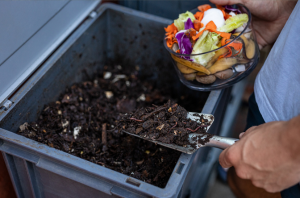
Soil health and waste management may initially seem like completely separate subjects.
Look more closely, however, and the connection becomes clear.
Our food begins with natural resources.
Plants grow.
Food is produced.
We eat what we can.
Scraps remain.
What happens next is a choice.
When suitable organic material is treated simply as rubbish, its potential value can be lost.
When avoidable food waste is prevented and unavoidable organic material is separated for appropriate composting, some of that material can begin another cycle.
It can become compost.
Compost can add organic matter to soil.
Healthy soil can support future plant growth.
And the cycle begins again.
Food does not necessarily have to be the end of the story for the nutrients and organic matter that helped produce it.
Sometimes, it can be the beginning of the next one.
Why Choose Insinc for Compostable Bags and Food-Waste Solutions?
Making better use of organic waste starts with having a collection system people can actually use.
Insinc supplies New Zealand businesses with a range of compostable bin liners, BioBags, food-waste bags, rubbish bags and waste-management products suitable for different workplace applications.
Whether you're setting up food-waste collection in a small staff kitchen, café, hospitality business or larger commercial facility, choosing the right liner can help make organics separation cleaner and easier.
Just remember: compostable products should always be matched with the appropriate collection and composting pathway.
Make Food-Waste Collection Easier
Explore compostable bags and liners for food scraps, organic waste and commercial waste-management systems.
Not sure which liner suits your bin or organics programme? Talk to the Insinc team about your bin size, waste volume and collection requirements.
Frequently Asked Questions About Soil Health, Compost and Food Waste
Why is healthy soil important?
Healthy soil supports plant growth, nutrient cycling, water infiltration and retention, soil organisms and overall ecosystem function. Organic matter is an important component because it contributes to soil structure, nutrient availability and biological activity.
How does compost improve soil health?
Compost adds organic matter to soil and can improve fertility, soil structure, water absorption and retention while supporting beneficial soil microorganisms.
Is food waste good for soil?
Food waste should not simply be buried directly in soil. However, suitable food scraps can be processed through an appropriate composting system. The finished compost can then be used as a soil amendment.
Why shouldn't food waste go to landfill?
Organic waste decomposing in landfill contributes to methane emissions. Food and organic waste account for approximately 9% of New Zealand's biogenic methane emissions and 4% of total greenhouse gas emissions when emissions associated with food production and decomposition are considered.
Is composting better than reducing food waste?
Preventing edible food from becoming waste should generally come first. Composting is particularly useful for unavoidable organic scraps that cannot otherwise be eaten or redistributed.
Can I use compostable bags for food waste?
Yes, compostable liners can be useful for collecting food scraps. However, you should first confirm that your organics collection provider or composting facility accepts the specific type of compostable liner you intend to use.
Are BioBags compostable?
Insinc's BioBag range consists of biodegradable and compostable bags, with different sizes available for waste-collection applications. Always check the requirements of your local composting or organics collection service before disposal.
Can compostable bags go into recycling?
No. Compostable plastics should not be placed into conventional plastic recycling simply because they look like plastic. They are designed for a different end-of-life pathway and can contaminate recycling streams.
Can all compostable plastics go into a home compost?
Not necessarily. Home-compostable and commercially compostable are different classifications. Check the product's certification and disposal instructions before placing it into a home composting system.
Where can New Zealand businesses buy compostable bin liners?
Insinc supplies compostable bin liners and BioBag products in multiple sizes for New Zealand businesses, including options for food-waste collection and larger commercial bins.
https://www.insinc.co.nz/biobag-compostable-biodegradable-rubbish-bags.html