Enzyme Cleaners for Boats and Fishing Gear: What Are They and How Do They Work?
Enzyme cleaners use naturally derived enzymes to help break down organic dirt such as grease, oils, food residues and other grime.
For boat owners and anglers, they can be useful for:
- Cleaning washable boat surfaces
- Breaking down greasy or organic residue
- Removing odour-causing grime
- Cleaning storage areas, floors and other hard surfaces
- Reducing reliance on harsher cleaning chemicals
However, there is an important distinction:
Routine cleaning with an enzyme cleaner is not necessarily the same as biosecurity decontamination.
When moving boats or fishing equipment between New Zealand waterways, always follow the Ministry for Primary Industries' Check Clean Dry requirements and any local Controlled Area Notice rules.
What Is an Enzyme Cleaner?
An enzyme cleaner is a cleaning product that uses enzymes to help break larger organic substances into smaller, easier-to-remove components.
Think of enzymes as tiny tools that target particular types of dirt.
Instead of relying entirely on strong solvents, bleach or highly alkaline chemicals, enzyme-based formulas can help tackle organic residues through biological processes.
Depending on the formulation, they may be particularly useful against:
| Type of Grime | Where You Might Find It |
| Oils and grease | Boat decks, engines areas, equipment |
| Food residue | Fishing boats, chilly bin areas |
| Organic grime | Boat floors, storage compartments |
| Odour-causing residue | Bins, fish storage areas, washable surfaces |
| General dirt | Boat interiors and hard surfaces |
Some enzyme-based products also incorporate beneficial microorganisms as part of the cleaning system.
For example, Insinc's Bio-Zyme range uses enzyme-based formulations designed to break down dirt, grease and odour-causing organic material.
How Do Enzyme Cleaners Work?
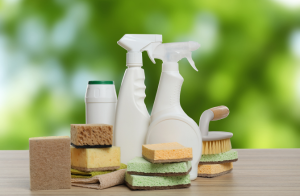
Traditional cleaning chemicals often loosen, dissolve or chemically react with dirt.
Enzymes work slightly differently.
1. Enzymes target organic material
Different enzymes can help break down different types of organic substances.
This can include:
- Fats and oils
- Protein-based residues
- Food contamination
- Other organic build-up
2. Large deposits are broken into smaller components
The enzyme helps accelerate the breakdown of the material, making stubborn grime easier to remove from the surface.
3. The loosened material can be rinsed or wiped away
After the cleaner has had the recommended contact time, the broken-down residue can generally be removed through wiping, rinsing or normal cleaning.
This makes enzyme cleaners particularly useful when dirt isn't simply sitting loosely on top of a surface.
Why Use Enzyme Cleaners on Boats?
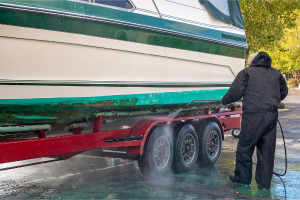
Boats are regularly exposed to an interesting cocktail of water, mud, fish residue, oils, food, sunscreen, dirt and other organic material.
That can mean plenty of cleaning after a long day on the water.
An enzyme cleaner can be useful for routine cleaning of suitable washable areas such as:
- Decks
- Floors
- Walls
- Storage compartments
- Seats and other compatible surfaces
- Fish preparation areas
- Waste areas
- Some vehicle and trailer surfaces
Bio-Zyme Cleaner, for example, is a New Zealand-made, readily biodegradable general cleaner that can be used on washable surfaces and is described by the manufacturer as non-corrosive.
Always check the cleaner's label and the equipment manufacturer's instructions before applying any cleaning product to specialised coatings, electronics, reels or sensitive materials.
What About Fishing Gear?
Fishing equipment can collect far more than visible mud.
Rods, nets, footwear, tackle boxes and other equipment may come into contact with:
- Fish residue
- Bait
- Oils
- Mud
- Organic matter
- Waterway material
An appropriate enzyme cleaner may therefore be helpful for general maintenance and cleaning, particularly where organic stains, grease or odours are involved.
But this is where an important New Zealand biosecurity rule comes in.
Enzyme Cleaning vs Check Clean Dry
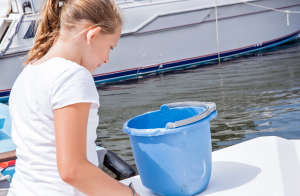
An enzyme cleaner should not automatically be assumed to kill didymo, invasive freshwater clams, algae or other freshwater pests.
Those are two different cleaning objectives.
Routine cleaning
The objective is to remove:
- Grease
- Dirt
- Organic grime
- Stains
- Odours
An enzyme cleaner can be useful here.
Biosecurity cleaning
The objective is to prevent organisms from being transported from one waterway to another.
For that, follow MPI's official Check Clean Dry procedure.
MPI currently advises water users to:
CHECK
Remove visible weeds, mud, clams and other material. Drain water from boats and equipment.
CLEAN
Blast watercraft and gear with tap water onto grass rather than into stormwater systems. Absorbent materials require one of MPI's prescribed treatments, such as soaking in a 10% dishwashing detergent solution for 10 minutes, appropriate hot-water treatment, or freezing until solid.
DRY
Allow gear to dry completely inside and out, then leave it dry for another 48 hours before using it in another waterway.
This is especially important in the South Island, where Check Clean Dry requirements apply under the Controlled Area Notice for didymo.
The simple rule
Use enzyme cleaners for cleaning. Use the prescribed Check Clean Dry process for freshwater biosecurity.
They can be parts of the same overall equipment-care routine, but they are not automatically interchangeable.
A Simple Boat and Fishing Gear Cleaning Routine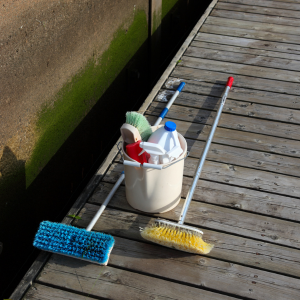
Want to keep things uncomplicated?
Step 1: Remove visible material
Before leaving the waterway, remove:
- Weed
- Mud
- Plant fragments
- Fish residue
- Other visible debris
Drain any water trapped inside your boat or equipment.
Step 2: Rinse the equipment
Use tap water where appropriate to remove loose dirt and residue.
Avoid directing contaminated water into stormwater drains or another waterway.
Step 3: Clean organic grime
Use an appropriate cleaning product on compatible washable surfaces.
For greasy areas, food residue or odour-causing organic build-up, an enzyme-based cleaner may be a useful option.
Follow the manufacturer's dilution and contact-time instructions.
Step 4: Complete required biosecurity treatment
If you are moving between freshwater locations, follow the applicable Check Clean Dry treatment rather than assuming your normal cleaner has completed the decontamination process.
Step 5: Dry thoroughly
Pay particular attention to areas that stay damp:
- Nets
- Ropes
- Carpet
- Footwear
- Boat storage areas
- Bilges
- Trailer components
Freshwater pests can travel on wet equipment, which is why drying is an important part of Check Clean Dry.
Are Enzyme Cleaners Better for the Environment?
Many enzyme-based cleaners are formulated as an environmentally preferable alternative to harsher conventional cleaning products.
However, “enzyme-based” does not automatically mean every product is environmentally harmless.
Always look at the individual formulation, safety data sheet and environmental certifications.
For example, Bio-Zyme Cleaner is readily biodegradable, made in New Zealand and carries Eco Choice Aotearoa licensing. The manufacturer also describes it as non-hazardous and non-corrosive.
Even biodegradable cleaners should still be used responsibly.
Cleaning wastewater should not simply be discharged directly into lakes, rivers or streams.
MPI recommends disposing of cleaning water away from waterways and stormwater systems when carrying out Check Clean Dry procedures.
Choosing an Enzyme Cleaner for Boat Cleaning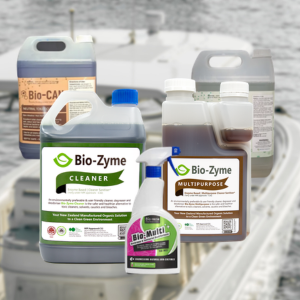
When comparing products, look for a cleaner that suits the actual job you need to perform.
Consider:
- Surface compatibility – Can it be used on the materials you're cleaning?
- Degreasing ability – Useful around greasy or oily areas.
- Biodegradability – Particularly relevant for outdoor cleaning.
- Concentration – Concentrated products can offer better value for regular cleaning.
- Safety instructions – Check the SDS and manufacturer's guidance.
- NZ certifications – Independent environmental or industry certifications can provide additional reassurance.
Insinc stocks a range of enzyme-based cleaners, including Bio-Zyme general cleaners, multipurpose cleaners and enzyme-based degreasers suitable for different cleaning applications.
The Bottom Line
Enzyme cleaners can be a useful addition to a boat owner's or angler's cleaning kit.
They are particularly useful for dealing with organic grime, grease, oils and odour-causing residues without always having to reach for harsher cleaning chemicals.
But when you're moving between New Zealand's rivers, lakes and streams, regular cleaning is only part of the job.
Remember:
Clean your equipment for maintenance.
Check Clean Dry your equipment for biosecurity.
Used together, good cleaning habits and proper biosecurity practices can help keep your equipment in better condition while reducing the risk of accidentally carrying unwanted freshwater pests to your next fishing spot.
Explore Insinc's range of enzyme-based cleaning products to find cleaning options for boats, equipment and everyday commercial cleaning applications.
Frequently Asked Questions
Can I use an enzyme cleaner on a boat?
Yes, enzyme cleaners can be suitable for many washable boat surfaces, depending on the particular product. Always check the manufacturer's instructions before using the cleaner on specialised coatings, fabrics, metals or sensitive equipment.
Are enzyme cleaners good for removing fish smells?
They can be particularly useful where smells are caused by organic residues because enzyme-based cleaning helps break down the material responsible for the odour rather than simply covering the smell.
Can enzyme cleaners remove grease?
Some enzyme cleaners are specifically formulated as degreasers. Bio-Zyme Industrial, for example, is designed to break down fats, oils and grease.
Do enzyme cleaners kill didymo?
Do not assume they do. Unless a particular treatment has been specifically approved or demonstrated for that purpose, use MPI's prescribed Check Clean Dry treatments when moving between freshwater waterways.
Should I clean fishing gear every time I change waterways?
Yes. MPI recommends following Check Clean Dry whenever moving between lakes, rivers and streams. In some areas, including the South Island's didymo Controlled Area, specific biosecurity requirements are legally enforced.
What fishing equipment should I clean?
Anything that comes into contact with the water should be considered, including rods, reels, nets, lines, footwear, clothing, boats, kayaks, anchors and other wet equipment.
Are enzyme cleaners biodegradable?
Many are, but it depends on the product. Check the manufacturer's specifications rather than assuming all enzyme cleaners have the same environmental credentials. Bio-Zyme products sold by Insinc include readily biodegradable enzyme-based cleaning options.
https://www.insinc.co.nz/product/bio-zyme-general-cleaner.html