The Complete Guide to Choosing Commercial Car Wash Chemicals
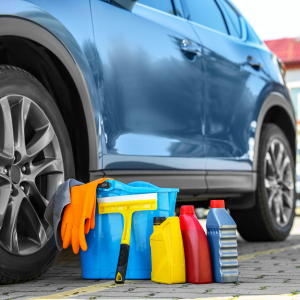
The quality of your vehicle cleaning results depends on more than your washing technique—it starts with choosing the right chemicals.
Commercial vehicle cleaning products are specifically formulated to tackle different types of contamination, from heavy grease and road film to brake dust and insects. Using the wrong product can make cleaning more difficult, waste valuable time, increase product consumption, and in some cases damage vehicle surfaces.
For businesses responsible for maintaining company vehicles, fleets, heavy machinery, or customer vehicles, selecting the right chemical is an important investment in both cleaning performance and long-term vehicle care.
This guide explains the different types of commercial car wash chemicals, how they work, and how to choose the right products for your operation.
Why Choosing the Right Car Wash Chemicals Matters
Not every cleaning product is designed to remove the same type of contamination.
Road grime behaves differently from grease.
Brake dust requires different chemistry than insect residue.
Oil-based contamination responds differently than mineral deposits.
Using the correct product helps businesses:
-
Achieve better cleaning results
-
Reduce labour time
-
Lower chemical consumption
-
Improve operational efficiency
-
Protect vehicle finishes
-
Extend equipment life
-
Deliver more consistent cleaning across an entire fleet
Rather than relying on stronger chemicals, successful vehicle cleaning often comes down to choosing the right chemical for the right job.
Understanding the Different Types of Vehicle Contamination

Before selecting a cleaning product, it's important to understand what you're trying to remove.
Commercial vehicles commonly collect:
1. Organic Contamination
Includes:
-
Bird droppings
-
Insects
-
Tree sap
-
Plant material
2. Petroleum-Based Contamination
Examples include:
-
Engine oil
-
Diesel residue
-
Lubricants
-
Grease
-
Bitumen
3. Mineral-Based Contamination
Such as:
-
Brake dust
-
Hard water deposits
-
Cement dust
-
Salt residue
4. General Road Contamination
Including:
-
Mud
-
Road film
-
Dust
-
Sand
-
Soot
Different contaminants require different chemical formulations for effective removal.
Types of Commercial Car Wash Chemicals
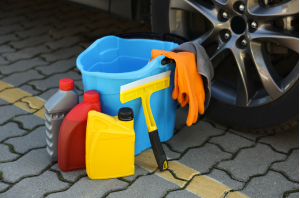
Professional vehicle washing typically uses several specialised products rather than one all-purpose cleaner.
1. Vehicle Wash Detergents
Vehicle wash detergents form the foundation of most commercial cleaning programmes.
Their primary role is to lift dirt and road grime from painted surfaces while allowing contaminants to be rinsed away safely.
Quality commercial detergents are designed to:
-
Produce consistent cleaning performance
-
Rinse cleanly
-
Minimise residue
-
Work efficiently with pressure washers or foam systems
2. Traffic Film Removers
Traffic film is the grey or brown layer that gradually builds up on commercial vehicles.
It often contains:
-
Oil
-
Carbon
-
Road dust
-
Exhaust particles
-
Grease
Traffic film removers are designed specifically to loosen this stubborn contamination before the main wash.
3. Degreasers
Degreasers target heavy oil-based contamination.
They're commonly used on:
-
Engine bays
-
Chassis
-
Hydraulic equipment
-
Workshop vehicles
-
Construction machinery
A good degreaser breaks down grease quickly while remaining suitable for the surfaces being cleaned.
4. Wheel Cleaners
Brake dust contains metallic particles that can bond firmly to wheel surfaces.
Wheel cleaners are formulated to remove:
-
Brake dust
-
Road grime
-
Iron contamination
-
Built-up dirt
Using a dedicated wheel cleaner often produces better results than relying on general detergents alone.
5. Glass Cleaners
Vehicle glass requires specialised products that remove fingerprints, road film, and residue without leaving streaks.
Commercial glass cleaners improve visibility while delivering a professional finish.
Understanding pH in Car Wash Chemicals
One of the most important factors when selecting cleaning products is pH.
The pH scale measures how acidic or alkaline a product is.
pH Neutral Cleaners
These cleaners are generally suitable for routine maintenance washes and vehicles with sensitive finishes or protective coatings.
Alkaline Cleaners
Alkaline products are often more effective at removing:
-
Grease
-
Road film
-
Organic contamination
They are commonly used as pre-wash products or traffic film removers.
Acidic Cleaners
Acid-based products are sometimes used to remove mineral deposits, rust staining, or heavy brake dust.
These products should always be used according to the manufacturer's recommendations and on compatible surfaces.
Selecting the correct pH helps maximise cleaning performance while protecting vehicle finishes.
Concentrated vs Ready-to-Use Chemicals
Commercial businesses often choose between concentrated products and ready-to-use solutions.
Concentrated Products
Advantages include:
-
Lower transport costs
-
Reduced packaging
-
Adjustable dilution
-
Better value for high-volume users
Ready-to-Use Products
These products require little or no mixing.
They are often chosen where:
-
Usage volumes are low
-
Convenience is important
-
Staff require simplified product handling
The right option depends on the size of your operation and daily vehicle throughput.
Why Dilution Ratios Matter
Using more chemical does not always produce better cleaning results.
Incorrect dilution can lead to:
-
Product waste
-
Increased operating costs
-
Poor rinsing
-
Surface residue
-
Reduced cleaning efficiency
Following the manufacturer's recommended dilution ratios helps ensure the product performs as intended while keeping operating costs under control.
Choosing Chemicals for Different Industries
Different industries place different demands on vehicle cleaning products.
1. Transport and Logistics
Vehicles often require products capable of removing road film, diesel residue, and motorway grime.
2. Construction
Construction vehicles frequently need heavy-duty degreasers and products capable of removing mud, cement dust, and hydraulic oil.
3. Agriculture
Farm vehicles may require cleaners formulated to tackle organic matter, mud, fertiliser residue, and heavy soil build-up.
4. Professional Car Washes
High-throughput operations often prioritise products that:
-
Clean efficiently
-
Rinse quickly
-
Produce consistent results
-
Work well through automated systems
Selecting chemicals suited to your industry helps improve efficiency and reduce unnecessary product use.
What to Consider When Choosing Commercial Car Wash Chemicals
Before purchasing, ask the following questions.
1. What Types of Vehicles Are Being Cleaned?
Different vehicle types may require different cleaning products depending on their materials and operating environments.
2. What Contaminants Are Most Common?
Understanding the primary source of dirt helps narrow product selection.
3. How Many Vehicles Are Cleaned Each Day?
High-volume operations often benefit from concentrated products with flexible dilution ratios.
4. How Are the Chemicals Applied?
Consider whether products will be used with:
-
Pressure washers
-
Foam cannons
-
Manual washing systems
-
Automatic wash equipment
Compatibility with your equipment is an important consideration.
How to Reduce Chemical Costs Without Sacrificing Performance
Businesses don't always need cheaper chemicals to reduce costs.
Instead, consider:
-
Using correct dilution ratios
-
Training staff in product application
-
Measuring chemical consumption
-
Choosing concentrated products where appropriate
-
Preventing product contamination
-
Storing chemicals correctly
Improving chemical management often delivers greater savings than simply purchasing lower-priced products.
If you're looking for practical guidance on how to use these products effectively, read our Step-by-Step Commercial Vehicle Washing Guide: The Best Order to Clean Any Vehicle, which explains the complete vehicle washing process from preparation through to final inspection.
Choosing a Reliable Supplier
The supplier you choose can be just as important as the products themselves.
Look for a supplier, like Insinc, that offers:
-
Commercial-grade products
-
Consistent product availability
-
Technical advice
-
Product support
-
Safety documentation
-
A broad automotive cleaning range
Working with a knowledgeable supplier, like Insinc, makes it easier to choose products that suit your vehicles, budget, and operating requirements.
Professional Automotive Cleaning Products from Insinc
At Insinc, we supply professional automotive cleaning products for businesses across New Zealand.
Our automotive range includes commercial vehicle wash detergents, degreasers, specialised cleaning chemicals, brushes, microfibre cloths, and accessories designed to help businesses maintain cleaner, more professional fleets.
Whether you operate a transport company, workshop, construction business, agricultural operation, or commercial car wash, our team can help you choose the right cleaning chemicals for your application.
Frequently Asked Questions
What are commercial car wash chemicals?
Commercial car wash chemicals are professional cleaning products formulated to remove specific types of vehicle contamination such as road film, grease, brake dust, insects, mineral deposits, and general dirt while helping protect vehicle finishes.
Why are different vehicle cleaning chemicals needed?
Different contaminants require different cleaning formulations. For example, grease, mineral deposits, and road film each respond best to different types of cleaning chemicals.
Should I choose concentrated or ready-to-use products?
Concentrated products are often more economical for businesses that clean vehicles regularly, while ready-to-use products may be suitable for lower-volume operations that prioritise convenience.
Does pH matter when choosing vehicle wash chemicals?
Yes. pH influences how a product performs and which contaminants it is best suited to remove. Choosing the correct product for the type of contamination helps improve cleaning efficiency while protecting vehicle surfaces.
How can businesses reduce vehicle cleaning chemical costs?
Businesses can often reduce costs by following recommended dilution ratios, training staff, using appropriate products for each cleaning task, monitoring chemical usage, and storing products correctly rather than simply choosing the cheapest chemicals.
https://www.insinc.co.nz/category/car-vehicle-wash
Posted: Friday 26 June 2026