Choosing a Disinfectant for Bird Flu in New Zealand
Choosing a disinfectant for bird flu starts with a specific question: does the product have documented efficacy for the intended use, and can your team follow the required application conditions? A familiar brand, strong smell or general antibacterial claim cannot answer that question.
For New Zealand poultry operators, product selection should fit the farm’s biosecurity plan and current veterinary and MPI advice. This guide explains what to check before buying, from supporting documentation to the practical cost of using a product correctly.
Check what the product claim actually covers
Bird flu is caused by avian influenza viruses. A cleaner advertised for grease removal or a sanitiser labelled antibacterial should not automatically be treated as an avian influenza disinfectant.
Ask the supplier for the current product label and supporting technical information. Identify the exact formulation, intended application and conditions attached to the claim. If the evidence refers to a different virus or a general virucidal standard, ask a qualified adviser whether it supports the intended avian influenza use.
The US EPA’s avian influenza disinfectant guidance illustrates how claims relate to specified products, surfaces and application instructions. Its registration list is US guidance; it should not be presented as New Zealand approval.
A useful purchasing rule is to pause when the claim cannot be matched to the exact product you plan to order. Request clarification before incorporating it into your cleaning procedure.
Match the disinfectant to the job
Write down where the product will be used before comparing alternatives. A poultry shed floor, removable equipment and a boot disinfection station may have different practical requirements.
Check the documentation for:
- The permitted application and surfaces.
- Compatibility with rubber, plastics, metals and other relevant materials.
- Whether birds, feed or drinking water must be removed or protected.
- Any rinsing, drying, ventilation or re-entry instructions.
A product suitable for one surface should not be assumed suitable for every part of a poultry operation. Specialist poultry cleaning and disinfection guidance explains that surface materials and chemical compatibility affect the choice of treatment.
For footwear specifically, read our guide to cleaning poultry boots and managing footbaths.
Compare dilution and contact time together
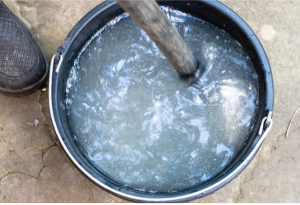
Dilution determines the working concentration. Contact time is how long the disinfectant must remain in contact with the surface under the specified conditions. Both belong in the purchasing decision.
A product is a poor operational fit if staff cannot reliably measure it, apply it or maintain the required contact time. Review these details with the people who will carry out the task, rather than choosing on bottle price alone.
Put the manufacturer’s relevant instructions into a clear worksheet. Include the product name, task, working dilution, application method and contact time. Have the procedure checked against the original label before staff use it.
Do not copy a dilution from another brand or use the rate for a different task. More concentrated does not automatically mean more appropriate. Likewise, a brief spray or quick step through a footbath cannot be assumed to fulfil a longer contact-time requirement.
Keep cleaning and disinfection compatible
Cleaning prepares the surface for disinfection by removing contamination. When reviewing a proposed product combination, ask how the cleaner should be removed before the disinfectant is applied and whether any residue could interfere with the process.
Our article Cleaning Before Disinfection: The Step Poultry Farms Shouldn’t Skip During Bird Flu Risk explains this preparation stage in more detail.
Insinc’s enzyme-based cleaner range includes products for different cleaning tasks. Evaluate each product for the particular soil and surface involved. An enzyme-based formulation alone does not establish effectiveness against avian influenza.
Keep the roles clear in your purchasing list: what removes soil, what provides the required disinfection, and what equipment is needed to apply each product.
Review safety and handling before ordering
Obtain the safety data sheet as well as the label. The safety data sheet helps you assess hazards, storage, personal protective equipment and spill response; it does not, by itself, prove that a product works against bird flu.
Confirm that staff have the specified protective equipment and suitable measuring tools. Do not assume any disposable glove will provide the necessary chemical protection. Choose protection according to the chemical documentation and workplace assessment.
Never improvise chemical mixtures. Ask for written clarification if a cleaning sequence or disposal instruction is unclear. Build these requirements into the procedure before the product arrives, so staff are not left making decisions at the mixing point.
Calculate the cost of correct use
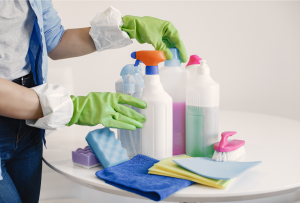
Compare the cost of the prepared solution at the required dilution, then consider the work involved. The cheapest container may not produce the lowest usable cost.
Include measuring equipment, protective equipment, preparation time and any product discarded under the manufacturer’s replacement instructions. Choose a pack size that suits your expected usage and storage arrangements.
Before placing a repeat order, ask staff whether the existing procedure is practical. Unclear measuring instructions or an awkward application process are reasons to review the procedure with your supplier and farm adviser.
Keep the choice within your biosecurity plan
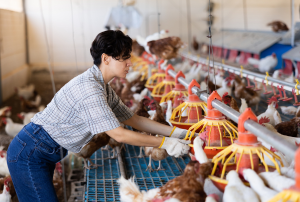
A disinfectant is one component of disease prevention. Visitor controls, dedicated equipment and separation from wild birds also matter. For broader context, see Bird Flu Biosecurity in NZ: Everyday Cleaning Practices That Help Reduce Risk.
For commercial farm planning, the Poultry Industry Association’s bird flu resources explain routes to biosecurity planning support. Suspected disease requires veterinary advice; routine product selection is not an outbreak decontamination plan.
Why Choose Insinc Products?
Insinc brings together commercial cleaning products for a range of workplace tasks, making it a useful starting point when reviewing your cleaning supplies.
Browse the range with your procedure in hand. Match each purchase to a defined task, and request the relevant documentation before selecting a product for disinfection. This helps you build a purchasing list based on suitability, rather than relying on a general cleaning claim.
Frequently Asked Questions
What disinfectant should I choose for bird flu?
Choose a product with documented efficacy supporting the intended avian influenza use, appropriate application instructions and compatibility with the surface. Confirm the choice with your farm adviser where necessary.
Does an antibacterial cleaner work against bird flu?
An antibacterial claim alone does not demonstrate activity against avian influenza viruses. Check the specific product’s documented claims before using it for that purpose.
Is there one dilution rate for all poultry disinfectants?
No. Use the rate specified for the exact product and application. Do not substitute a dilution from another product or assume all uses of the same product require the same concentration.
Can an enzyme cleaner replace a bird flu disinfectant?
Only if the exact product has appropriate documented disinfectant efficacy for that use. The description “enzyme cleaner” does not establish that claim.
Does overseas approval mean a disinfectant is approved in NZ?
No. Overseas listings are not a substitute for checking the product supplied in New Zealand, its applicable requirements and the instructions relevant to your operation.
https://www.insinc.co.nz/category/cleaning-products-supplies.html