
Alex & Alex · The Practicalists
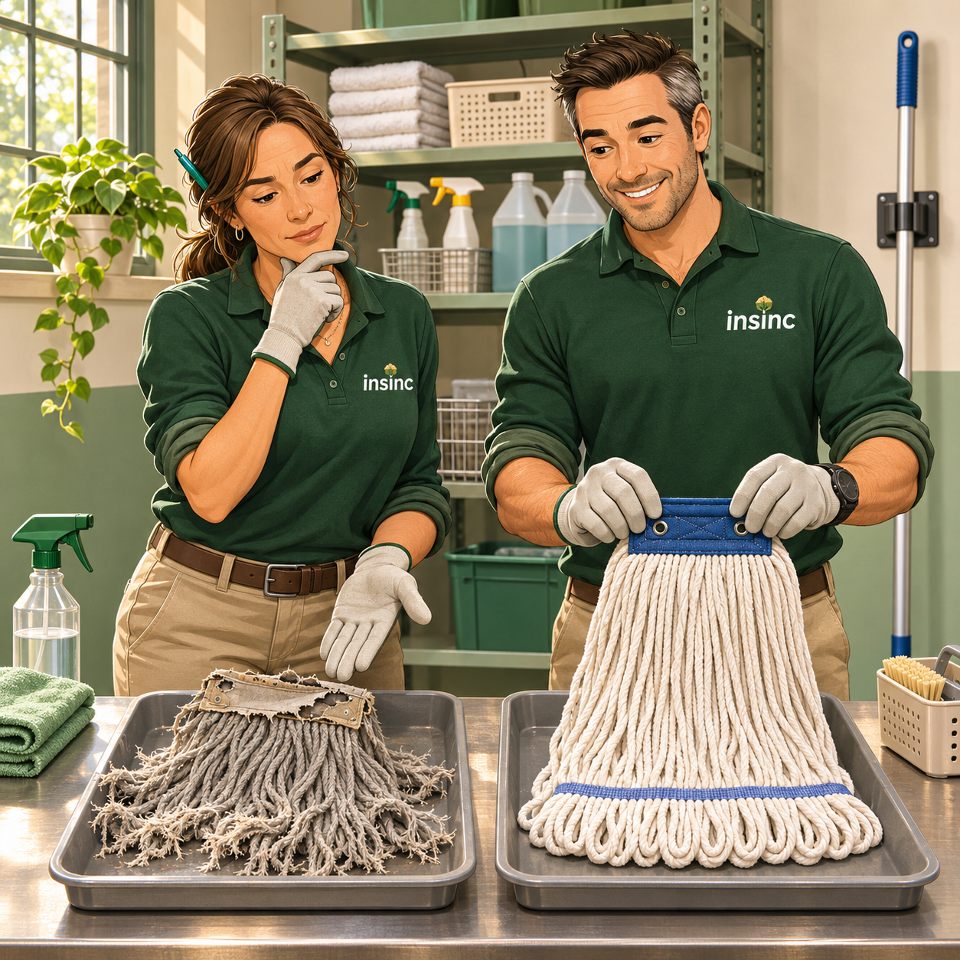
Does that mop need a wash or a replacement?
The yarn looks tired, the pad is not picking up as well, and someone suggests ordering a new mop. Before replacing the whole tool, it is worth checking what has actually worn out.
Commercial mop heads face different workloads. A head used across a busy site every day has a different working life from one used occasionally in a small office.
Alex & Alex explain how NZ workplaces can make replacement decisions using condition, cleaning performance and the manufacturer's care instructions.
Quick answer: when should commercial mop heads be replaced?
Replace a mop head when damage, permanent wear or unresolved contamination makes it unsuitable for its intended task. Follow any manufacturer or workplace replacement limits as well.
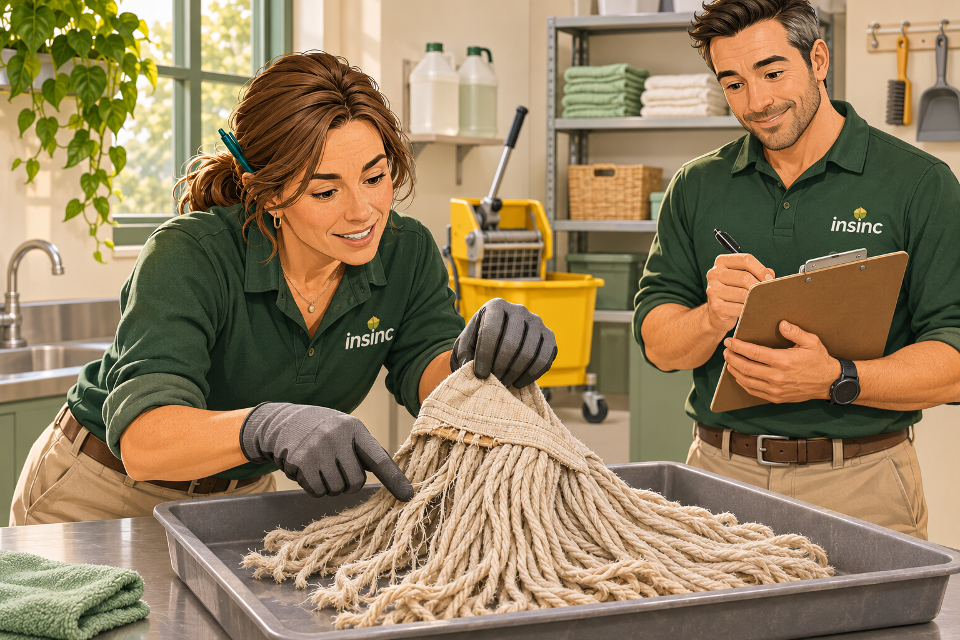
Inspect reusable heads before use and after cleaning. Look for damaged stitching, excessive shedding, worn backing, insecure attachments and performance that does not recover after correct care.
A calendar reminder is useful for inspection, but there is no universal replacement interval for every mop material, workplace and cleaning routine.
Changing a mop head is not always the same as discarding it
Change to a clean head
During a shift, your procedure may require a fresh head between areas or when the current one becomes soiled. A reusable head can then go through its approved cleaning process.
Retire a worn head
Permanent replacement means removing a head from service because it no longer meets the required condition, performance or hygiene standard.
Keep these decisions separate when training staff. “Changed today” does not necessarily mean “new today”.
01 · Inspect the working parts
Look beyond the colour of the fibres
Discolouration alone does not tell you whether a mop head is worn out. Equally, a white-looking head is not proof that it has been cleaned correctly.
- String heads: inspect the headband, stitching, yarn and any tailband for damage.
- Flat pads: check the cleaning face, edges, backing and fastening areas.
- Attachments: confirm that the head or pad stays securely fitted.
- Performance: note excessive shedding, poor pickup or uneven contact with the floor.
Remove damaged equipment from use while deciding what needs replacing. A loose pad or broken fitting should not be left for the next person to discover.
What Alex would ask: “Is it simply stained, or is part of the mop actually failing?”
Clean, inspect or replace?
| What you notice | First action | Replacement decision |
|---|---|---|
| Ordinary soil after cleaning a floor | Change to a clean head and process the used one according to its instructions. | Routine dirt does not automatically require disposal of a reusable head. |
| Staining remains after approved cleaning | Check condition, cleaning history and workplace requirements. | Colour alone is not a reliable pass or fail test. |
| Torn backing, broken stitching or substantial fibre loss | Remove the head from service. | Replace when damage compromises cleaning or secure attachment. |
| A flat pad keeps detaching | Check the pad's fastening, the frame and compatibility. | Replace the faulty component; a new pad will not repair a damaged frame. |
| Poor pickup or smearing | Review the head, cleaning solution, floor preparation and care routine. | Replace a worn head if correct care and use do not restore acceptable performance. |
| Persistent unpleasant odour after approved cleaning and drying | Keep it out of service and investigate the cleaning and storage process. | Replace if it cannot be restored to the required condition. |
| Hazardous or unusual contamination | Isolate it and follow the site's specific procedure. | Do not assume routine laundering makes it suitable for reuse. |
02 · Check the care instructions
Not every mop head belongs in the same wash
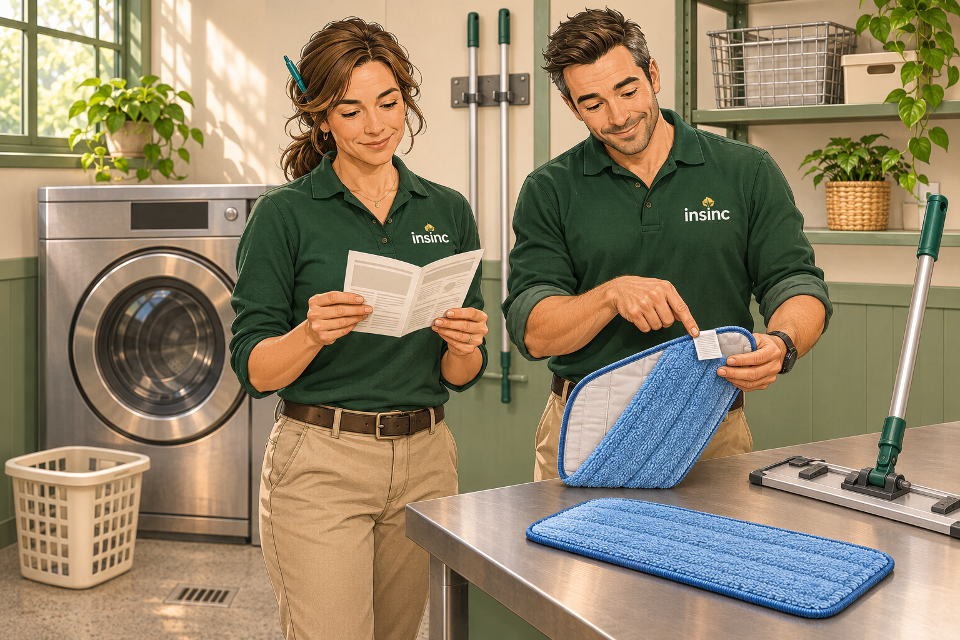
Before laundering, identify the product and confirm whether machine washing is permitted. Reusable, hand-washable and disposable products need different handling.
- Follow the specified wash temperature and programme.
- Use suitable detergent at the recommended dose.
- Check whether bleach or other additives are permitted.
- Follow instructions for separating loads and using laundry bags.
- Check drying temperatures and methods.
For microfibre, avoid fabric softener unless the manufacturer explicitly permits it. Do not transfer one product's bleach or temperature instructions to another.
If the identity or care instructions are missing, ask the supplier before selecting a wash programme. Keep the confirmed instructions where staff can find them.
Does a wash-cycle rating tell you the replacement date?
A published laundering rating applies to a particular product under stated conditions. It is not a promise that every head will remain usable until that number of washes. Inspect throughout its life and follow any stated maximum-use limits.
03 · Dry and store properly
Give cleaned heads room to dry
After approved cleaning, use the recommended drying method. For heads intended to be stored dry, make sure they are fully dry before packing them away.
- Keep clean and used equipment separate.
- Space suitable heads or pads apart when air drying.
- Avoid leaving used heads standing in dirty solution.
- Keep clean supplies protected from floor contact and splashes.
- Maintain your site's cleaning-zone separation during storage.
A shortage of spare heads can push staff to reuse equipment before it is ready. Plan enough replacements to cover cleaning, drying and the next shift.
What Alex would ask: “Can the next person tell which heads are clean and ready to use?”

04 · Match the replacement
Check the fitting before ordering another head
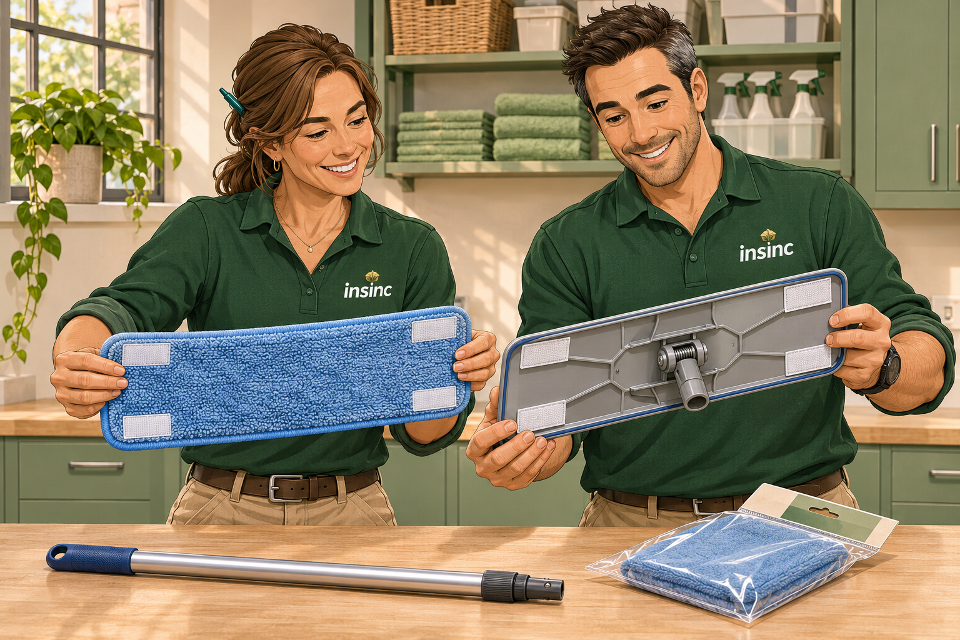
Two mop heads can look similar and still use different connections. Record the existing product or system before buying replacements.
- String or round heads: check the connector, thread or headband and clamp requirements.
- Flat pads: confirm the frame model, dimensions and fastening system.
- Intended task: distinguish wet cleaning, dry dusting and floor-finishing products.
- Workplace system: maintain the required colour and zone assignment.
Inspect the handle and frame too. Replace only the head when the rest of the equipment is sound and a compatible replacement is available.
If unsure, send the supplier a photo of the fitting and the product code rather than relying on the mop's colour.
Replacement mop options from Insinc
These links provide starting points for checking the right replacement. Confirm compatibility and care requirements for the exact product.
Sabco microfibre round mop head
Insinc lists a blue Sabco 350g microfibre round mop head. Check the connection against your existing handle.
View round mop headHyGenie flat mop pad
The green HyGenie 40cm microfibre flat mop pad is an option to assess for a compatible system.
View flat mop padMicrofibre heads and fringes
Compare different sizes and intended uses across Insinc's microfibre mop range.
Explore microfibre mopsNeed to review the whole system? Browse commercial cleaning mops and flat mop pads, frames and systems.
Make replacement decisions easy for the team
Keep a short record of the product, area of use, date put into service and reason for replacement. Where relevant, track laundering cycles against the manufacturer's limits.
Repeated early failures can point to rough surfaces, an unsuitable head, incorrect laundering or a damaged attachment.
Practical sustainability means getting useful service from suitable equipment while retiring heads that no longer meet the job's requirements.
Frequently asked questions
Should we replace commercial mop heads every month?
Not as a universal rule. Use the manufacturer's instructions, your site's procedures and regular condition checks. Workload, surfaces, material and care all affect useful life.
Does staining mean a mop head is dirty?
Staining alone cannot establish cleanliness or wear. Check that the approved cleaning process has been completed and inspect the head's condition. Appearance and smell are not hygiene tests.
Can all commercial mop heads be machine washed?
No. Check the exact product's instructions. Some heads are machine washable, others have different care requirements, and disposable pads should not be treated as reusable.
Why does a mop still smell after washing?
Review the wash process, rinsing, drying and storage. Keep the head out of service while investigating, and replace it if approved care cannot restore it to the required condition.
Can I replace just the mop head?
Often, provided the handle or frame is sound and you select the correct fitting. Check the model, attachment and dimensions before ordering.
What if the floor still looks poor with a new head?
Review the cleaning method, product dilution, solution changes, floor condition and suitability of the mop system. A replacement head cannot correct every cause of poor cleaning results.
Your 60-second mop check
- Condition: are fibres, stitching and backing intact?
- Attachment: does the head fit securely?
- Care: are staff following this product's instructions?
- Readiness: is it clean and prepared for the task?
- Performance: does it still do the job properly?
Need help finding a replacement? Send Insinc the product code, a photo of the fitting and details of the floor and cleaning task.
Ask Insinc about mop replacementsRelated reading
Don't Get Your Mop in a Twist: How to Choose the Right Mop for Your Business