
Why Are Your Windows and Mirrors Still Streaky? A Guide for NZ Cleaning Teams
Alex & Alex / The Practicalists
Still seeing streaks?
Before you add another spray, check what is being left behind. A practical troubleshooting guide for windows, mirrors and internal glass in NZ workplaces.
Find your streaking problem →
Quick answer
Streaks often come from cleaner residue, a dirty or saturated cloth, or solution drying before it is removed. Start with a fresh glass cloth, the label-directed dose and a manageable area of cool glass. Check the dry finish before changing products.
First identify the surface: mirrors, window film and coated glass can require different methods.
Why this matters
A clear finish should not take three attempts.
On reception doors, shopfronts and washroom mirrors, smears are easy to notice. For cleaning contractors and facilities teams, repeat wiping also means extra time, cloth changes and product use. A consistent method makes it easier to find what is going wrong.
Start with the symptom
What kind of mark are you seeing?
A greasy-looking film
Check the cleaner dose and whether the cloth has picked up oily soil or another product. More spraying may simply spread the residue.
Smears as you wipe
Try a fresh cloth face, then a clean replacement. A wet or loaded cloth has limited capacity to collect more soil and moisture.
Lines after a squeegee
Check for dirt, nicks or uneven wear on the rubber. Clean it and inspect your technique before blaming the chemical.
Fast-drying patches
If the glass is hot or sunlit, work when it is cooler. Clean a smaller area so the solution does not dry ahead of you.
Lint or tiny fibres
Check the cloth type and laundry process. Keep glass cloths away from lint-shedding fabrics and replace damaged cloths.
Marks that stay put
Fixed spots, scratches or haze may need assessment rather than repeated polishing. Ask the glazing supplier before trying a stronger treatment.
These are starting checks, not a diagnosis from appearance alone. Stop if a small test area does not improve with the approved routine.
What Alex would ask
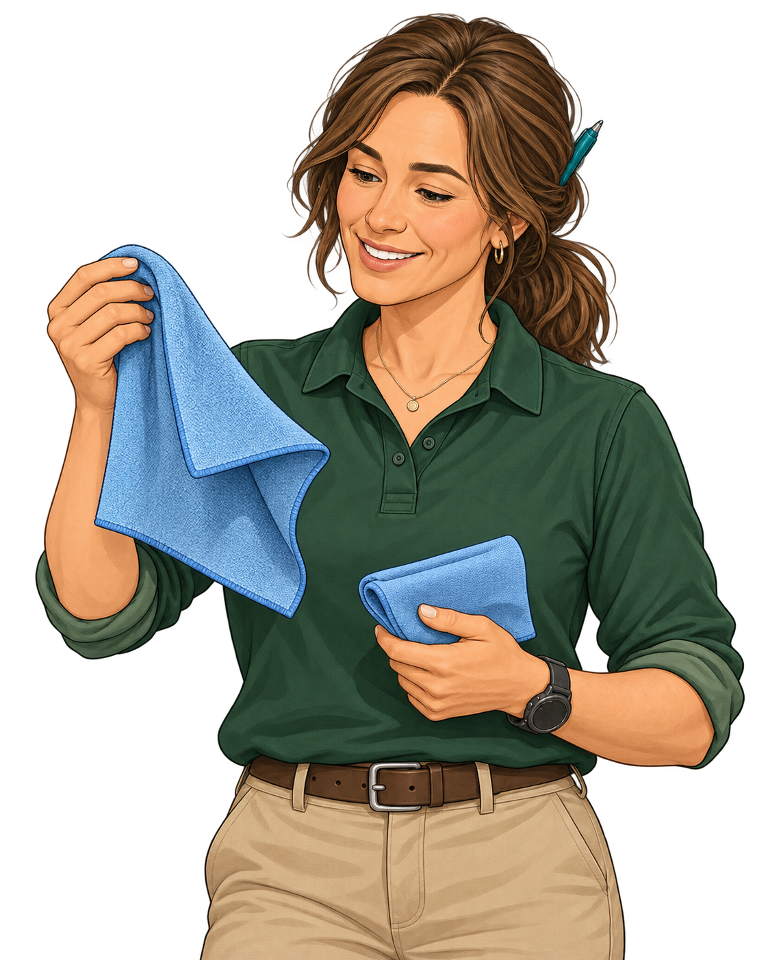
Is the cloth really ready for glass?
- Was it used on a greasy surface or with another cleaner?
- Was it washed with fabric softener or lint-producing towels?
- Is it already too wet to finish the glass?
- Are clean replacements available on the trolley?
Follow the cloth's care instructions. Avoid fabric softener and dryer sheets, and keep used cloths separate from clean stock. See our microfibre cloth care guide.
A repeatable routine
How to clean windows and mirrors without chasing streaks
1. Check the surface
Identify film, coatings and mirror edges. Use the surface manufacturer's cleaning instructions; do not assume every glass cleaner or tool is compatible.
2. Prepare clean tools
Use a clean, lint-free glass cloth. Remove loose grit gently using the approved method, and keep frame-cleaning cloths separate from finishing cloths.
3. Measure the cleaner
Dilute concentrates exactly as labelled. Use ready-to-use products as supplied unless instructed otherwise. Apply enough for the task without flooding the surface.
4. Remove the soil
Work in manageable sections. Fold the cloth to expose fresh faces, replacing it when dirty or saturated. Treat greasy patches with a compatible method before finishing.
5. Finish consistently
On compatible ordinary glass, use a clean squeegee or the approved cloth method. Keep the rubber clean between passes. Avoid repeatedly buffing dry glass.
6. Inspect when dry
View the result from an angle. Check corners and edges, then note any repeat work. Judge the finished pane, not its appearance while still wet.
Mirror care: use controlled moisture and keep it away from edges and backing. Coated glass may have tool restrictions. The Viridian Glass Cleaning Guide sets out separate methods for different glass types.

The Practicalist Take
Change one thing. Check the result.
Start with one troublesome pane. Keep the approved product and dose the same, but use a freshly prepared glass cloth. If the result improves, investigate cloth handling before ordering a different cleaner.
If it does not, test another relevant factor, such as cooler conditions or a sound squeegee blade. Keep the same required standard throughout.
Practical Sustainability™: record product use and repeat wiping so any claim of reduced waste is based on what actually changed.
What to measure on your next round
Inputs
Record the surface, product, dilution, application amount, cloth condition and whether the glass was warm or sunlit.
Results
Record cleaning time, cloth changes, repeat passes and whether the dry finish met your standard. Use comparable panes when judging a change.
Where Insinc can help
Choose the cleaner and tools as a working combination. Tell us the glass type, current product, cloth routine and when the streaks appear.
Glass cleaners
Compare ready-to-use and concentrate options against your surface and task.
Explore glass and window cleaners →Glass cloths
Set up a dedicated supply for cleaning and finishing glass.
Explore glass cleaning cloths →Window tools
Check squeegee size, rubber condition and suitability for the job.
Explore window cleaning hardware →A practical next step
Take the 60-second Practical Workplace Check-up.
Review what is working, what is creating repeat work and where a better product fit could help.
Start your workplace check-up →Alex & Alex answer
Frequently asked questions
Why does glass cleaner leave streaks?
Possible causes include excess product, the wrong dilution, contaminated cloths or fast drying. Start with the label instructions and a fresh cloth, then assess the dry result.
Can I use a microfibre cloth with water only?
For light marks, this may work if the cloth and surface instructions allow it. It is not a universal method for oily residue or other soils. Trial a small area and check the finish.
Should I use a stronger mix?
Only if the label specifies it for the task. Adding concentrate by eye can leave more residue. Check the dose, cloth and method first.
Can the same cleaner be used on every mirror and window?
No. Window film, exposed coatings and mirror backing can have different requirements. Confirm compatibility with both the cleaner label and the surface manufacturer's instructions.
Why does my squeegee leave a line?
Inspect the rubber for trapped dirt, wear or damage, then check pressure and overlap. Replace damaged rubber. Use a squeegee only where the surface instructions allow it.
What if marks remain after correct cleaning?
Ask the glazing supplier to assess them. A persistent mark is not proof that you need a stronger cleaner. Avoid unapproved abrasives or blades, especially on coated or heat-treated glass.
Related reading
- How to clean microfibre cloths properly
- Insinc chemical dilution chart. Use alongside the product label.
Further guidance: Viridian glass care and Unger squeegee guidance. Follow the instructions for your specific surface, cleaner and equipment.