
Can You Put Any Soap in Your Dispenser? Alex & Alex Explain Refill Compatibility
Alex & Alex / The Practicalists
Can you put any soap in your dispenser? A practical guide to refill compatibility for New Zealand workplaces.
Check your refill first →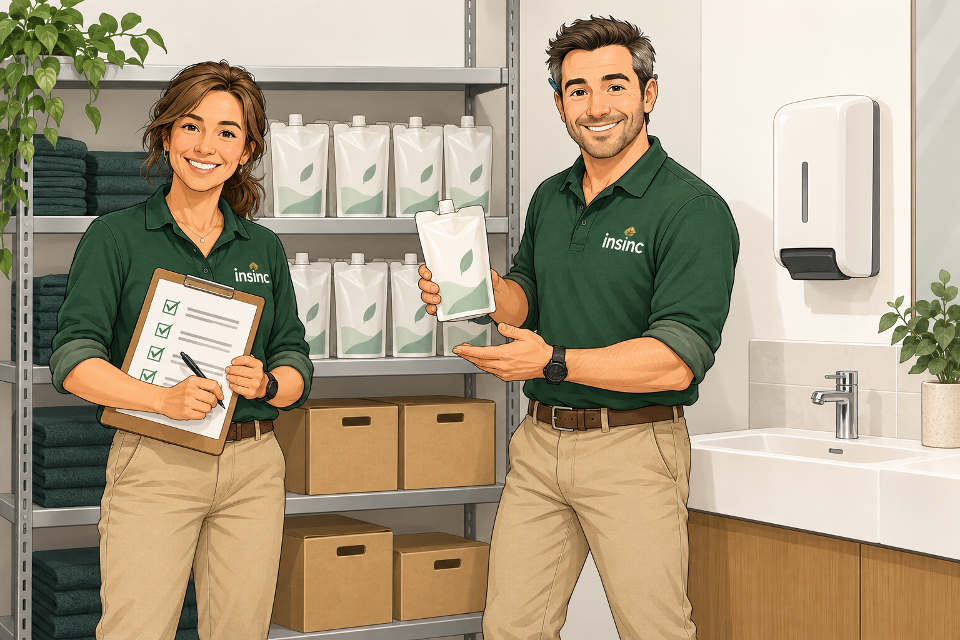
Quick answer
No—start with the dispenser.
Use the soap type and refill format specified for your dispenser. A liquid pump, foam pump and sealed-cartridge system can have different requirements. Matching the bottle size or choosing the same brand is not enough: check the model, formulation and refill connection.
Bulk-fill does not mean universal. It describes how the reservoir is filled, not permission to use any product.
Why this matters
A small refill mix-up can become a daily nuisance.
The delivery arrives. The containers look familiar. Someone puts them in the washroom cupboard—and only later discovers they are for a different dispenser.
Time
Staff spend time identifying the problem, sourcing another refill and revisiting the washroom.
Stock
A carton has little value on the shelf if none of your dispensers can use it.
Consistency
A documented dispenser-and-refill pairing gives every shift the same clear instructions.
For offices, schools, hospitality venues and cleaning teams, begin with a simple equipment list. Healthcare and other specialist settings should also follow their own product-selection and hygiene procedures.
The Practicalist Take
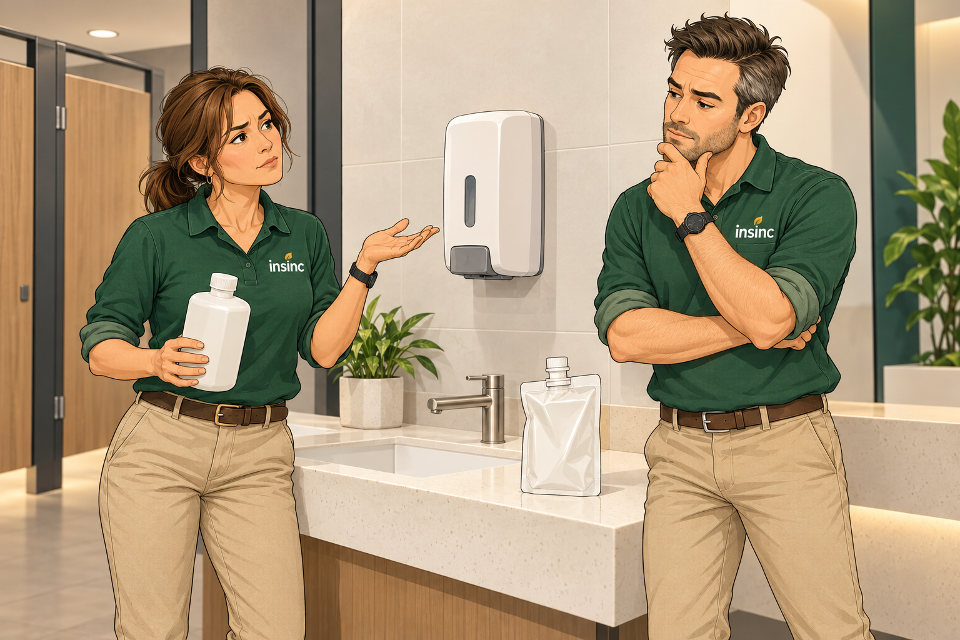
“It’s hand soap—shouldn’t it work?”
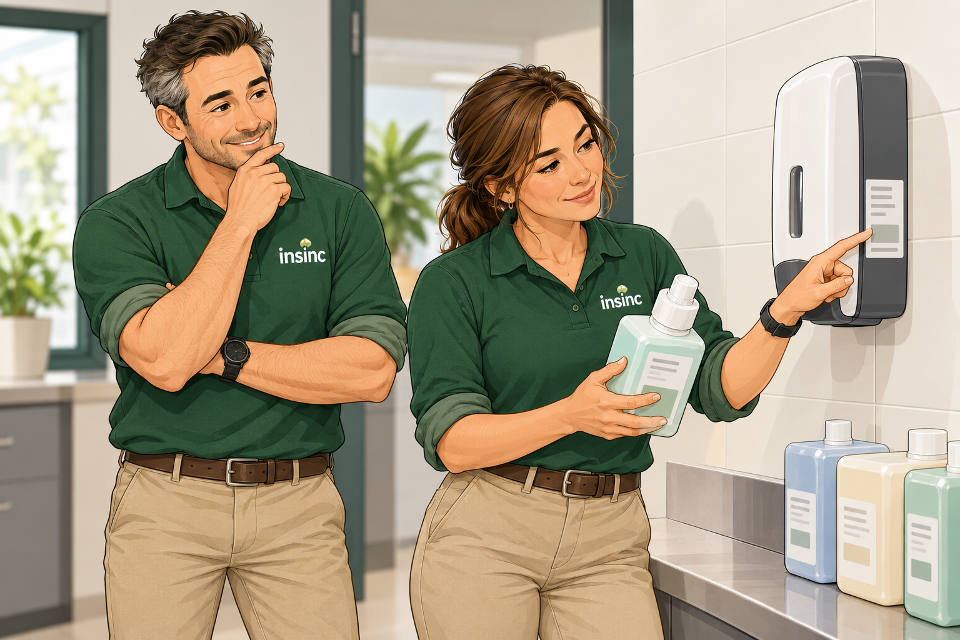
Female Alex: “The refill looks similar, but what does this dispenser actually need?”
Male Alex: “Check the system first. The right purchase is the one that fits, dispenses correctly and suits the workplace.”
01 / Match the soap format
Foam and liquid are different dispensing systems.
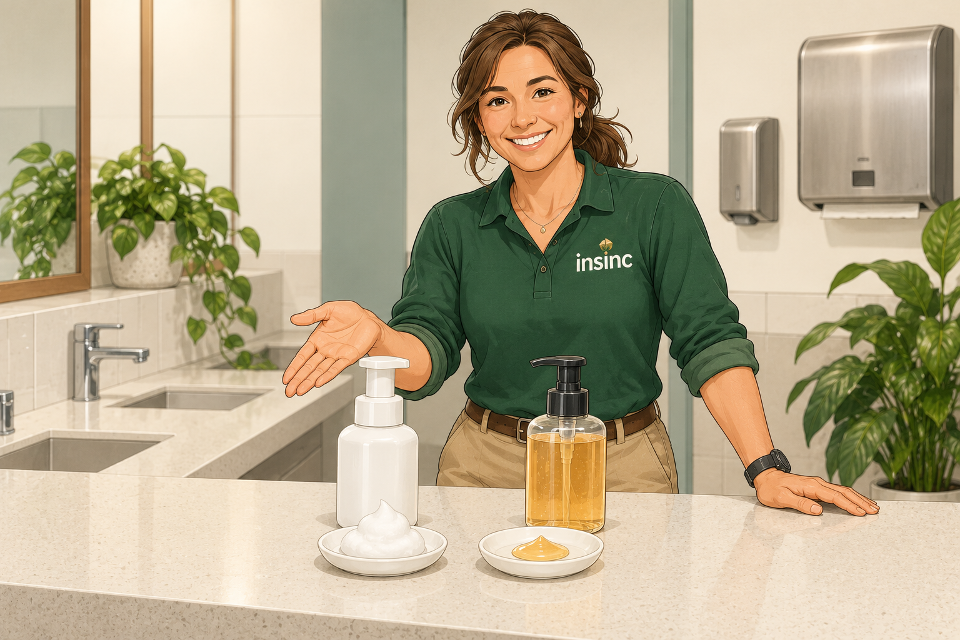
Read the refill specification.
Foaming dispensers need a formulation suitable for their foam mechanism. Standard liquid handwash is not automatically a suitable substitute. Equally, a foam-soap refill should not be assumed to work correctly in an ordinary liquid pump.
The product in a foam refill may look liquid before dispensing. Judge compatibility by the label and dispenser instructions, not its appearance in the container.
For liquid dispensers
Check the permitted soap specification, including viscosity where provided. A product that is too thick for the pump can cause poor delivery. Specialist hand cleaners containing particles need equipment specifically suited to them.
For foaming dispensers
Choose a compatible foaming handwash. Do not turn a standard liquid soap into a DIY foam refill by adding water. Only prepare a concentrate or soluble product when its own instructions specify the method and suitable dispenser.
02 / Identify the refill system
Bulk-fill or sealed refill?
This is a separate question from foam versus liquid. Check both before ordering.
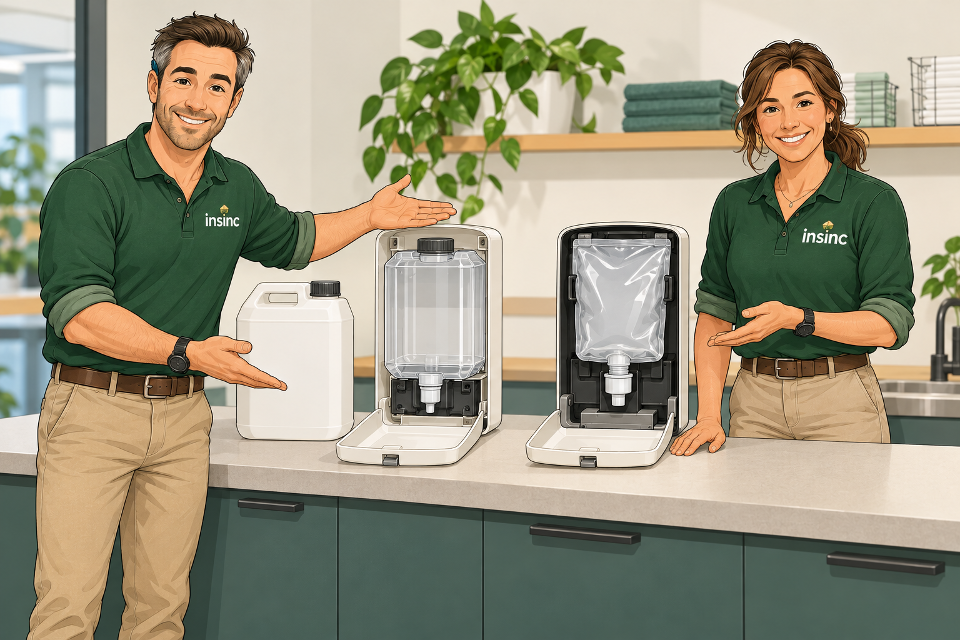
Look inside the instructions first.
Bulk-fill systems use a refillable reservoir. Sealed systems accept a specified pouch or cartridge. Some models support more than one refill arrangement, but that flexibility must be stated for the particular unit.
For example, Insinc lists a Matthews 1000 mL foaming dispenser with bulk-fill or cartridge options. It is still a foaming dispenser; those options do not make every soap suitable.
Bulk-fill checks
- Is this reservoir designed to be refilled?
- Does the soap meet the pump requirements?
- What cleaning and drying procedure is specified?
- Who maintains the dispenser between refills?
Sealed-refill checks
- Does the exact refill code match the dispenser?
- Are the pack size and connector correct?
- Does the system require a particular pump or nozzle?
- Is the packaging intact and within its use period?
Do not cut open, decant into or refill a single-use sealed cartridge to make an incompatible product fit. Follow the system’s replacement instructions.
What Alex would ask
Can we match the model and the refill code?
- Dispenser: photograph the brand, model label and unit.
- Current refill: keep the code from a confirmed compatible pack.
- Soap: record foam or liquid and any formulation requirements.
- System: note bulk-fill, pouch or cartridge.
- Purchase: confirm quantity per pack and volume per refill.
03 / Troubleshoot the symptom
Soap not coming out? Check before replacing.
Use the manufacturer’s troubleshooting steps. A dispensing problem does not automatically mean the whole unit needs replacing.
No soap
Check the level, refill seating and any required priming procedure. For an automatic unit, check power and the sensor as directed.
Weak or irregular output
Confirm the formulation is suitable and inspect accessible parts for dried residue. Use only the prescribed cleaning method.
Leaking or poor fit
Check the connector and approved replacement parts. Do not force the pack or modify the housing. Ask for support if the problem continues.
Do not add water, switch products at random or dismantle powered components as a troubleshooting shortcut.
04 / Refill hygiene
Can you top up the soap already inside?
Avoid adding fresh soap to a partly empty reservoir. CDC healthcare guidance specifically advises against this practice because topping up liquid soap can introduce contamination risks.
For refillable units, follow the manufacturer’s complete emptying, cleaning, drying and refilling procedure. For sealed systems, replace the intended pack as directed. A sealed refill still needs correct handling and a maintained dispenser.
Keep bulk containers closed, use clean handling equipment and retain the product identity. Avoid mixing brands or formulations in the reservoir.
05 / Compare the real cost
Look beyond the price per litre.
Compare compatible systems that meet the same workplace needs. Use your own records rather than assuming foam or bulk-fill always costs less.
Refill cost per dose
Refill price ÷ usable doses = soap cost per dose.
Illustrative example: a $12 refill providing 1,000 usable doses costs 1.2 cents per dose. If people use two doses per wash, that becomes 2.4 cents per wash before other costs.
Example figures only—not Insinc pricing or a recommended dose. Use the amount required by the product instructions.
What else should you measure?
- Refill and cleaning time
- Usable volume and discarded residue
- Leaks or repeat service visits
- Batteries and replacement parts
- Stock availability and ordering mistakes
Keep GST treatment consistent when comparing prices.
Make the next order easier
One simple refill checklist.
Create a record for each dispenser type, with its location, model, compatible refill code and maintenance instructions. Put the same code on the stock shelf and purchasing list.
Before ordering a different product, confirm compatibility and trial it in a suitable unit using the approved changeover procedure. Record the result before extending the change across the site.
Practical Sustainability™: avoid buying the wrong supplies, maintain working equipment and assess packaging and waste using the system you actually operate.
Where Insinc can help
Choose the dispenser and refill together.
Use the specifications and associated products to build a shortlist. If the existing unit is unclear, send Insinc a photo of the model label and current refill.
Compare systems
Explore liquid, foam and different refill arrangements.
Soap and sanitiser dispensers →Touch-free foam
The Aerelle A77 listing specifies a 925 mL foam-pouch system. Use its listed compatible refills, rather than choosing by capacity alone.
View the Aerelle dispenser →Match the handwash
Review handwash formats and product suitability for your workplace.
Hand soap and hand cleaners →One practical next step
Check one washroom before the next order.
Can you identify the dispenser, the correct refill code and the approved refill procedure? If any answer is missing, start there.
Take the 60-second check-up →The questions we hear
Soap dispenser compatibility FAQs
Can I put normal liquid soap in a foam dispenser?
Only if the manufacturer explicitly confirms it is suitable. Choose the specified foaming formulation rather than assuming an ordinary liquid handwash will work.
Can I dilute hand soap to make it compatible?
Do not improvise a dilution. Only mix products designed for preparation that way, following their exact instructions and the dispenser requirements.
Does a one-litre cartridge fit every one-litre dispenser?
No. Capacity does not establish connector, pump or housing compatibility. Match the model and refill code.
Can I change soap brands in a bulk-fill dispenser?
Possibly, if the new product meets the dispenser specification and your workplace requirements. Follow the approved changeover procedure and do not mix it into the remaining soap.
Can hand sanitiser go in a soap dispenser?
Only when the exact dispenser and formulation are specified as compatible. “Soap and sanitiser” category names do not mean every unit accepts both products.
Is touch-free the same as sealed-refill?
No. Touch-free describes activation; sealed-refill describes the product supply system. Check both independently.
Can eco handwash work in a commercial dispenser?
Yes, when the particular formulation and refill format meet the unit’s requirements. An environmental claim does not establish pump compatibility.
Related Insinc reading
Check eco handwash compatibility
Explore the practical fit between handwash and commercial dispensers.
Read the dispenser guide →Further guidance: CDC guidance on soap refilling in healthcare and Bradley dispenser maintenance resources . Follow the instructions for your own dispenser and soap. Illustrations show generic systems, not exact Insinc product configurations.
Alex & Alex · The Practicalists · Practical Sustainability™
Need help choosing? Ask Insinc or call 0508 467 462.