How Can Cafés Reduce Napkin Waste Without Leaving Customers Short?
ALEX & ALEX | THE PRACTICALISTS
A handful with every coffee. A pile left on the table. Five napkins when you only wanted one.
Napkin waste is easy to overlook during a busy café shift. But those small piles are worth investigating, especially when staff keep opening new packs while clearing away unused serviettes.
For Alex & Alex, the question is simple: how can you make it easy for customers to take what they need, without handing out extras automatically?

How can cafés reduce napkin waste?
Check how napkins are dispensed, where they are placed and how many staff include with each order. Use compatible refills, avoid overfilling dispensers and keep extras easy to reach.
Then compare usage per order over similar trading periods, alongside customer feedback. The aim is to reduce unnecessary use while keeping service comfortable.
1. Find out where the extra napkins are going
Before changing products, watch a typical service. A café serving takeaway coffees has different needs from one serving burgers, filled sandwiches and family lunches.
Serving habits
Do several napkins go into every bag, regardless of the order? Are staff adding extras out of habit rather than matching the food?
Dispenser problems
Do customers pull repeatedly because napkins jam, tear or come out in clumps? Check the refill and loading before blaming overuse.
Exposed stock
Do loose napkins get wet, blow away or fall onto the floor? Look at where and how they are stored during service.
Product suitability
Do customers need several because the napkin is too small or does not hold up to the food being served?
What Alex would ask: “Are these napkins being used with meals, or are we losing them through packing habits, dispenser problems and spills?”
Do not return napkins from cleared tables or customer trays to clean stock, even if they look unused.
2. Measure napkin use against orders
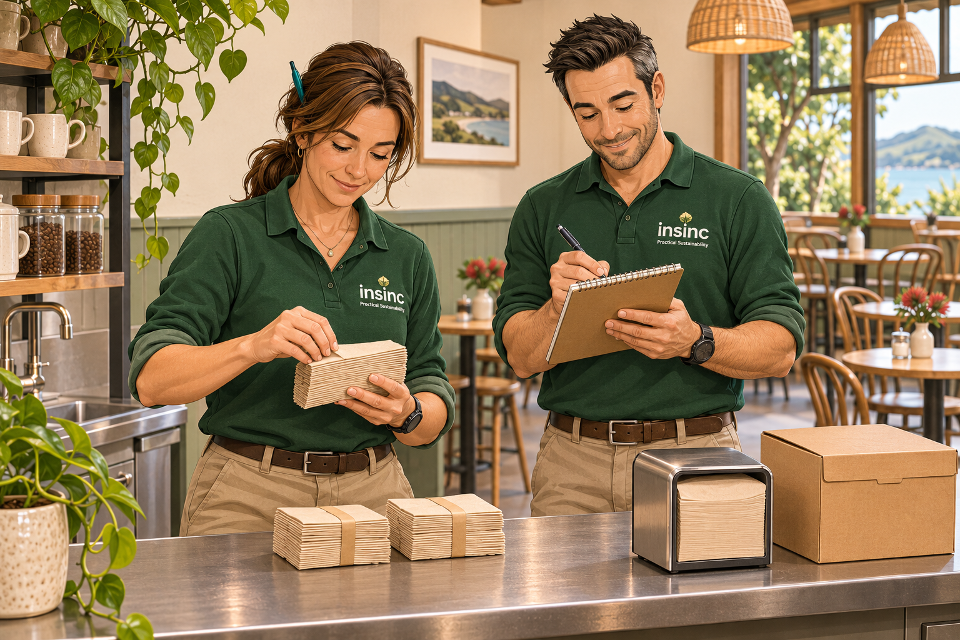
“We used fewer cartons this week” does not tell the whole story if the café was quieter. Start with the number of napkins used per order.
Napkins used = opening stock + deliveries − closing stock
Napkins per order = napkins used ÷ number of orders
Count consistently, including opened packs and napkins already in dispensers. Account for transfers to other sites or uses outside café service.
What does that look like in practice?
Illustrative example: 2,400 napkins used across 800 orders equals three napkins per order. This is a starting measurement, not a recommended allowance.
The calculation measures total consumption, including waste. Compare similar weekdays and note changes such as catering bookings, group orders or a new menu item. Track dine-in and takeaway separately where practical if their needs differ significantly.
3. Match the refill to the dispenser
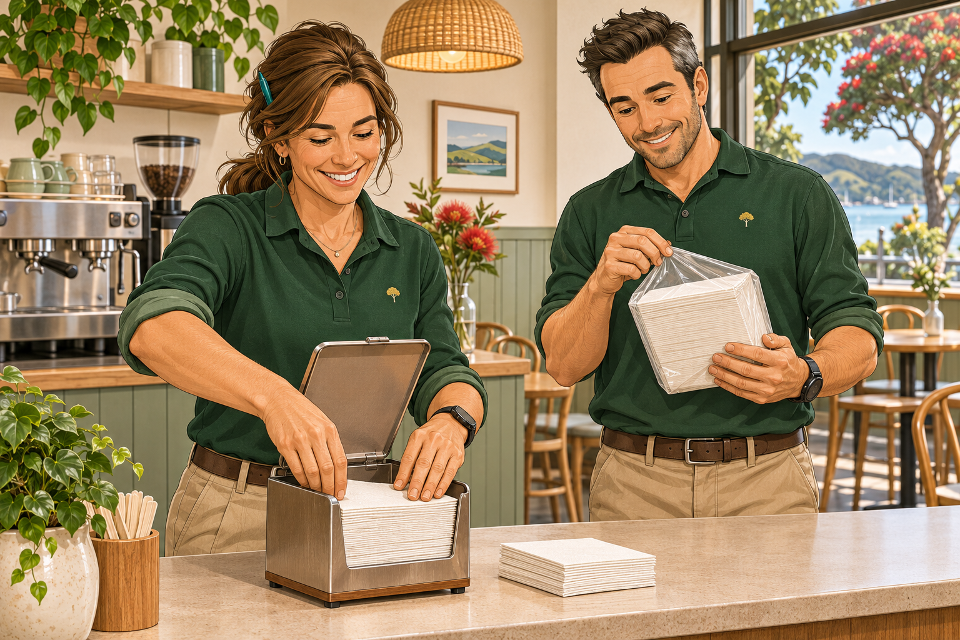
A dispenser works best with the refill it was designed for. Compact, tall, single-saver and quarter-fold napkins are not automatically interchangeable.
Check the dispenser model, refill dimensions and fold before ordering. A pack that fits inside the housing may still feed poorly through the opening.
- Load napkins in the specified direction.
- Stay within the recommended capacity.
- Test a few pulls after refilling.
- Check for catching, tearing or a unit that slides around.
Browse Insinc’s dispenser napkins and confirm compatibility before changing refills.
4. Match napkin provision to the order
A dry pastry, a saucy sandwich and a shared lunch create different needs. There is no single napkin allowance that suits every order.
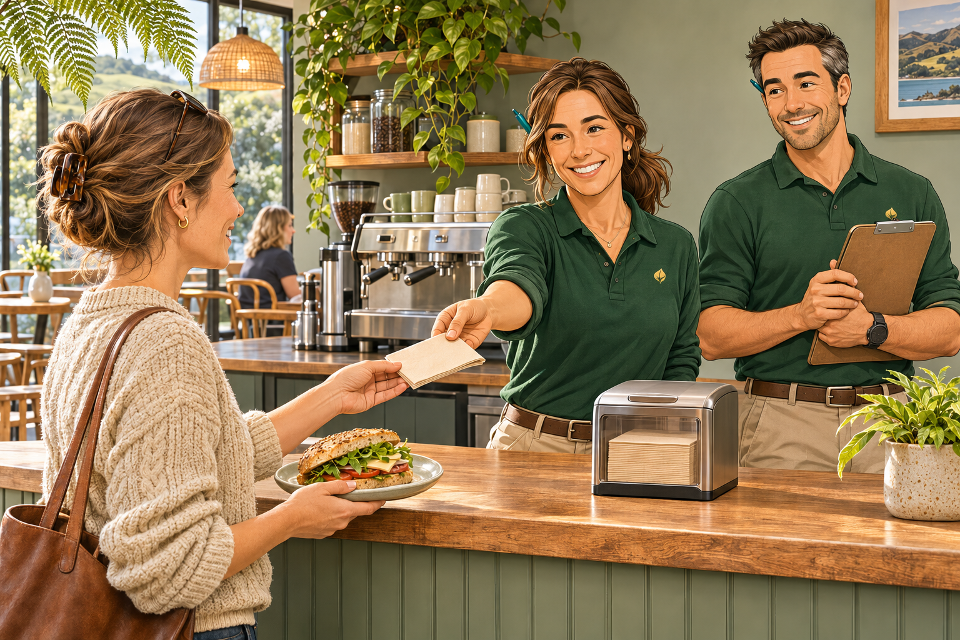
Agree on a sensible starting approach for common orders, then make it easy for staff to offer more. Avoid turning that starting point into a strict limit.
The Practicalist Take: Compare cost per order, not just carton price. A thicker napkin is only better value if its performance justifies the extra cost.
A starting approach to trial
Coffee-only orders
Offer access to napkins without automatically adding a handful.
Pastries and light snacks
Provide an appropriate napkin with the food and keep extras available.
Sandwiches and messier meals
Trial whether a larger or stronger napkin works better than several small ones.
Takeaway and delivery
Allow for the food and number of diners, especially when customers cannot return for extras.
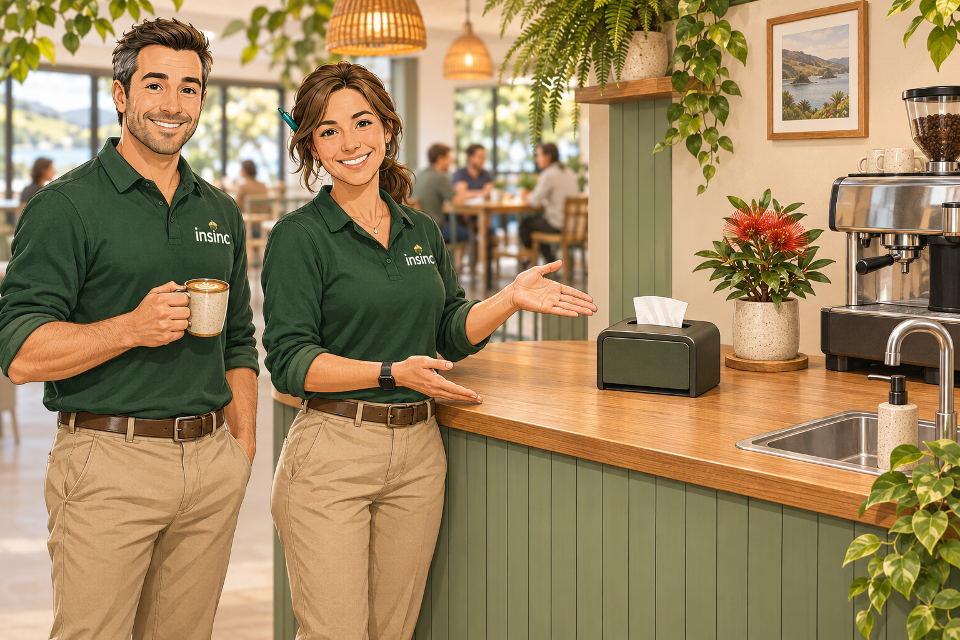
5. Keep extras visible and easy to reach
Reducing waste should not leave someone with sticky fingers searching the room for help. Check the station from the customer’s side.
- Can customers find it without asking?
- Can they reach it without leaning over food or hot drinks?
- Does it stay clear of the payment queue?
- Is it protected from splashes, spills and draughts?
- Who checks it during busy periods?
A friendly message can help: “Please take what you need — extras are here.”
6. Trial one change and check the result
Measure a baseline week, then test one change over a comparable week. Adjust the packing routine, move a dispenser or trial a compatible refill. Changing everything at once makes it harder to identify what helped.
Consumption and cost
Record napkins used per order and napkin cost per order, using a consistent GST basis. Include the purchase cost of new dispensers when assessing savings.
Service and reliability
Track jams, tearing, empty dispensers and refill time. Check whether customers can find napkins and get enough for their meal.
An occasional request for another napkin is normal. Repeated requests because customers cannot find them, or because the napkin is unsuitable, suggest the setup needs adjusting.
Extend the trial if one week was unusually quiet or your menu mix changed substantially. Lower usage is only useful when the service still works well.
Where Insinc can help
Start with your menu, service style and existing dispenser. Then compare the formats that fit.
- Serviettes and napkins — explore options for different food and table-service needs.
- Dispenser napkins — check refill dimensions and folds against your dispenser.
- Napkin dispensers — compare units for your counter space and refill routine.
Unsure which refill fits? Share the dispenser model and details from your current napkin packaging with the Insinc team before ordering.
Your 60-second Practical Workplace Check-up
- Does the refill match the dispenser model and fold?
- Can you pull a napkin without tearing it or moving the unit?
- Are napkins dry and protected from spills?
- Can customers easily find and reach extras?
- Do staff adjust provision to suit the order?
- Are you measuring usage alongside customer experience?
Choose one issue to fix this week. Check the result before making your next change.
Frequently asked questions
How many napkins should a café provide per order?
There is no universal number. Consider the food, the number of diners and whether customers can easily get more. Set a practical starting approach for common orders and adjust it using staff observations and customer feedback.
Can napkin dispensers reduce waste?
They can help control access to individual napkins, particularly when replacing loose stacks. Results depend on the design, compatible refills, loading and customer behaviour. Measure your own usage rather than assuming a fixed saving.
Should napkins be self-service or handed out by staff?
Either approach can work. A combination is worth trialling: provide an appropriate amount with meals and keep additional napkins accessible for customers who need them.
Why does a dispenser release several napkins at once?
Check refill compatibility, loading direction and whether the unit is overfilled. Inspect the opening for damage or obstructions. Some designs do not dispense individually, so check the intended operation before treating this as a fault.
Are thicker napkins better value?
They may be if they perform better for your menu and customers need fewer. Compare cost per order during a trial rather than judging by ply or carton price alone. A lighter napkin may still suit simpler service needs.
How do we know whether we are providing too few?
Review consumption alongside service observations. Customers should still be able to find napkins, get enough for their meal and use the dispenser easily. If access becomes awkward or complaints increase, revise the arrangement.
Alex & Alex — The Practicalists.
Practical Sustainability™ starts with a setup that works for your customers and your team.